Where Is Mount Everest Located?
Mount Everest lies in the Himalayas on the international border between Nepal and Tibet. On the Nepal side, it is located in Solukhumbu District of Koshi Province, within Sagarmatha National Park and the famous Khumbu region, home to the Sherpa people. At 8,848.86 meters (29,031.69 feet) above sea level, Everest is the highest mountain on Earth.
For travellers, Everest is much more than simply the world’s highest peak. The journey into the Khumbu takes you through beautiful mountain scenery, traditional Sherpa villages, Buddhist monasteries, glaciers, high valleys, and landscapes shaped by centuries of life in the Himalayas. This combination of nature, culture, and mountaineering heritage is what makes the Everest region such a special part of Nepal.
In Nepal, Mount Everest is called Sagarmatha, while in Tibet it is known as Chomolungma. The summit lies on the international border, with trekking and climbing approaches available from both sides. The southern approach from Nepal is particularly well known for the Everest Base Camp journey and the network of trails throughout the Khumbu. The Everest Region Trekking area offers a wide range of routes, from classic trekking experiences to longer and more challenging Himalayan adventures.
For those interested in Trekking in Nepal, the Everest region is one of the country’s most rewarding destinations. The classic Everest Base Camp trek is the best-known route, while other trails lead to high passes, remote valleys, viewpoints, and quieter parts of the Khumbu. For experienced mountaineers, the region also has a special place in the history of Climbing in Nepal, with Everest remaining one of the world’s most sought-after climbing objectives.
Whether you are planning to trek to Everest Base Camp, explore Sherpa villages and monasteries, take a mountain flight, join a helicopter tour, or simply learn more about the world’s highest mountain, knowing where Mount Everest is located provides a starting point for understanding the remarkable landscapes and culture of the Khumbu.
Mount Everest Location
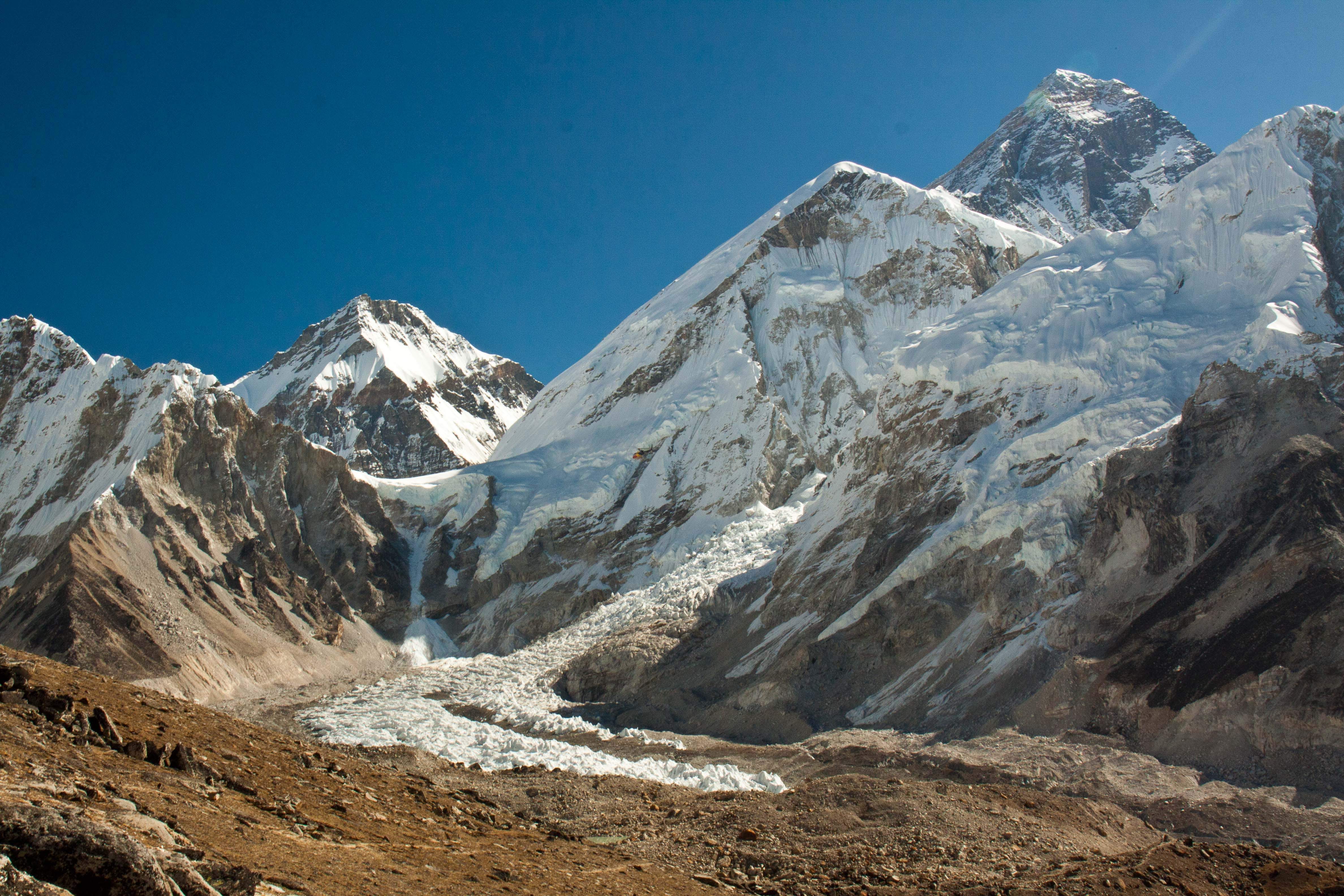
Mount Everest stands in the Himalayan mountain range of southern Asia, along the international border between Nepal and Tibet. On the Nepal side, Everest is located in Solukhumbu District, within Sagarmatha National Park and the famous Khumbu region.
The mountain is surrounded by some of the world's most spectacular Himalayan peaks, including Lhotse, Nuptse, Ama Dablam, Pumori, and Thamserku. Deep valleys, glaciers, rugged mountain ridges, alpine landscapes, and traditional settlements create the extraordinary environment for which the Everest region is known.
Sagarmatha National Park protects a large area of this Himalayan landscape and is home to remarkable natural and cultural heritage. The park contains high mountains, glaciers, valleys, forests, wildlife, and important cultural sites connected with the Sherpa communities.
The Khumbu is also the historic home of the Sherpa people. Their traditions, Buddhist faith, mountain knowledge, hospitality, and close relationship with the Himalayan environment are an essential part of the Everest experience.
For more information about the protected natural and cultural environment surrounding Everest, see our Sagarmatha National Park Guide.
Mount Everest Location
Mount Everest stands in the Himalayan mountain range of southern Asia, along the international boundary between Nepal and Tibet. On the Nepal side, the mountain is located in Solukhumbu District, within the wider Khumbu region and the protected landscape of Sagarmatha National Park.
Everest is surrounded by some of the world's most spectacular Himalayan peaks, including Lhotse, Nuptse, Ama Dablam, Pumori, and Thamserku. Deep valleys, glaciers, rugged ridges, alpine landscapes, and traditional mountain settlements create the extraordinary environment for which the Everest region is known.
The Khumbu is also the historic homeland of the Sherpa people. Their traditions, Buddhist heritage, mountain knowledge, hospitality, and close relationship with the Himalayan environment are an essential part of the Everest experience.
The natural and cultural landscape around Everest is protected through Sagarmatha National Park, which encompasses high mountains, glaciers, valleys, forests, wildlife habitats, and important cultural sites. For more information about this remarkable protected area, see our Sagarmatha National Park Guide.
Where Is Mount Everest on the Map?
On a map of Asia, Mount Everest is located in the central Himalayas along the northern frontier of Nepal. The summit lies on the international boundary between Nepal and Tibet, while the southern side of the mountain and its famous trekking approaches are within Nepal's Everest region.
The Nepal-side Everest region lies in the northeastern part of the country, within the wider Khumbu area. Much of the famous Everest landscape and trekking environment is protected as Sagarmatha National Park, a remarkable Himalayan protected area known for its high mountains, glaciers, valleys, Sherpa settlements, and distinctive mountain culture.
Kathmandu, Nepal's capital, is the main international gateway for most travelers visiting the Everest region. From Kathmandu, travelers continue toward the Khumbu according to their chosen itinerary and mode of travel.
The location of Everest places it among an extraordinary collection of Himalayan mountains. The surrounding landscape includes some of the highest peaks on Earth and provides spectacular mountain views throughout the Khumbu.
For a broader understanding of Nepal's geography, regions, destinations, climate, culture, and travel information, see our Nepal Travel Information Guide.
How High Is Mount Everest?
Mount Everest rises to 8,848.86 meters (29,031.69 feet) above sea level. Nepal and China jointly announced this official elevation in 2020 following a new measurement of the mountain.
Everest is the highest of the world's fourteen mountains above 8,000 meters. Its enormous elevation creates an extreme environment characterized by low oxygen levels, freezing temperatures, strong winds, snow, ice, and rapidly changing weather.
The height of Everest also has an important effect on visitors traveling through the region. The Everest Base Camp route begins at a much lower elevation and gradually climbs through the Khumbu toward the high Himalayas. Proper acclimatization and a carefully designed itinerary are therefore important parts of high-altitude trekking.
Although the summit represents the ultimate objective for mountaineering expeditions, travelers do not need to climb Everest to experience its spectacular landscape. The surrounding region offers many opportunities to see and appreciate the mountain from different viewpoints.
How Do You Get to Mount Everest?
Most international travelers visiting Mount Everest from Nepal first arrive in Kathmandu, the country's main international gateway. From Kathmandu, the best way to continue depends on the season, available time, transportation conditions, and the type of Everest experience you have chosen.
The Classic Everest Base Camp Trek usually begins with a flight to Lukla, followed by a trek through the Khumbu region. The route passes through Phakding, Namche Bazaar, Tengboche, Dingboche, Lobuche, and Gorak Shep before reaching Everest Base Camp.
For travelers with limited time, scenic mountain flights and helicopter experiences provide alternative ways to see Everest and the surrounding Himalayan range without undertaking a long trekking journey.
Transportation to the Everest region can be affected by mountain weather, particularly flights to and from Lukla. Seasonal flight operations and airport arrangements can also vary, so it is important to check the current departure point and allow some flexibility in the itinerary.
For practical information about transportation throughout Nepal and how different destinations are connected, see our Nepal Transportation Guide.
For detailed information about the Classic Everest Base Camp Trek, including its itinerary, accommodation, altitude, acclimatization, and practical preparation, see our Everest Base Camp Trek Guide.
Trekking Routes and Approaches to Everest Base Camp
Everest Base Camp can be reached through several trekking routes and approaches. The classic route is the most popular, while alternative trails offer different landscapes, cultural experiences, levels of difficulty, and opportunities to explore less-traveled parts of the Himalayas.
Classic Everest Base Camp Trek: The most established route follows the main Khumbu trail from Lukla through Phakding, Namche Bazaar, Tengboche, Dingboche, Lobuche, and Gorak Shep to Everest Base Camp. It is the route most commonly associated with the Everest Base Camp Trek.
Everest Base Camp Trek via Gokyo Lakes and Cho La Pass: This spectacular alternative combines the Everest Base Camp journey with the Gokyo Valley and its beautiful glacial lakes. After exploring Gokyo, the route crosses the challenging Cho La Pass before joining the Everest Base Camp route.
Everest Base Camp Trek from Jiri: This historic approach begins in the lower Solu region and gradually enters the Khumbu before joining the main Everest trail. It provides a longer and more traditional journey through villages and landscapes below Lukla and has strong connections with the early history of Everest expeditions.
Everest Base Camp by Road Approach: Roads now reach parts of the lower Everest region, including areas around Salleri, allowing travelers to shorten or modify the traditional approach. However, there is no road directly to Everest Base Camp, and the final journey must be completed on foot.
Arun Valley to Everest Base Camp Trek: This longer and less-traveled approach enters the Everest region from the Arun Valley before connecting with the Khumbu. It offers a more remote Himalayan experience and can be combined with other high-altitude routes.
Everest Three High Passes Trek: This challenging high-route journey crosses Renjo La, Cho La, and Kongma La, creating a demanding circuit through the Everest region while incorporating Everest Base Camp along the way.
Tashi Lapcha Pass to Everest Base Camp: This remote route connects the Rolwaling Valley with the Khumbu through the high Tashi Lapcha Pass. It is suitable for experienced trekkers looking for a demanding and less-traveled Himalayan adventure.
Amphu Lapcha Pass to Everest Base Camp: This demanding route connects the Hinku Valley with the Khumbu through Amphu Lapcha Pass. The route involves challenging high-altitude terrain and requires appropriate experience, preparation, equipment, and suitable mountain conditions.
There are also highly remote approaches from the Makalu region, including routes involving Sherpani Col, West Col, and other high passes. These are specialized high-altitude routes and should not be confused with the standard Everest Base Camp Trek.
The South Col route is different again. It is the classic Nepal-side mountaineering approach used by Everest summit expeditions and is not a normal trekking route. Reaching the summit requires a specialized mountaineering expedition with appropriate experience, equipment, permits, and support.
Together, these routes and approaches provide many different ways to experience Everest—from the classic Khumbu trekking journey to remote high-pass adventures and full-scale mountaineering expeditions. The right choice depends on your experience, available time, preferred level of adventure, and the type of Himalayan experience you are looking for.
Where Is Everest Base Camp Located?
Everest Base Camp on the Nepal side is located in the Khumbu region of Solukhumbu District, at approximately 5,364 meters (17,598 feet) above sea level.
Everest Base Camp is an important expedition base for mountaineers preparing to climb Everest from Nepal. For trekkers, reaching Base Camp is itself the destination of one of Nepal's most famous Himalayan journeys.
The route to Base Camp passes through the heart of the Khumbu and provides an opportunity to experience the region's natural and cultural heritage. Travelers walk through traditional villages, cross suspension bridges, pass Buddhist monasteries and mani walls, and gradually move from forested valleys into the high-altitude Himalayan environment.
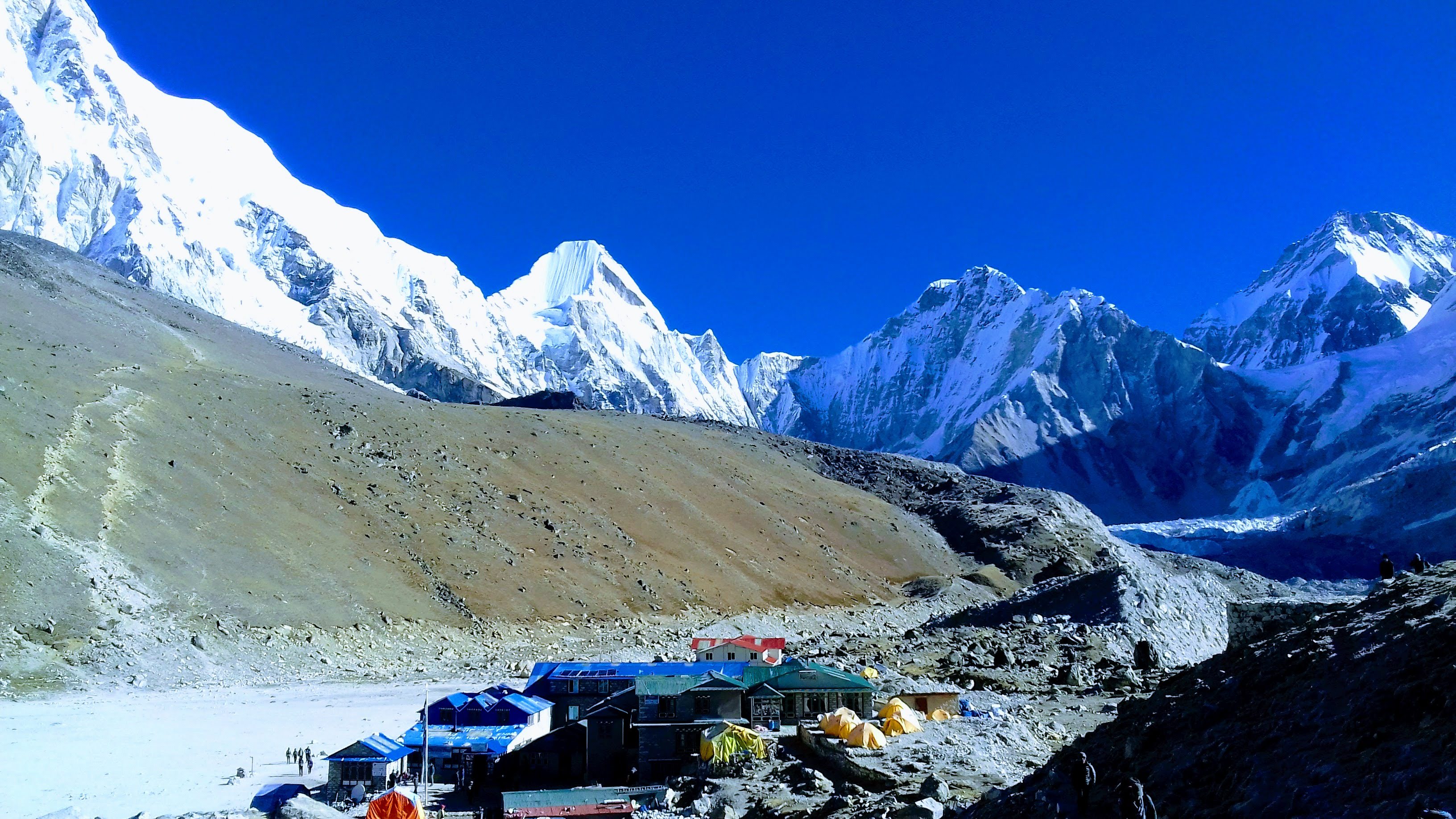
One of the highlights of the journey is the area around Gorak Shep and the nearby viewpoint of Kala Patthar, which is renowned for spectacular panoramic views of Everest and surrounding peaks.
The Base Camp journey therefore combines adventure, scenery, culture, and mountain history rather than simply being a walk to a particular geographical point.
For a detailed overview of Everest Base Camp, including the route, elevation, accommodation, and practical information, see our Everest Base Camp Guide.
Different Ways to Experience Mount Everest
Mount Everest can be experienced in several different ways, depending on your available time, interests, level of adventure, and preferred style of travel. You do not need to undertake a mountaineering expedition to appreciate the world's highest mountain and the remarkable landscapes of the Khumbu.
The Everest Base Camp Trek is one of the world's most famous Himalayan trekking journeys. It takes travelers deep into the Khumbu, passing through traditional villages, Buddhist monasteries, spectacular mountain landscapes, and communities closely connected with Sherpa culture.
For travelers with less time, the Everest View Trek offers a shorter journey through the lower Khumbu with opportunities to enjoy impressive views of Everest and other major Himalayan peaks without continuing to Everest Base Camp.
An Everest Mountain Flight Tour is a convenient option for travelers who have limited time or prefer to see the Himalayas from the air. The scenic flight provides panoramic views of Mount Everest and the surrounding high peaks without requiring a multi-day journey into the mountains.
An Everest Base Camp Helicopter Tour offers another spectacular way to experience the Everest region from the air, providing closer views of the dramatic Himalayan landscape and allowing travelers to reach Everest Base Camp in a much shorter time than a traditional trekking journey.
For experienced mountaineers, climbing Mount Everest is an entirely different undertaking. A summit expedition requires extensive mountaineering experience, specialized equipment, permits, acclimatization, careful preparation, and professional high-altitude support. It is fundamentally different from trekking, sightseeing, or scenic mountain flights.
These different options allow travelers to discover Mount Everest according to their own interests and circumstances—from an immersive Himalayan trek to a scenic flight, helicopter journey, or full-scale mountaineering expedition.
When Is the Best Time to Visit Mount Everest?
The best time to visit the Everest region depends on your chosen activity, route, and tolerance for different weather conditions. Nepal experiences four broad seasons, and conditions in the high Himalayas can change considerably throughout the year.
Spring, particularly March through May, is one of the most popular periods for trekking and mountaineering. Conditions are generally favorable, mountain views can be excellent, and the lower valleys may be decorated with blooming rhododendrons.
Autumn, especially October and November, is another highly popular season. Following the summer monsoon, the atmosphere is often clearer, creating excellent opportunities for Himalayan views. Temperatures are generally comfortable at lower elevations, although conditions become much colder as altitude increases.
Winter can offer exceptionally clear mountain scenery, but temperatures at high elevations can be very cold. Some higher-altitude services and routes may also operate differently during the coldest part of the season.
Summer and monsoon bring rain to many parts of Nepal. The Everest region can still be visited, but weather conditions and mountain flight operations can be less predictable, particularly on the approach to Lukla.
The best season also depends on what you want to do. Trekking, mountain viewing, cultural experiences, helicopter tours, mountain flights, and mountaineering can each have different seasonal considerations.
For a detailed understanding of Nepal's seasonal conditions, temperatures, rainfall, regional differences, and travel conditions throughout the year, see our Nepal Weather Guide.
For broader guidance on choosing the right season and destination for your trip, see our Best Time to Visit Nepal Guide.
Mount Everest and Sherpa Life in the Khumbu
Mount Everest and the Sherpa people have become deeply connected in the modern history of Himalayan mountaineering and tourism. The Khumbu is the traditional homeland of the Sherpa communities, whose culture, Buddhist faith, mountain knowledge, and way of life have developed over generations in this high Himalayan environment.
Sherpa life in the Khumbu has traditionally included agriculture, animal husbandry, trade, and community life adapted to the mountain environment. Over time, mountaineering and trekking brought new opportunities, and tourism has become an important part of the regional economy.
The historic 1953 Everest expedition of Tenzing Norgay and Sir Edmund Hillary brought worldwide attention to the mountain and the Khumbu region. Tenzing Norgay's successful ascent with Hillary became one of the defining moments in the history of Himalayan mountaineering and helped establish the Everest region as a destination known throughout the world.
Since then, generations of Sherpa guides, mountaineers, porters, lodge owners, cooks, traders, and other local professionals have contributed to the development of Himalayan tourism and mountaineering. Their knowledge of the mountains, high-altitude environment, routes, weather, and local culture remains an important part of the Everest experience.
Today, visitors to the Khumbu encounter a living culture rather than simply a historic one. Buddhist monasteries, prayer flags, mani walls, festivals, traditional villages, and local hospitality remain important parts of life throughout the region.
The relationship between Everest and Sherpa life has therefore developed in both cultural and economic ways. The mountain has brought global attention to the Khumbu, while Sherpa communities have played a major role in shaping how visitors experience and understand the Everest region.
For more information about the Sherpa traditions, history, and cultural heritage of the Everest region, see our Everest Sherpa Culture Guide.
Planning and Preparation for an Everest Journey
Planning and preparation are important when traveling to the Everest region because the journey takes place in a remote Himalayan environment and may involve significant changes in elevation and weather.
The first step is choosing the experience that best matches your available time, interests, and preferred travel style. Travelers may choose the Everest Base Camp Trek, a shorter Everest-view journey, a mountain flight, a helicopter tour, or another experience in the Khumbu.
Preparation should include checking travel documents and visa requirements, arranging appropriate travel insurance, choosing suitable clothing and footwear, preparing personal equipment, considering accommodation and transportation, and understanding the conditions of the chosen itinerary.
For trekking journeys, altitude and acclimatization deserve particular attention. Routes toward Everest Base Camp involve progressively higher elevations, so itineraries normally include appropriate acclimatization periods. A gradual pace, adequate rest, and awareness of high-altitude conditions are important parts of responsible trekking.
Weather is another important consideration. Conditions in the Himalayas can change quickly, particularly at higher elevations, and mountain flights may sometimes be affected by weather. Allowing some flexibility in your itinerary can therefore be useful.
Planning should also take the season into account. Spring and autumn are popular for trekking, while winter and monsoon provide different conditions and considerations.
For comprehensive practical advice about preparing for travel in Nepal, see our Nepal Trip Preparation Guide. For a broader step-by-step guide to planning destinations, activities, seasons, transportation, and itineraries throughout Nepal, see our Nepal Travel Planning Guide.
Frequently Asked Questions About Mount Everest
Is Mount Everest located in Nepal?
Mount Everest stands along the international border between Nepal and Tibet. On the Nepal side, the mountain is located in Solukhumbu District within Sagarmatha National Park and the Khumbu region, which is the principal setting for the famous Nepal-side Everest trekking and tourism experience.
What is Mount Everest called in Nepal?
Mount Everest is known as Sagarmatha in Nepal. The name is an important part of Nepal's identity for the world's highest mountain, while the surrounding Khumbu region is deeply associated with Sherpa culture and Himalayan traditions.
What is the highest place visitors can reach without a climbing expedition?
Travelers can reach high points in the Everest region through trekking routes without undertaking a summit expedition. Everest Base Camp is approximately 5,364 meters above sea level, while viewpoints such as Kala Patthar provide even higher trekking viewpoints with exceptional views of Everest and the surrounding mountains.
How long does it take to experience the Everest region?
The time required depends on the experience chosen. A mountain flight can be completed in a much shorter time, while helicopter experiences and shorter treks require additional time. The classic Everest Base Camp journey normally takes several days because the route requires gradual altitude gain and appropriate acclimatization.
What should I know before traveling to Everest?
Travelers should understand the season, transportation, altitude, weather, itinerary, accommodation, and preparation requirements before beginning an Everest journey. The conditions and practical requirements can vary depending on the destination and type of trip. For answers to broader questions about traveling throughout Nepal, see our Nepal Travel FAQs.
Plan Your Journey to Mount Everest
Now that you know where Mount Everest is located and how the Everest region can be explored, our experienced local team can help you choose the right Everest experience based on your time, interests, and travel plans.
Whether you are considering the Everest Base Camp Trek, an alternative trekking route, a mountain flight, or a helicopter experience, we can assist with routes, transportation, seasons, permits, accommodation, and other practical arrangements.
Contact Us
Have questions about Mount Everest, the Everest region, trekking routes, transportation, or planning your journey? Contact our local team for practical advice and personalized assistance.
WhatsApp / Call: +977-9841566449
Email: info@mountainkingtrek.com
Plan Your Trip
Ready to explore Mount Everest? Let us help you choose and arrange an experience that suits your available time and interests, from the classic Everest Base Camp journey to other ways of discovering the Khumbu.