The Ancient Tradition Behind Dingboche’s Summer Silence
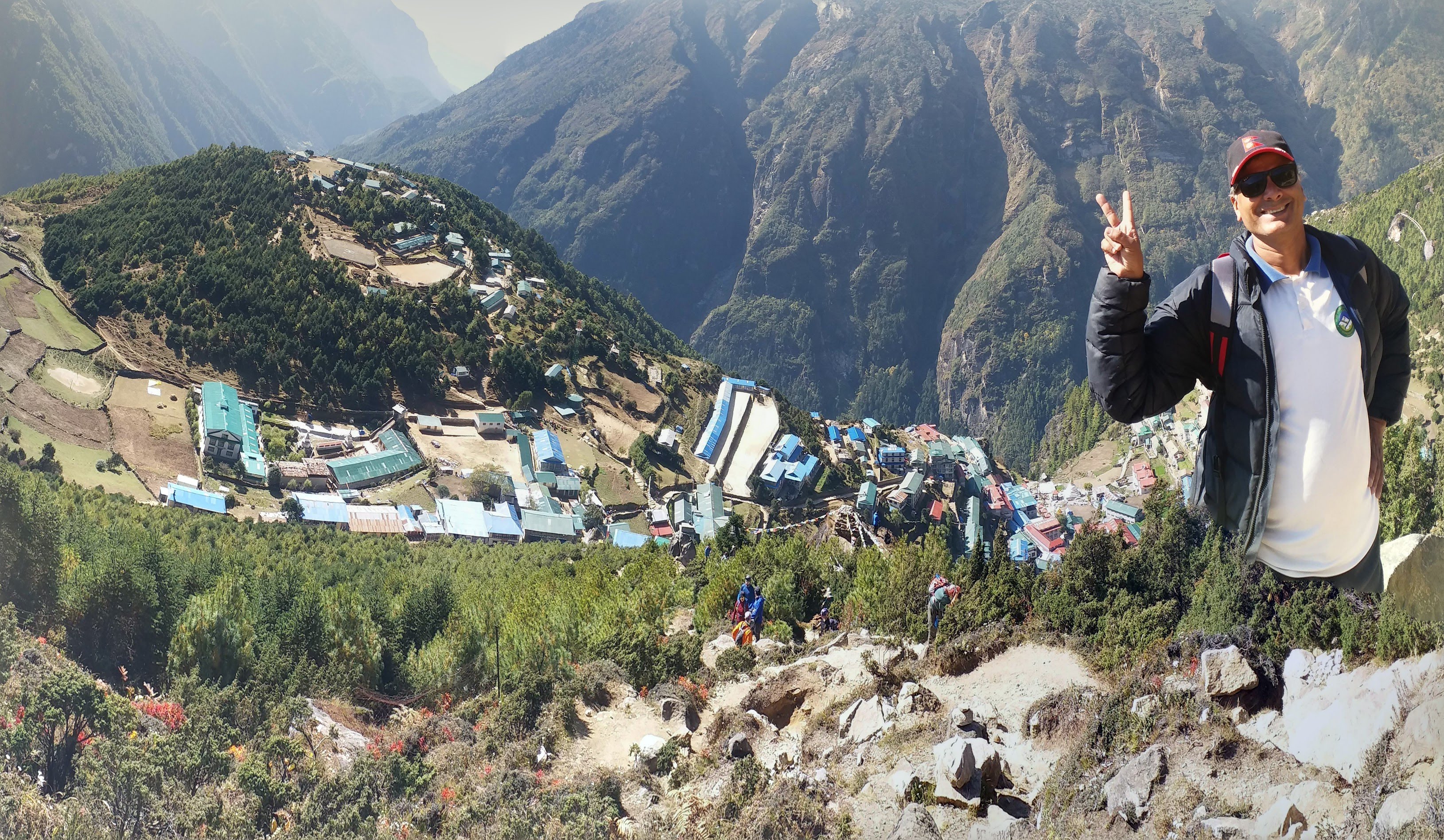
High in the Khumbu Valley of Nepal, at around 4,410 metres above sea level, lies Dingboche, a historic Sherpa settlement surrounded by some of the most spectacular mountains of the Everest region. Today, the village is widely known as an important stop for trekkers heading toward Everest Base Camp, but its history reaches far beyond modern Himalayan tourism. Long before trekking became an important part of life in Khumbu, Dingboche was a high-altitude agricultural and herding settlement where Sherpa families cultivated fields, raised livestock, and followed seasonal traditions closely connected with the land. Visitors exploring the region today can discover this deeper cultural landscape through Everest Region Trekking and other journeys through Trekking in Nepal.
Among the most fascinating traditions associated with Dingboche is Dei, sometimes written as Dee in English-language sources. During a traditional period of about one month in Saun, the Nepali month that generally falls in July and August, the community observes a strict prohibition on making fires within the settlement. Traditionally, this includes household cooking fires, creating an unusual period when ordinary village life changes dramatically. The custom is closely connected with the agricultural cycle and the traditional belief that protecting the crops requires particular care during this important stage of the growing season.
The tradition reflects a much older understanding of the relationship between people, agriculture, nature, and spiritual life in the high Himalayas. Historical accounts indicate that the practice is not a recent tourism-era custom but part of a longstanding system of community agricultural regulations in Khumbu. For generations, local people have understood the success of their crops as closely connected with careful observance of seasonal customs and community rules.
For modern visitors, it may seem extraordinary that a high Himalayan settlement could become unusually quiet because residents are traditionally prohibited from lighting fires inside the village. Yet for the people of Dingboche, this practice represents much more than an unusual annual restriction. It reflects generations of environmental knowledge, agricultural experience, spiritual belief, community cooperation, and adaptation to life at extreme altitude.
Dingboche Before Modern Trekking
Dingboche was traditionally much more than a place for trekkers to spend an acclimatization night. It formed part of the wider agricultural and pastoral landscape of Khumbu, where Sherpa communities developed ways of making a living in an environment with a short growing season, severe winters, limited cultivable land, and challenging mountain conditions. Historical research describes Dingboche as an important area for barley cultivation, with agricultural fields associated not only with families from nearby Pangboche but also with households from other Khumbu settlements, including Khumjung, Kunde, and Nauje.
The extensive agricultural terraces around the settlement are reminders of this earlier way of life. At elevations above 4,000 metres, farming required detailed knowledge of the local environment: when to prepare the fields, when to sow crops, how to protect them from harsh weather and disease, when livestock could graze, and when the harvest would be ready. These were not simply individual farming decisions. They were part of a broader community system shaped by generations of experience in the high Himalayas.
Agriculture was therefore closely connected with community customs and spiritual beliefs. The success of a harvest was important to the food security and well-being of families, while traditional rules helped regulate activities that could affect fields, livestock, and the wider agricultural landscape. In this setting, the annual fire prohibition during Saun can be understood as one part of a much larger cultural system that linked everyday life with the protection of crops and respect for the natural and spiritual world.
The Importance of Barley
The history of Dingboche is closely connected with barley, one of the important crops traditionally cultivated in the high-altitude fields of Khumbu. Historical ethnographic research describes barley as an important crop in the area and records the deep cultural significance attached to a successful harvest. It was not regarded simply as food or a commodity; traditional beliefs connected the crop with spiritual forces, agricultural well-being, and the wider relationship between the community and its environment.
Another particularly fascinating part of Dingboche’s agricultural history concerns the introduction and eventual acceptance of potatoes. Today, potatoes are strongly associated with high-altitude Himalayan farming, but their acceptance was not immediate. Historical research records that, in the early twentieth century, some communities in the Dingboche area were reluctant to plant potatoes alongside barley because of the belief that the newer crop could offend or negatively affect the barley harvest. Over time, these restrictions weakened, and potatoes gradually became an increasingly important part of agriculture throughout Khumbu.
This history shows that agricultural change in the Himalayas was not simply a matter of introducing a new crop or adopting a more productive method of farming. New crops had to fit within an established system of knowledge, belief, community authority, and environmental understanding. The story of barley and potatoes therefore offers an important glimpse into how Sherpa communities adapted to changing circumstances while maintaining traditions that had developed around the difficult conditions of high-altitude life.
The Month of Saun and the Fire Ban
The most remarkable part of the Dingboche tradition occurs during a particular period of the year. Rather than describing the entire summer as a closure, it is more accurate to focus on the traditional one-month period in Saun, roughly corresponding to July–August, when the village observes a strict prohibition on making fires. Historical ethnographic research places the beginning of the fire ban on a specific day in the sixth month of the Sherpa lunar calendar, with the restriction continuing through an important part of the agricultural season. The prohibition traditionally included ordinary household hearth fires, making this a particularly unusual custom for a community living in such a cold, high-altitude environment.
Without the ability to maintain ordinary cooking fires inside the settlement, normal household life became extremely difficult. Residents therefore traditionally moved elsewhere for the period or stayed outside the settlement while continuing to care for their fields and livestock. Pheriche, a nearby settlement at a lower elevation, has traditionally been one of the places where people could stay during this period. From Pheriche, the surrounding landscape could still be observed and accessed, and today the area also provides opportunities for acclimatization walks such as the Nangkartshang/Nagarjun viewpoint, from where visitors can look back toward the Dingboche valley and appreciate the landscape in which this tradition developed.
Recent accounts of the tradition describe Dingboche becoming temporarily quiet and largely deserted during the period of Dei, with residents moving to nearby areas or elsewhere and taking livestock with them. Houses and lodges may remain closed, while people continue their seasonal activities away from the settlement. For modern visitors, this temporary absence can seem unusual, but historically it was a practical consequence of observing a community rule that made ordinary life around the household hearth impossible.
Why Was Fire Forbidden?
The traditional explanation for the fire prohibition is closely connected with agriculture and the protection of crops. Local understandings have associated smoke and pollution from household fires with possible harm to the fields, particularly during the important period leading toward the barley harvest. Historical research also records a broader set of agricultural restrictions in Khumbu that were intended to reduce the danger of crop disease and protect fields during sensitive stages of cultivation. The fire ban was therefore part of a wider system of traditional environmental knowledge rather than an isolated rule.
These customs were shaped by several interconnected ideas. Some restrictions focused directly on preventing disease and protecting crops, while others reflected traditional beliefs that plants and fields could be negatively affected by things associated with death, decay, pollution, or unpleasant smells. In the Sherpa worldview described by ethnographic research, plants and agricultural land could be understood as responsive elements of the natural and spiritual environment, meaning that respectful treatment of the fields was connected with the well-being of the wider community. The prohibition on fire therefore carried a deeper meaning than simply avoiding smoke; it formed part of a traditional system in which agriculture, environment, community life, and spirituality were closely connected.
The Role of Community Rules
Dingboche's traditional agricultural system also depended heavily on community cooperation. The rules were not simply private decisions made by individual households but formed part of a wider customary system through which communities regulated agriculture, pasture, livestock, and other shared resources. Historical research documents the role of local institutions and officials known as nawa, who helped enforce seasonal regulations and crop-protection measures in different Khumbu communities.
This community-based system was particularly important because agricultural life in such a difficult environment depended on cooperation and careful timing. A later account of Dingboche describes villagers collectively maintaining the tradition, with community authorities helping ensure that people respected the restrictions on cooking fires and protected areas where livestock and agricultural activities were regulated. The survival of the custom therefore reflects more than an old belief; it demonstrates how Sherpa communities historically used collective rules to manage their environment and protect an agricultural livelihood that was vulnerable to the harsh mountain climate.
When the Village Falls Silent
Imagine Dingboche during the traditional month of the fire ban: the familiar smoke rising from household chimneys disappears, cooking fires are not lit, and many homes and lodges remain closed. Residents temporarily move to other locations or stay outside the settlement while continuing seasonal agricultural and herding activities, creating a very different atmosphere from the busy trekking village visitors know today. Livestock may also be taken to other grazing areas, while people remain connected to their fields and surrounding landscape even though they are no longer living in their usual homes.
For a modern visitor, such a scene might appear strange or mysterious, but historically it represented something both practical and spiritual. The temporary movement away from the settlement allowed the community to observe the fire prohibition while continuing the seasonal activities necessary for agriculture and livestock. Recent local accounts describe residents moving to surrounding areas during the period, while people whose livelihoods depended on tourism could leave the valley altogether. The silence of Dingboche was therefore not an abandonment of the village but part of a traditional seasonal rhythm.
Dingboche and Seasonal Herding
Agriculture was only one part of traditional Sherpa life, and livestock played an equally important role in the economy and seasonal movement of Khumbu communities. Yaks and other high-altitude animals provided essential resources while also requiring access to different pastures according to the season. Families therefore moved livestock between elevations and grazing areas as conditions changed, creating a close relationship between settlement patterns, agriculture, pasture, weather, and animal husbandry.
Historical research describes herders moving livestock away from Dingboche after the fire ban began, using places such as Shangyo, Pheriche, and Bibre as seasonal bases. This movement shows that the traditional landscape was not organized around one permanent settlement alone. People used a much wider mountain territory according to the needs of crops, animals, water, weather, and seasonal conditions, and their movement through this landscape was an important part of adapting to life at high altitude.
From Agricultural Settlement to Trekking Destination
The transformation of Dingboche over the past several decades has been remarkable. Mountaineering and trekking brought new economic opportunities to the Khumbu, gradually encouraging the development of lodges, shops, communication facilities, and other services for travelers heading toward Everest and the surrounding high mountains. What was once primarily an agricultural and seasonal settlement increasingly became a major destination within the modern trekking economy, and Dingboche eventually developed into one of the best-known stops on the Everest Base Camp route.
Research on landscape change in Sagarmatha National Park notes that Dingboche was traditionally associated with summer pasture and agricultural use, while the growth of tourism helped transform it into a much more continuously inhabited settlement. The modern village therefore contains two closely connected histories: one rooted in Sherpa agriculture, livestock herding, community regulation, and spiritual traditions, and another shaped by trekking, mountaineering, tourism, and international visitors. Understanding both histories gives a much richer picture of what Dingboche has become.
A Tradition That Survived the Age of Tourism
Tourism has changed Dingboche enormously. Guesthouses and lodges have become an important part of the local economy, trekking has created new employment and business opportunities, and modern communications, energy systems, and tourism infrastructure have changed many aspects of daily life. Yet the tradition of Dei demonstrates that older cultural practices have not simply disappeared as the settlement has become an important trekking destination.
Recent reports from Dingboche describe the tradition continuing into the twenty-first century, with residents still observing the traditional period and temporarily leaving their homes. Its continuation is significant because it shows that the cultural identity of Khumbu cannot be understood only through the modern tourism industry. Beneath the busy trekking routes and modern lodges, older patterns of community life, seasonal movement, agriculture, and cultural practice continue to shape the identity of the place.
The Story of Dingboche Is Also the Story of Himalayan Adaptation
The history of Dingboche illustrates how people have adapted to one of the world's most demanding environments. At an altitude where farming is difficult and the growing season is short, communities developed specialized agricultural knowledge and carefully organized planting and harvesting. Livestock moved seasonally to make use of different pastures, while community regulations helped protect crops and manage shared resources. In a cultural landscape where spiritual beliefs were closely connected with nature, agricultural practices also became intertwined with traditions concerning the respectful treatment of land and the environment.
The fire ban of Saun is therefore only one part of a much larger story. It represents a traditional understanding that the survival of a community depended on cooperation, careful environmental management, and respect for the natural forces surrounding mountain life. Seen in this wider context, the custom provides a valuable insight into how Sherpa communities developed practical and cultural systems that allowed them to live, farm, herd animals, and maintain community life in an exceptionally challenging environment.
The Historical Landscape of Dingboche Today
Visitors walking through Dingboche today may see modern lodges, bakeries, trekking shops, prayer flags, stone walls, agricultural terraces, and spectacular mountain scenery. Yet beneath this modern appearance are layers of history that remain visible in the landscape. The terraces tell the story of high-altitude farming, the grazing areas reflect the history of livestock herding, and the settlement itself represents generations of Sherpa adaptation to the Khumbu environment.
The surrounding peaks and valleys are also part of a cultural and spiritual landscape that extends far beyond the modern trekking routes. The annual tradition of Dei connects the present settlement with an older agricultural rhythm, reminding us that Dingboche existed as a living community long before it became an important stop for international trekkers. Understanding this history allows travelers to see the village not simply as a place to spend an acclimatization night before walking higher, but as a community shaped by generations of adaptation to the mountains.
Respecting Dingboche as a Living Community
For visitors, perhaps the most important lesson from this tradition is simple: Dingboche is a living community with its own customs, history, and seasonal practices. Travelers should respect local decisions concerning agricultural land, homes, religious places, community spaces, and traditional customs, particularly when visiting during periods of local observance. Such traditions should be understood as part of the community's cultural life rather than viewed simply as an inconvenience to visitors.
Responsible travel begins with recognizing that the Himalayas are not merely scenic destinations or trekking routes. They are home to communities whose history, livelihoods, beliefs, and cultural practices existed for generations before the modern tourism industry arrived. Respecting that living heritage allows visitors to experience the Everest region with a deeper understanding of the people and landscape that make it unique.
Dingboche: A Window into the History of Khumbu
The ancient tradition of summer silence offers an unusual window into the history of the Everest region. For one month in Saun, the absence of fire and smoke reminds us of a time when the success of a harvest could have a direct influence on the well-being of an entire high-altitude community. The tradition also connects several important aspects of Sherpa life: the cultivation of barley and potatoes, seasonal movement of livestock, community institutions, environmental knowledge, and a spiritual relationship with the natural world.
Modern Dingboche may be internationally known because of Everest trekking, but its deeper identity was shaped long before modern tourism transformed the Khumbu. Its story is one of Sherpa heritage, high-altitude agriculture, community cooperation, spirituality, and adaptation. Beneath the modern trekking destination remains an ancient mountain community whose traditions continue to connect people, fields, livestock, and the extraordinary landscape of Khumbu.
Frequently Asked Questions
What is Dingboche known for?
Dingboche is known as a historic Sherpa settlement and high-altitude agricultural village in the Khumbu region. Today, it is also an important stop for trekkers travelling toward Everest Base Camp.
How high is Dingboche?
Dingboche is situated at approximately 4,410 metres (14,470 feet) above sea level.
What is Dei in Dingboche?
Dei, also written as Dee in some sources, refers to a traditional period during which the community observes important restrictions, particularly the prohibition on making fires in the settlement. The custom is closely connected with the agricultural cycle and protection of crops.
Why are fires traditionally prohibited in Dingboche?
The traditional fire prohibition is associated with protecting crops, particularly during an important period of the agricultural season. Local beliefs connect smoke and pollution with possible harm to the harvest, while the wider system of customary rules also sought to protect fields from disease and other threats.
Did people traditionally leave Dingboche during the fire-ban period?
Yes. Because the prohibition included household cooking fires, traditional habitation during the restricted period became difficult. Historical and more recent accounts describe residents temporarily moving away from the settlement or staying outside it while continuing seasonal agricultural and herding activities.
Explore Dingboche with Mountain King Treks
Dingboche offers a fascinating combination of Sherpa history, traditional agriculture, mountain culture, and spectacular Himalayan landscapes. Understanding the story behind its seasonal traditions gives travelers a deeper appreciation of the village and the wider Khumbu region, where ancient ways of life continue alongside modern trekking and mountaineering.
Mountain King Treks can arrange private and customized trekking and mountain adventure programs through the Everest region according to your available time, interests, and travel style. You can experience Dingboche as part of our Everest Base Camp Trek, or continue deeper into the high mountains through adventures such as Island Peak Climbing and the Baruntse Expedition.
Planning & Preparation
A journey through the Everest region requires thoughtful planning, from selecting the right itinerary to understanding the mountain environment and preparing for high-altitude conditions. Our Nepal Travel Planning Guide provides useful information for organizing your journey, while the Nepal Trip Preparation Guide covers equipment, travel insurance, fitness, and other practical preparations. For broader information about travelling in Nepal, visit our Nepal Travel Information Guide.
Contact Us
Mountain King Treks & Expedition Pvt. Ltd.
WhatsApp / Call: +977-9841566449
Email: info@mountainkingtrek.com
If you would like to experience Dingboche and the wider Everest region, contact Mountain King Treks to discuss your preferred itinerary, travel dates, interests, and travel style. We will be happy to help you plan a meaningful journey through the Himalayas.
Plan a Trip
Share your preferred dates, interests, and travel style with us, and we can help create a private and customized Himalayan journey that fits your plans and allows you to experience the landscapes, communities, and cultural heritage of Nepal.