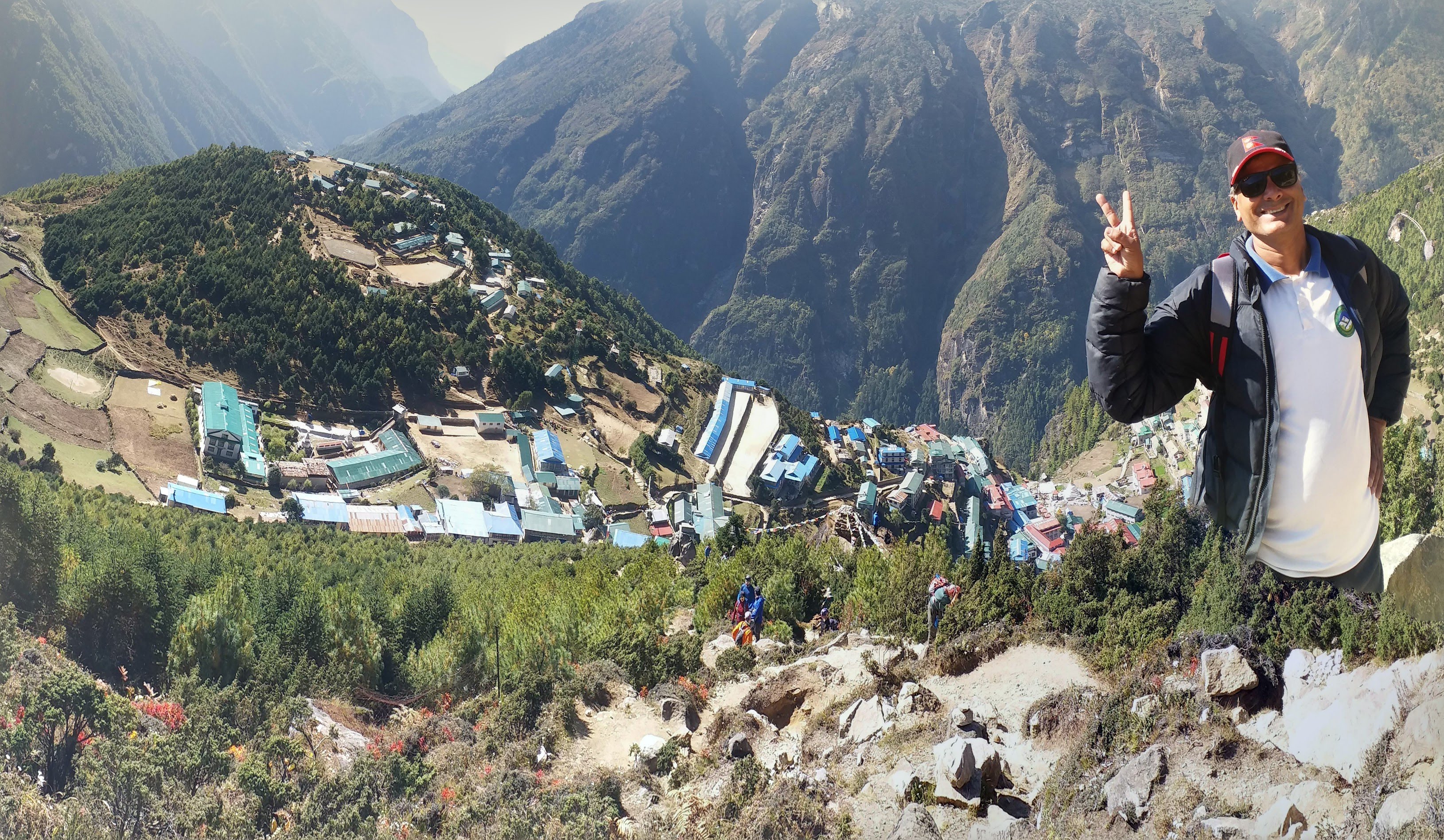
About History of Pokhara
Pokhara is one of Nepal’s most beautiful and fascinating cities, known for Phewa Lake, Machhapuchhre, the Annapurna range, traditional neighbourhoods, religious sites, caves, waterfalls and adventure tourism. Yet the story of Pokhara is much older and deeper than its modern image as a lakeside tourist destination.
The landscape itself holds clues to a dramatic past. Long before roads, markets and hotels appeared, enormous quantities of rock, gravel and sediment moved down from the high Himalaya and accumulated across the Pokhara Basin. Later, the Seti River cut deeply through these deposits, creating the spectacular gorges that characterize the valley today. Scientific studies have identified several major episodes of catastrophic sedimentation between roughly 700 and 1700 AD, with evidence linking some of them to great Himalayan earthquakes.
Human history developed within this remarkable landscape. Communities settled around the valley and surrounding hills, religious traditions became established, and Pokhara gradually developed from a regional settlement into an important trading centre. Newar merchants and artisans helped shape its commercial character, while Gurung, Magar, Khas, Thakuri, Thakali and other communities contributed to its cultural identity.
During the twentieth century, improved transportation, the decline of malaria, modern education and health services, and the opening of Nepal to international visitors transformed Pokhara again. The successful ascent of Annapurna I in 1950 helped introduce the region to the international mountaineering world, and trekking later turned Pokhara into the principal gateway to the Annapurna region.
Today, Pokhara brings together geology, history, religion, culture, nature and adventure in one extraordinary Himalayan setting.
Where Is Pokhara?
Pokhara lies in Kaski District of Gandaki Province, in central Nepal, south of the Annapurna Massif. The city sits in a broad basin through which the Seti River and several tributaries flow.
The surrounding landscape rises dramatically from the valley toward the Annapurna and Dhaulagiri Himalayan ranges. On clear days, mountains including Annapurna I, Annapurna South, Hiunchuli, Machhapuchhre and Dhaulagiri form an impressive northern panorama.
Its geographical position has always been important. Pokhara sits between the middle hills and the higher Himalayan region and historically connected routes leading toward northern Nepal, the Kali Gandaki region, Tibet and the southern plains.
This combination of geography and accessibility eventually helped transform Pokhara from a regional settlement into a major commercial and tourism centre.
The Geological History of Pokhara
To understand the history of Pokhara, it is useful to begin not with people but with the mountains.
The modern Pokhara Valley is partly built upon enormous quantities of sediment deposited by powerful geological processes originating in the high Himalaya. Research has found that the Pokhara Basin contains a remarkable record of catastrophic valley filling, including thick deposits of gravel, rock and other sediment carried downstream from the Annapurna region.
These deposits created a broad sedimentary fan across much of the basin. Some of the material travelled through the steep Seti gorge and spread into the lower valley, where it accumulated over long periods.
The story was not the result of one single event. Geological evidence points to several major episodes of sedimentation, followed by erosion and renewed deposition. At least three major sediment pulses have been identified between approximately 700 and 1700 AD, together depositing more than five cubic kilometres of material across the Pokhara fan.
Researchers have associated some of these episodes with major Himalayan earthquakes, while the precise sequence of landslides, debris flows, rock avalanches and water-related processes continues to be studied.
The important point is that the land beneath modern Pokhara is itself a record of the powerful forces that have shaped the Himalaya.
The Great Sediment Events
One of the most remarkable discoveries about Pokhara is the scale of the ancient sediment deposits beneath and around the valley.
Scientific research describes a sediment fan covering approximately 148 square kilometres, extending from the steep Seti Khola gorge into the Pokhara Basin. The deposits invaded and blocked numerous tributary valleys, in places leaving layers of debris tens of metres thick.
These deposits were not simply ordinary river sediments. They contain evidence of major high-energy events involving enormous quantities of rock and sediment.
Radiocarbon dating and sedimentological research have identified at least three major episodes between about 700 and 1700 AD. Their timing broadly coincides with several major earthquakes known from the Himalayan historical and geological record, including events around 1100, 1255 and 1344 AD. Researchers therefore consider strong earthquakes among the possible triggers, although the complete mechanism behind each sediment pulse is more complicated than a single explanation.
These ancient events helped create the physical foundation on which later lakes, settlements, agricultural land and eventually the modern city developed.
How Lakes Developed in the Pokhara Valley
Pokhara is famous for its lakes, particularly Phewa, Begnas and Rupa. Their presence is closely connected with the geological history of the valley.
When enormous quantities of sediment entered the basin, some tributary valleys were partly blocked. Water flowing from surrounding hills could then accumulate behind these natural barriers, creating or enlarging lakes and wetlands.
Research on Phewa Lake indicates that the lake formed behind gravel deposits before later human-made dams altered its water level.
Over thousands of years, the landscape changed repeatedly. Some water bodies became larger, others became smaller or disappeared, and rivers gradually reshaped the deposited sediments.
This helps explain why water is such an important part of Pokhara's natural identity. The lakes are not merely scenic features surrounding a modern city; they are part of a much older geological story.
Phewa Lake and the Changing Valley
Phewa Lake has become the visual symbol of modern Pokhara, but its history is connected to the changing landscape of the entire basin.
The lake lies immediately west of the urban area and beneath the southern face of the Annapurna range. Its calm surface reflects Machhapuchhre and the surrounding hills, creating the landscape that attracts visitors from around the world.
Today, the lake is also an important part of the city's economy, recreation and tourism. Boats cross the water toward Tal Barahi Temple, while the Lakeside area has grown along its eastern shore.
The lake, however, remains environmentally sensitive. Sediment entering its catchment, urban development, erosion and changes in land use can affect its long-term condition. Studies have documented sediment accumulation and watershed pressures affecting Phewa Lake.
Protecting Phewa therefore means protecting not only a tourist attraction but also an important part of Pokhara's natural and historical landscape.
The Seti River and the Birth of the Gorges
The Seti River is another essential part of Pokhara's story.
After the major sediment deposits accumulated across the basin, the Seti and its tributaries continued to erode the landscape. Over time, the river cut deeply into the sediment, producing the dramatic gorges visible in and around Pokhara today.
Places such as the Seti Gorge provide an extraordinary view of this geological history. The river can appear surprisingly deep below the surrounding city, revealing how dramatically water has carved through the valley deposits.
The Seti is therefore more than a river running through Pokhara. It is one of the natural forces responsible for shaping the landscape on which the city developed.
From Pokhari to Pokhara: How Did the City Get Its Name?
The name Pokhara is commonly associated with the Nepali word pokhari (पोखरी), meaning a pond, pool or water body.
The connection is particularly interesting because the Pokhara Valley has long been characterized by lakes, ponds, wetlands and other water bodies.
However, it would be too simple to say that the entire valley was officially called Pokhari and later changed directly into Pokhara. Available historical evidence does not establish such a straightforward sequence.
Instead, Pokhari and Pokhara can reasonably be understood as linguistically and geographically connected. The abundance of water bodies in the valley provides an interesting context for the name, while Pokhara itself became an established place-name long before the modern Lakeside tourism district, hotels and roads existed.
Historical records provide particularly valuable evidence. The Documenta Nepalica project of Heidelberg University records Pokhara as a historical place-name and includes documents from 1809 VS (1866 BS) and later records using forms such as Pokharā, as well as the forms Pokhara and Poṣarā.
This demonstrates that Pokhara was already an established geographical name centuries before the city became an international tourist destination.
The development of the name can therefore be understood as part of a much longer process:
water-rich landscape → human settlement → established place-name → trading centre → regional town → modern tourism city
The name Pokhara thus connects the natural character of the valley with the long history of human settlement.
From Natural Landscape to Human Settlement
The lower Pokhara Valley was not always the obvious place for a large urban settlement.
For centuries, surrounding hills were important places for communities whose livelihoods were based on agriculture, livestock and local trade. The valley itself had a warm and humid climate, and malaria was historically a serious limitation to settlement in the lowlands.
Communities including Gurung, Magar, Khas and Thakuri lived in the surrounding region, while other communities became associated with particular occupations, settlements and trading activities.
Religious sites also helped shape settlement patterns. Temples, shrines, traditional resting places and local markets gradually became centres around which communities interacted.
As political and economic conditions changed, settlement increasingly expanded into the valley floor.
Pokhara and the Kingdom of Kaski
Before becoming part of the unified Kingdom of Nepal, Pokhara belonged to the historical Kingdom of Kaski, one of the states of the Chaubisi Rajya, or Twenty-Four Kingdoms.
Kaski played an important role in the political history of western Nepal, and the Pokhara area gradually developed greater strategic and economic importance.
The city's location was particularly valuable because routes through the region connected communities of the middle hills with areas toward the northern Himalaya and the southern plains.
By the eighteenth century, Pokhara was becoming increasingly important as a place of commerce.
The Rise of Pokhara as a Trading Centre
The transformation of Pokhara into a commercial centre was one of the most important stages in its history.
Trade routes passing through the region connected the north and south, while routes toward the western hills and the Kathmandu Valley added to its strategic significance.
In the eighteenth century, rulers of Kaski encouraged the development of commerce and settlement in Pokhara. Newar merchants and skilled artisans from the Kathmandu Valley, particularly Bhaktapur, became closely associated with the development of the town's commercial culture. Historical studies commonly identify the arrival of Newar settlers in the eighteenth century as a major turning point in Pokhara's urban development.
Their contribution extended beyond trade. Newar merchants and craftsmen brought architectural traditions, religious practices, craftsmanship and commercial institutions that helped give old Pokhara its distinctive character.
Old Pokhara and Newar Heritage
The historic Old Bazaar remains one of the best places to understand Pokhara before modern tourism transformed the city.
Traditional brick houses, carved wooden windows, courtyards, temples and narrow streets reflect the influence of Newar urban architecture.
Areas such as Bhimsen Tole and Bhairab Tole became important commercial and cultural centres.
The Bhimsen tradition is especially significant because Bhimsen is traditionally associated with trade and commerce in Newar culture. The historic architecture of Old Bazaar therefore represents more than an attractive old neighbourhood; it reflects the period when commerce helped transform Pokhara into an urban centre.
This heritage should be understood alongside the contributions of the many other communities that shaped the city.
Bindhyabasini Temple and Religious Heritage
Bindhyabasini Temple is one of Pokhara's most important religious landmarks.
Located on a hill in the northern part of the city, the temple is dedicated to Goddess Bindhyabasini and has long been associated with the religious and cultural life of the Pokhara region.
The temple's location also illustrates an important feature of historic Pokhara: religious centres, settlements and commercial routes developed together.
Today, pilgrims and visitors continue to visit Bindhyabasini Temple, making it both a living place of worship and an important part of Pokhara's cultural heritage.
Pokhara After the Unification of Nepal
As the Gorkha state expanded under Prithvi Narayan Shah, Kaski and Pokhara eventually became part of the unified Kingdom of Nepal.
Pokhara's position as a strategic settlement and trading centre became increasingly important in the nineteenth century.
The town served administrative, military and commercial purposes, while movement between different parts of western Nepal contributed to its growth.
The historic trading role of Pokhara also connected the city with the wider economic changes taking place across Nepal.
Thakali Traders and a Growing Commercial City
The growth of trade brought additional communities to Pokhara.
Thakali traders from the Kali Gandaki region became particularly influential in commercial life during the nineteenth century. Historical research describes their role in expanding trade networks and introducing the dhikuri rotating credit system, which later became influential among other communities as well.
The result was an increasingly diverse town in which different communities contributed to commerce, agriculture, crafts, transport and cultural life.
Pokhara's identity has therefore never belonged to one community alone. Its history is the result of interaction among many peoples.
From Market Town to Modern Pokhara
For much of its earlier history, Pokhara remained a relatively small regional town.
The twentieth century brought major changes.
Road construction, air connections, government administration, education, health services and increasing movement of people gradually transformed the valley.
One particularly important change was the decline and eventual eradication of malaria in the Pokhara Valley. Historical studies describe the 1960s and 1970s as a major period of urban growth, when improved health conditions encouraged more people from surrounding hills to settle in the valley. Roads, air services and urban amenities further accelerated this transformation.
Pokhara was no longer simply a traditional market town. It was becoming a modern regional city.
The Beginning of Himalayan Tourism
The mountains changed Pokhara's future.
The successful ascent of Annapurna I on 3 June 1950 by Maurice Herzog and Louis Lachenal was a landmark in global mountaineering history. It also helped draw international attention toward the Annapurna region and Pokhara.
Swiss geographer Tony Hagen visited Pokhara during the early 1950s, while other explorers, mountaineers and travellers followed.
During the 1950s and 1960s, Pokhara increasingly served as a transit point for mountaineers travelling toward the Annapurna region. The establishment of tourism services and the development of commercial trekking helped accelerate the city's transformation. British Colonel Jimmy Roberts and Thomas Cook were associated with an early commercial trekking milestone in 1966.
Improved road access was another turning point. The completion of the Siddhartha Highway in the 1960s greatly improved connections with southern Nepal, while subsequent road development strengthened Pokhara's links with Kathmandu and other regions.
Lakeside and the Rise of Modern Tourism
The area now known as Lakeside developed gradually along the eastern shore of Phewa Lake.
What was once a relatively quiet lakeshore became a centre for travellers, trekking agencies, hotels, restaurants, cafés, shops and tourism services.
The growth of trekking in the Annapurna region strengthened the relationship between Pokhara and Himalayan adventure.
Travellers could relax beside the lake while preparing for journeys toward Annapurna Base Camp, the Annapurna Circuit, Mardi Himal, Ghorepani, Poon Hill and other destinations.
Pokhara eventually became much more than a transit point. It developed into a destination in its own right.
The Hippie Era and International Visitors
During the 1960s and 1970s, Pokhara also attracted Western travellers seeking inexpensive accommodation, natural beauty and a slower way of life.
This period helped introduce Lakeside and Pokhara more widely to international travellers.
Tourism gradually diversified from mountaineering and trekking into cultural tourism, nature travel, boating, sightseeing and adventure activities.
By the end of the twentieth century, Pokhara had become one of Nepal's most recognized tourism destinations.
The 2012 Seti River Disaster
Pokhara's modern history also contains a powerful reminder of the forces that continue to shape the Himalaya.
On 5 May 2012, a catastrophic event in the upper Seti River system sent an enormous sediment-laden flow downstream toward Pokhara.
Research indicates that the disaster was associated with rock and ice failure on the slopes of Annapurna IV, followed by a complex chain of processes involving water, rock, sediment and debris. The event ultimately killed 72 people and caused extensive destruction along more than 40 kilometres of the Seti River corridor.
Early reports sometimes described the event as a glacial lake outburst flood, but subsequent investigations found no large glacial lake that could explain the disaster. Satellite observations and field investigations instead pointed toward a high-mountain rockfall or avalanche and a subsequent hazard cascade.
The disaster was a tragic reminder that Pokhara's beautiful landscape is part of an active Himalayan environment.
It also demonstrated why understanding geology, river systems, settlement patterns and disaster risk is essential for the city's future.
A City Built on a Changing Landscape
Pokhara's history is a story of nature and human adaptation. The dramatic landscape was shaped by ancient geological events, powerful rivers, sediment and changing lakes, while generations of people gradually settled the valley, developed trade, established religious and cultural centres, and built the modern city. Over time, improved roads, air connections and tourism linked Pokhara with the rest of Nepal and the wider world.
The transformation can be seen through several important stages:
- Geological forces created the sedimentary landscape of the Pokhara Basin.
- Rivers carved deep gorges through the deposited sediments.
- Lakes and wetlands developed as natural drainage systems changed.
- Communities established settlements in and around the valley.
- Trade routes brought merchants, artisans and new commercial opportunities.
- Religious and cultural centres became an important part of the city's identity.
- Roads and air connections opened Pokhara to other parts of Nepal.
- Himalayan tourism connected the city with trekkers, mountaineers and travellers from around the world.
This long interaction between landscape, people and development is what makes Pokhara's history distinctive. The modern city cannot be fully understood without looking at the natural forces and human communities that shaped it.
Major Attractions of Pokhara
Pokhara's historical development is reflected in the places visitors see today. Its major attractions combine natural landscapes, religious heritage, traditional neighbourhoods, museums and adventure experiences.
Phewa Lake and Tal Barahi Temple
Phewa Lake is the heart of the modern Pokhara experience.
Visitors can enjoy boating across the lake, view the Annapurna range and Machhapuchhre, and visit Tal Barahi Temple, located on an island in the lake.
The lake also provides an important connection between Pokhara's natural and cultural history.
Sarangkot
Sarangkot is one of Pokhara's most famous viewpoints.
From the hilltop, visitors can enjoy broad views across the city, Phewa Lake and the Annapurna range. Sunrise and sunset are particularly popular.
Sarangkot also became an important centre for paragliding, adding a modern adventure dimension to Pokhara's mountain tourism.
World Peace Pagoda
The World Peace Pagoda, or Shanti Stupa, stands on a hill overlooking Phewa Lake.
Its elevated position provides panoramic views of the lake, Pokhara Valley and the Himalaya. The site also adds a spiritual and contemplative dimension to the city's tourism experience.
Pumdikot
Pumdikot has become another important hilltop attraction overlooking Pokhara.
The site combines expansive views with religious significance and offers visitors a different perspective toward Phewa Lake, the city and the surrounding mountains.
Old Bazaar and Bindhyabasini Temple
For visitors interested in history and culture, Old Bazaar and Bindhyabasini Temple provide a valuable connection to Pokhara's earlier identity.
Traditional architecture, temples and historic streets reveal the commercial and religious foundations from which modern Pokhara developed.
Seti Gorge
The Seti Gorge is one of the city's most striking geological features.
The deep channel carved by the Seti River provides a visible reminder of the enormous sediment deposits and subsequent erosion that shaped the Pokhara Basin.
Bridges and viewpoints around the city allow visitors to observe the river from above.
Devi's Fall
Devi's Fall is one of Pokhara's most distinctive natural attractions, where water from Phewa Lake's outlet plunges through a narrow rocky channel and continues underground. Its powerful flow and unusual geological setting make the waterfall an important part of Pokhara's natural landscape.
Gupteshwor Cave
Gupteshwor Cave is one of Pokhara's best-known limestone caves, with underground passages shaped by water over long periods. The cave also has religious significance, making it a place where natural geology and local spiritual traditions come together.
Together, Devi's Fall and Gupteshwor Cave offer two different ways to experience the geological character of Pokhara—one through a dramatic waterfall and the other through an underground landscape.
Mahendra Cave
Mahendra Cave is one of the best-known limestone caves near Pokhara.
Its underground passages, rock formations and natural chambers provide another perspective on the geological diversity of the region.
International Mountain Museum
The International Mountain Museum preserves and presents information about the world's mountain ranges, mountaineering history, Himalayan cultures and the people who live in mountain environments.
For anyone interested in understanding why Pokhara became such an important Himalayan tourism centre, the museum provides valuable context.
Gurkha Museum
The Gurkha Museum documents the history and traditions of Gurkha soldiers and their long association with military service.
The museum adds an important human dimension to the history of western Nepal and the communities around Pokhara.
Begnas and Rupa Lakes
Beyond Phewa, Begnas Lake and Rupa Lake provide quieter alternatives for visitors seeking nature and peaceful landscapes.
They also help demonstrate the wider importance of lakes within the Pokhara Basin.
Adventure Tourism
Modern Pokhara has developed into a centre for a wide range of adventure activities.
Depending on the season and conditions, visitors can enjoy paragliding, trekking, rafting, mountain biking, ziplining, boating and other outdoor experiences.
The city's adventure tourism is a modern development, but it depends on the same mountains, rivers, valleys and landscapes that shaped Pokhara's history.
Pokhara's Cultural Diversity
One of Pokhara's greatest strengths is its cultural diversity.
The city's history includes Gurung, Magar, Khas, Newar, Thakuri, Thakali and other communities, each contributing to its social and cultural character.
Gurung and Magar communities have deep historical connections with the surrounding hills and the wider Gurkha tradition. Newar communities played an important role in commerce, architecture and urban development. Thakali traders strengthened commercial networks between the hills and the trans-Himalayan region.
Religious traditions are equally diverse, including Hindu and Buddhist practices as well as local beliefs and customs.
Pokhara's cultural identity is therefore best understood not as a single tradition but as a meeting place of communities, religions and historical influences.
Tibetan Refugee Settlements in Pokhara
The arrival of Tibetan refugees became an important chapter in Pokhara's modern history. Following the Tibetan exodus beginning in 1959, refugee communities were established in and around Pokhara, bringing new cultural traditions, Buddhist practices, handicrafts and connections to the wider Himalayan world.
Today, four Tibetan settlements are associated with the Pokhara region: Tashi Ling, Tashi Palkhiel, Paljorling and Jampaling. Each developed its own community institutions, including monasteries, schools, handicraft activities and other services, and together they have become an important part of Pokhara's cultural diversity.
Tashi Ling
Tashi Ling, meaning “place of great fortune,” is one of Pokhara's established Tibetan settlements. The community developed through the refugee resettlement programmes of the 1960s and became known particularly for carpet weaving and handicrafts. Its monastery and traditional Tibetan cultural practices remain important parts of the settlement's identity.
Tashi Palkhiel
Tashi Palkhiel is another major Tibetan settlement in the Pokhara area. Established in 1962, it developed as a permanent community with a monastery, school, health facilities and handicraft activities. Carpet weaving and small businesses have traditionally provided important sources of livelihood for residents.
Paljorling
Paljorling is located within the urban area of Pokhara and has become an important part of the city's Tibetan community. It was established as part of the later rehabilitation and resettlement of Tibetan refugees, including people connected with the Mustang region. The settlement continues to maintain Tibetan religious and cultural traditions within the rapidly developing city.
Jampaling
Jampaling is another Tibetan settlement associated with the Pokhara region. It was established in the 1970s as part of the resettlement of Tibetans connected with the Mustang region. The community maintains its own cultural and religious institutions and forms part of the wider Tibetan heritage of the Pokhara area.
These settlements are more than places associated with refugee history. They are living communities where Tibetan language, Buddhist traditions, handicrafts, architecture and cultural practices continue to be preserved. Their presence adds another important layer to Pokhara's modern identity as a meeting place of Himalayan peoples and cultures.
Pokhara and the Annapurna Region
Modern Pokhara is closely connected with the history of Himalayan trekking. The city serves as a major gateway to the Annapurna region, with routes including the Annapurna Circuit, Annapurna Base Camp, Ghorepani and Poon Hill, and Mardi Himal.
Many trekkers begin and end their journeys in Pokhara, while visitors drawn to its lakes, mountains and cultural heritage often continue into the surrounding Himalaya.
This close connection between Pokhara and the Annapurna mountains has played a central role in the city's transformation into a major Himalayan tourism destination.
Pokhara International Airport and a New Era
The opening of Pokhara International Airport marked another stage in the city's long transformation from a regional settlement into an internationally oriented tourism centre.
Modern transportation has made Pokhara increasingly connected with Nepal's major cities and the wider international tourism system.
At the same time, rapid development brings new responsibilities. Roads, buildings, hotels, airports and tourism infrastructure must coexist with fragile lakes, rivers, forests, cultural heritage and the geological conditions of the valley.
The history of Pokhara shows that development has always been accompanied by environmental change. The challenge today is to ensure that future development does not damage the natural and cultural foundations that make the city special.
Responsible Tourism and the Future of Pokhara
Pokhara's future depends on protecting the very resources that created its identity.
The lakes need protection from excessive sedimentation, pollution and unmanaged development. Rivers and natural drainage systems need to remain functional. Historic neighbourhoods and traditional buildings deserve conservation. Religious sites need to remain living cultural spaces rather than simply becoming tourist attractions.
Tourism should also create opportunities for local communities while respecting their traditions and environment.
Visitors can contribute by reducing plastic waste, respecting cultural sites, using local services responsibly, conserving water, avoiding litter and choosing tourism operators that value local communities and environmental protection.
Responsible tourism is not separate from Pokhara's history. It is the next chapter of that history.
Why Pokhara's History Matters
The history of Pokhara is more than the story of a beautiful tourist city. It is a story of mountains and rivers, earthquakes and sediment, lakes and settlements, temples and markets, communities and trade, and the gradual rise of modern tourism.
The mountains and rivers shaped the valley; geological events created its remarkable landscape; communities established settlements; trade transformed the town; and improved transportation opened Pokhara to the wider world. Tourism eventually connected the city with the Himalaya and international travellers.
Understanding this history makes a visit to Pokhara more meaningful. Phewa Lake, the Seti Gorge, Old Bazaar and the surrounding mountains are not simply attractions—they are living parts of a much longer natural, cultural and human story.
Frequently Asked Questions About the History of Pokhara
What is Pokhara famous for?
Pokhara is renowned for Phewa Lake, spectacular views of the Annapurna range and Machhapuchhre, beautiful lakes and natural landscapes, caves, waterfalls, cultural heritage and its role as a gateway to the Annapurna Himalaya.
How did Pokhara get its name?
The name Pokhara is commonly associated with the Nepali word pokhari, meaning pond, pool or water body. However, the historical development of the name should not be reduced to a simple claim that the entire valley was once called Pokhari. Historical records show that Pokhara was already an established place-name centuries ago.
What caused the unusual landscape of Pokhara?
The Pokhara Basin contains enormous deposits of sediment transported from the high Himalaya. Geological research has identified several major sedimentation episodes, including at least three significant pulses between approximately 700 and 1700 AD. These events contributed to the formation of the valley landscape and altered or blocked tributary valleys.
Why are there so many lakes around Pokhara?
The unusual concentration of lakes is closely connected with the geological history of the Pokhara Basin. Large sediment deposits blocked or altered tributary valleys, allowing water to accumulate in natural basins and wetlands. Phewa, Begnas and Rupa lakes are part of this long history of changing water systems across the valley.
When did Pokhara become a major tourist destination?
International interest in Pokhara grew significantly from the 1950s, following the successful ascent of Annapurna I and the development of mountaineering and trekking in the surrounding Himalaya. Tourism expanded further with improved transportation, commercial trekking, the growth of Lakeside and the increasing popularity of the Annapurna region.
What happened in the 2012 Seti River disaster?
On 5 May 2012, a catastrophic high-mountain event associated with rock and ice failure near Annapurna IV triggered a powerful sediment-laden flow along the Seti River. The disaster killed 72 people and caused extensive destruction downstream, highlighting the continuing influence of powerful Himalayan natural processes on the Pokhara region.
Explore Pokhara and the Annapurna Region with Mountain King Treks
Pokhara offers an exceptional combination of Himalayan scenery, lakes, culture, history and adventure. Exploring the city alongside its surrounding landscapes provides a deeper understanding of the natural and human history described in this article.
Mountain King Treks can arrange private and customized journeys combining Pokhara sightseeing, Phewa Lake, Sarangkot, cultural experiences, short hikes and trekking in the Annapurna region according to your available time, interests and travel style.
For travelers continuing into the mountains, the Annapurna Base Camp Trek, Poon Hill Trek and other Annapurna journeys can be naturally combined with time in Pokhara.
Planning Your Nepal Journey
Whether you are visiting Pokhara for a few days, combining it with Kathmandu, Chitwan and Lumbini, or continuing into the Annapurna Himalaya, thoughtful planning allows you to experience far more than the famous lakeside views.
Your itinerary can combine heritage and culture, nature, sightseeing, short hikes and Himalayan trekking according to your interests, available time and preferred style of travel.
Mountain King Treks can help you create a private and personalized Nepal journey connecting Pokhara with the wider Himalaya.
For practical assistance with organizing your journey, understanding Nepal's travel conditions and preparing for your trip, explore our Nepal Travel Planning Guide, Nepal Travel Information Guide and Nepal Trip Preparation Guide.
Contact Us
Mountain King Treks & Expedition Pvt. Ltd.
WhatsApp / Call: +977-9841566449
Email: info@mountainkingtrek.com
Plan a Trip
Share your travel dates, interests and available time with Mountain King Treks, and we can help you design a personalized journey through Pokhara, the Annapurna region and the wider Himalaya.