A Vibrant Town in the Heart of the Everest Region
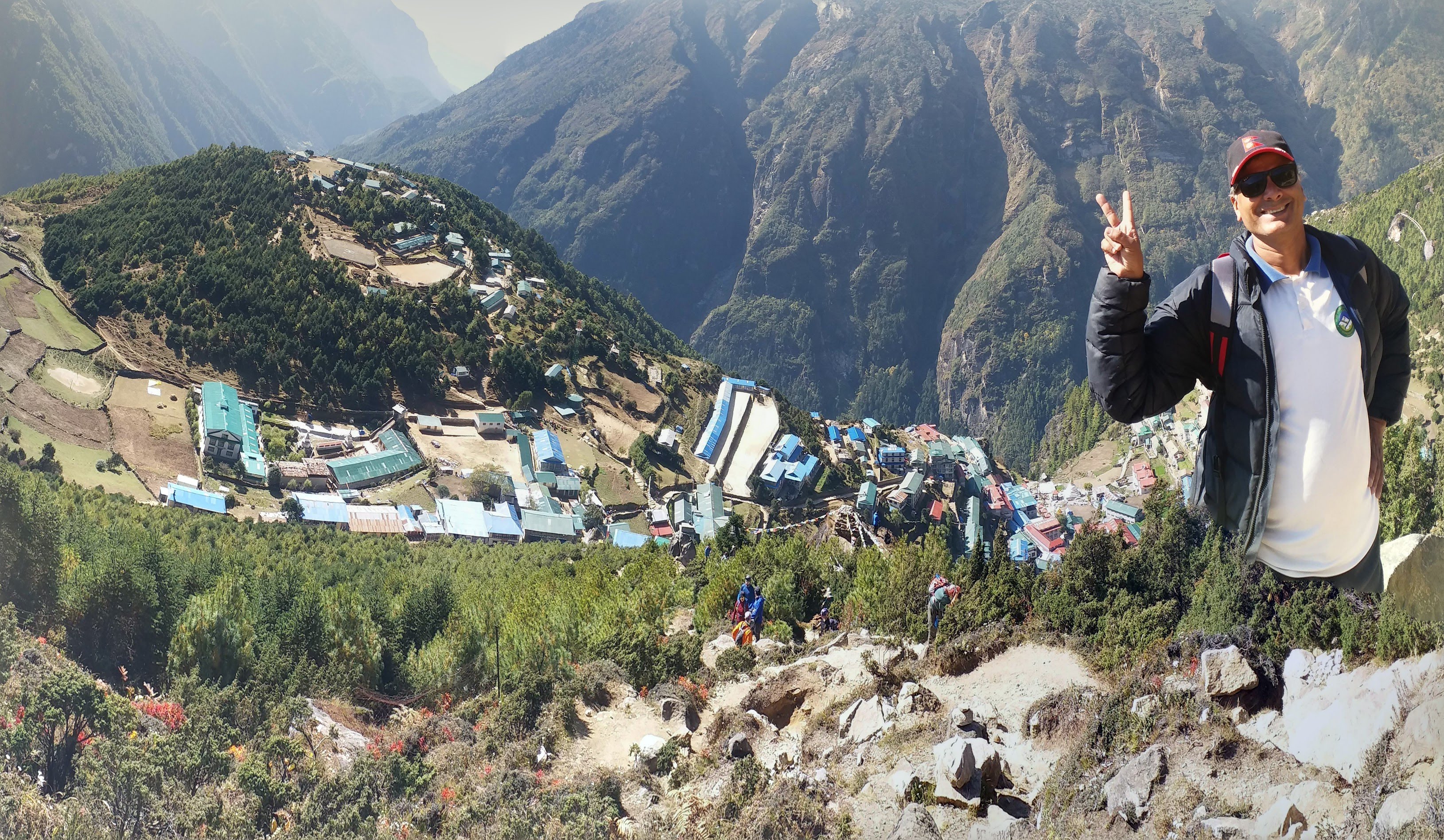
High in the Khumbu region of Nepal, surrounded by some of the world's most spectacular mountains, lies Namche Bazaar, the famous highland Sherpa town and one of the most recognizable settlements in the Everest region. Built on the slopes of a natural mountain amphitheatre, Namche is much more than a stopping point on the way to Everest Base Camp. It is a place where Sherpa heritage, Himalayan trade, mountain tourism and everyday life come together.
At an elevation of around 3,440 metres, Namche offers an extraordinary combination of mountain scenery and human activity. Stone houses, colourful prayer flags, narrow paths, cafés, bakeries, lodges, shops and traditional buildings fill the steep hillside, while the surrounding peaks rise dramatically above the town.
For trekkers arriving from Lukla, Namche often feels like the first major Himalayan settlement of the Everest journey. It is a place to rest, acclimatize, explore the local community and prepare for the higher valleys beyond.
For the Sherpa people, however, Namche is much more than a trekking destination. Its importance comes from a much longer history of trade, settlement, culture and life in the Khumbu Himalayas.
Everest Region Trekking offers an opportunity to explore this remarkable mountain landscape, while Trekking in Nepal provides access to many other extraordinary Himalayan destinations.
The History and Name of Namche Bazaar
Namche developed long before modern trekking tourism transformed the Khumbu. Its location made it a natural meeting and trading place for communities living in the high valleys and for traders travelling across the Himalayan region.
The origin of the name Namche is associated with the natural landscape. According to local tradition, the area was once covered by dense, dark woodland before becoming the settlement seen today. The earlier name Nak-che, also recorded as Nauche, is commonly explained as meaning “big dark forest.”
As the settlement developed and became an important place for trade and exchange, the name gradually evolved into the Namche used today. The addition of “Bazaar” reflects the town's historic role as a market and trading centre.
This history gives Namche an identity that extends far beyond modern tourism. Its development was closely connected with the movement of people and goods through the high Himalayan valleys.
Namche Bazaar as a Himalayan Trading Center
For generations, Namche served as an important trading centre for communities of the Khumbu and traders travelling between the highlands and lower valleys.
Traditional trade routes connected the region with Tibet and other parts of Nepal. Goods such as salt, wool, livestock and other mountain products were exchanged, while agricultural and manufactured products from lower elevations made their way toward the high settlements.
The market helped connect communities that lived across difficult mountain terrain and played an important role in the local economy.
Although modern tourism has transformed the town, this trading character remains visible today. Shops, local businesses, market stalls and services continue to make Namche an important commercial centre for the surrounding communities.
The Saturday Market in Namche
The weekly market is one of the best expressions of Namche's traditional trading character.
People from surrounding villages may come to Namche to buy supplies, sell products, conduct business and meet friends and relatives. The market can become particularly lively when local communities gather.
For visitors, the market provides a glimpse into everyday life in the Khumbu. It also demonstrates that Namche is not simply a place created for trekkers; it remains a living community marketplace serving local people.
Sherpa Heritage and Life in Namche
Namche is deeply connected with Sherpa culture, which has developed over generations in the high valleys of Khumbu.
Sherpa communities have traditionally adapted their lives to challenging mountain environments, developing distinctive forms of architecture, agriculture, pastoralism, trade, religious practice and community life.
Buddhism is an important part of Sherpa cultural identity. Mani stones, prayer wheels, prayer flags, monasteries and other religious features can be found throughout the Khumbu, including around Namche.
The town's houses and surrounding settlements also reflect the ways Himalayan communities have adapted to life at high altitude.
For visitors, spending time in Namche provides an opportunity to experience this living culture rather than simply passing through on a trekking route. Learn more through our Everest Sherpa Culture Guide.
Monasteries, Mani Stones and Prayer Flags
The cultural landscape around Namche contains many visible expressions of Himalayan Buddhist tradition.
Prayer flags move in the mountain wind, mani stones carry sacred inscriptions, and prayer wheels are commonly found along trekking paths. Visitors may also encounter monasteries, chortens and shrines connected with the spiritual life of local communities.
These are not simply decorative features for tourists. They form part of the religious and cultural environment in which local people live.
Travellers should therefore approach these places respectfully, avoid disturbing religious objects and ask before photographing ceremonies or people engaged in worship.
Namche Bazaar and Mount Everest
Namche is closely associated with Mount Everest, although the mountain itself is not visible from every part of the town.
From viewpoints and surrounding trails, trekkers can see some of the great peaks of the Khumbu, including Everest, Lhotse, Nuptse, Ama Dablam, Thamserku and Kongde, depending on the viewpoint and weather.
The mountain scenery is one of the major reasons Namche has become such an important destination for visitors.
Yet the appeal of Namche is not simply the view of Everest. The town provides a place where visitors can slow down and appreciate the wider Himalayan environment before continuing toward the higher valleys.
The Everest View Trek offers one way to experience the spectacular scenery surrounding Namche.
Namche Bazaar as an Acclimatization Stop
Namche is one of the most important acclimatization stops on the Everest trekking route.
After walking from the lower Khumbu toward Namche, trekkers generally spend additional time here before gaining more altitude. An acclimatization day does not necessarily mean staying inside the lodge all day. Short walks around the surrounding hills provide an opportunity to explore while allowing the body more time to adjust to the increasing elevation.
One popular excursion leads toward the Everest View Hotel, where trekkers can enjoy views of Everest and other Himalayan peaks in favourable weather.
Other walks lead toward nearby villages, viewpoints and cultural sites.
Acclimatization should always be approached according to individual health, fitness, weather and trekking conditions. Spending additional time at Namche can be an important part of a responsible approach to travelling into the higher mountains.
The Route from Lukla to Namche Bazaar
For many trekkers, Namche is reached after flying from Kathmandu to Lukla and beginning the trek through the lower Khumbu.
The route passes through mountain villages, forests, suspension bridges and river valleys before reaching the higher landscape around Namche.
The journey itself is an important part of the experience. As trekkers gain altitude, the vegetation and landscape gradually change, and the mountains become increasingly dominant.
The final approach to Namche involves a substantial uphill climb, making arrival in the town especially memorable.
For many visitors, Namche is the point where the Everest trekking experience begins to feel distinctly Himalayan.
Our Sagarmatha National Park Guide and Everest Base Camp Trek Guide provide further information about travelling through this remarkable region.
What to See and Do in Namche Bazaar
Namche offers much more than accommodation and acclimatization. Trekkers and visitors can explore the town, learn about the region's natural and cultural heritage, enjoy panoramic mountain views and take day excursions into the surrounding valleys.
Explore the Namche Market
Walking through the market is one of the simplest ways to experience the character of the town. Shops, cafés, bakeries, trekking stores and local businesses create a lively atmosphere throughout the main trekking seasons.
Visit the Sherpa Culture Museum
The Sherpa Culture Museum provides an opportunity to learn about the history, traditions, lifestyle and mountaineering heritage of the Sherpa people and the Khumbu region.
The museum also helps visitors understand how Sherpa communities have adapted to life in the high Himalayas.
Visit the National Park Visitor Centre
The Sagarmatha National Park Visitor Centre in Namche offers an interesting introduction to the natural and cultural heritage of the Everest region. Visitors can learn about the Himalayan environment, local wildlife, flora and fauna, conservation, Sherpa communities, and the importance of protecting the unique mountain landscape.
The centre also features photographs and displays related to Mount Everest, mountaineering and Himalayan expeditions, helping visitors understand the history of exploration and climbing in the region. From the centre, visitors can also enjoy some of the finest panoramic mountain views around Namche, with magnificent peaks forming a dramatic backdrop to the town.
A visit to the centre is therefore a good way to combine nature, conservation, Sherpa heritage, mountaineering history and spectacular Himalayan scenery in one place.
Walk to the Everest View Hotel
The walk toward the Everest View Hotel is a popular acclimatization excursion and can provide magnificent views of Everest, Ama Dablam and surrounding peaks when the weather is clear.
It is also an excellent way to experience the mountain landscape above Namche without undertaking a long trekking day.
Day Excursion to Khumjung and Khunde
The villages of Khumjung and Khunde can be visited on a day excursion from Namche. The trails pass through beautiful mountain landscapes and provide an opportunity to experience traditional Sherpa settlements away from the main market.
The journey can also be combined with the Everest View Hotel area, creating a rewarding acclimatization and cultural excursion.
Enjoy Local Cafés and Bakeries
Namche has developed a distinctive café and bakery culture. After days of walking through the mountains, enjoying tea, coffee, fresh bakery products or a warm meal can become an enjoyable part of the trekking experience.
Flora and Fauna Around Namche
Namche lies within the wider Sagarmatha National Park, a protected Himalayan landscape known for its remarkable biodiversity.
The vegetation changes with elevation, ranging from forests at lower elevations to alpine landscapes and sparse high-mountain vegetation.
The wider region provides habitat for wildlife adapted to the Himalayan environment, including species such as the Himalayan tahr, musk deer, Himalayan monal and red panda, although wildlife sightings are never guaranteed.
The national park's natural environment is closely connected with the lives and traditions of local communities. Conservation therefore protects not only scenery and wildlife but also the wider mountain landscape in which people live and work.
Namche Bazaar and the Growth of Tourism
The transformation of Namche is closely connected with the development of trekking and mountaineering in the Everest region.
As increasing numbers of mountaineers and trekkers began travelling through Khumbu, local families opened lodges, restaurants, shops and other services.
Tourism created new economic opportunities while also changing the physical and social character of the town.
Today, Namche provides many services that would have been difficult to imagine during the period when traditional trade dominated the local economy. Internet access, modern communications, trekking equipment, cafés, bakeries and accommodation have become part of everyday life.
At the same time, Namche continues to serve the wider network of villages and communities that make up the Khumbu region.
The People Who Make Namche Come Alive
One of the most memorable aspects of Namche is its people.
Sherpa families, traders, lodge owners, porters, guides, cooks, shopkeepers and mountain workers all contribute to the life of the town.
During the main trekking seasons, visitors from around the world join this local community temporarily, creating an unusually international atmosphere in a remote Himalayan setting.
Despite this modern international character, Namche remains rooted in its local community and Himalayan traditions.
Mountains Around Namche Bazaar
The landscape surrounding Namche is extraordinary.
The Kongde Range rises prominently to the west, while peaks such as Thamserku and Kusum Kanguru dominate parts of the surrounding skyline. From suitable viewpoints, the higher Everest massif and neighbouring peaks appear beyond the valleys.
Ama Dablam, with its distinctive double summit, is another particularly memorable mountain seen during the journey through Khumbu.
The changing light across these mountains is one reason visitors often remember Namche long after their trek has ended.
Morning, afternoon and evening can produce completely different views as clouds move through the valleys and sunlight reaches the peaks.
Namche Bazaar Through the Seasons
Spring
Spring brings relatively favourable trekking conditions and colourful mountain landscapes. Rhododendrons bloom at lower elevations, while the higher mountains remain covered with snow.
Autumn
Autumn is one of the most popular periods for trekking in the Everest region. Clearer mountain views and generally favourable trekking conditions make Namche especially lively.
Winter
Winter brings cold temperatures and quieter trails. Snow and freezing conditions can affect higher routes, although Namche itself can remain an interesting destination for experienced winter travellers.
Summer and Monsoon
The monsoon season brings cloud, rain and reduced mountain visibility. Trails can become wet and conditions can change quickly, although the landscape becomes greener at lower elevations.
Responsible Travel in Namche Bazaar
Namche is a high-altitude community in a fragile mountain environment. Responsible tourism is therefore important.
Visitors can help by reducing plastic and other waste, carrying reusable water bottles, using waste facilities properly and avoiding unnecessary damage to the natural environment.
Supporting local businesses, staying in locally operated accommodation and using local guides and services can also help tourism contribute to the communities of Khumbu.
Cultural respect is equally important. Sacred places, religious objects, local customs and private homes should be treated with care.
The goal should be to experience Namche while helping preserve the environment, culture and character of the town for future generations.
Namche Bazaar: More Than a Stop on the Everest Trek
Namche Bazaar is often described as an acclimatization stop on the way to Everest Base Camp, but that description does not fully capture its character.
It is a historic market, Sherpa settlement, mountain town, tourism centre and important meeting place in the Khumbu.
Its story reaches back to traditional Himalayan trade and continues through the development of mountaineering and tourism. Its streets bring together local residents and travellers from around the world, while its surrounding mountains provide an unforgettable Himalayan setting.
For trekkers, Namche may be an important stop on the journey toward Everest. For visitors who take the time to explore it, however, the town offers something much richer: an opportunity to experience the people, history, culture, trade, nature and mountain life of the Khumbu Himalayas.
Frequently Asked Questions
What is Namche Bazaar famous for?
Namche Bazaar is famous as a historic Himalayan market town, Sherpa settlement and important acclimatization stop on the Everest trekking route.
How high is Namche Bazaar?
Namche Bazaar is situated at approximately 3,440 metres (11,286 feet) above sea level.
Is Namche Bazaar a Sherpa town?
Yes. Namche is a major settlement of the Sherpa community and an important cultural and economic centre of the Khumbu region.
Why do trekkers stay in Namche Bazaar?
Trekkers commonly spend additional time in Namche to acclimatize to increasing altitude before continuing toward the higher parts of the Everest region.
Can you see Mount Everest from Namche Bazaar?
Yes. Mount Everest can be seen from viewpoints around Namche, particularly during walks toward higher viewpoints such as the Everest View Hotel, although visibility depends on weather and the exact location.
What can visitors do in Namche Bazaar?
Visitors can explore the market, Sherpa cultural sites, National Park Visitor Centre, mountaineering displays, surrounding trails, viewpoints, cafés and local shops. Day excursions to places such as Khumjung, Khunde, the Everest View Hotel and Thame can also be arranged depending on time and trekking conditions.
Explore Namche Bazaar with Mountain King Treks
Namche Bazaar is an essential part of many journeys through the Everest region. Whether you are travelling toward Everest Base Camp, exploring the Khumbu, or looking for a deeper cultural and mountain experience, spending time in Namche allows you to experience the region beyond its famous peaks.
Mountain King Treks can arrange private and customized trekking programs in the Everest region, according to your available time, interests and trekking experience.
Explore the Everest Base Camp Trek and discover the landscapes, villages and mountain communities that make the Khumbu one of Nepal's most remarkable trekking destinations.
Planning & Preparation
A journey to Namche and the higher Everest region requires thoughtful planning, particularly because of altitude and changing mountain conditions.
Our Nepal Trip Planning Guide provides useful information for organizing your journey, while the Nepal Trip Preparation Guide covers equipment, insurance, fitness and other practical preparations.
For broader information about travelling in Nepal, see the Nepal Travel Information Guide.
Contact Us
Mountain King Treks & Expedition Pvt. Ltd.
WhatsApp / Call: +977-9841566449
Email: info@mountainkingtrek.com
If you would like to explore Namche Bazaar and the Everest region, contact Mountain King Treks to discuss your preferred itinerary and travel interests.
Plan a Trip
Share your preferred dates, interests and travel style, and we can help arrange a Himalayan experience that fits your plans.