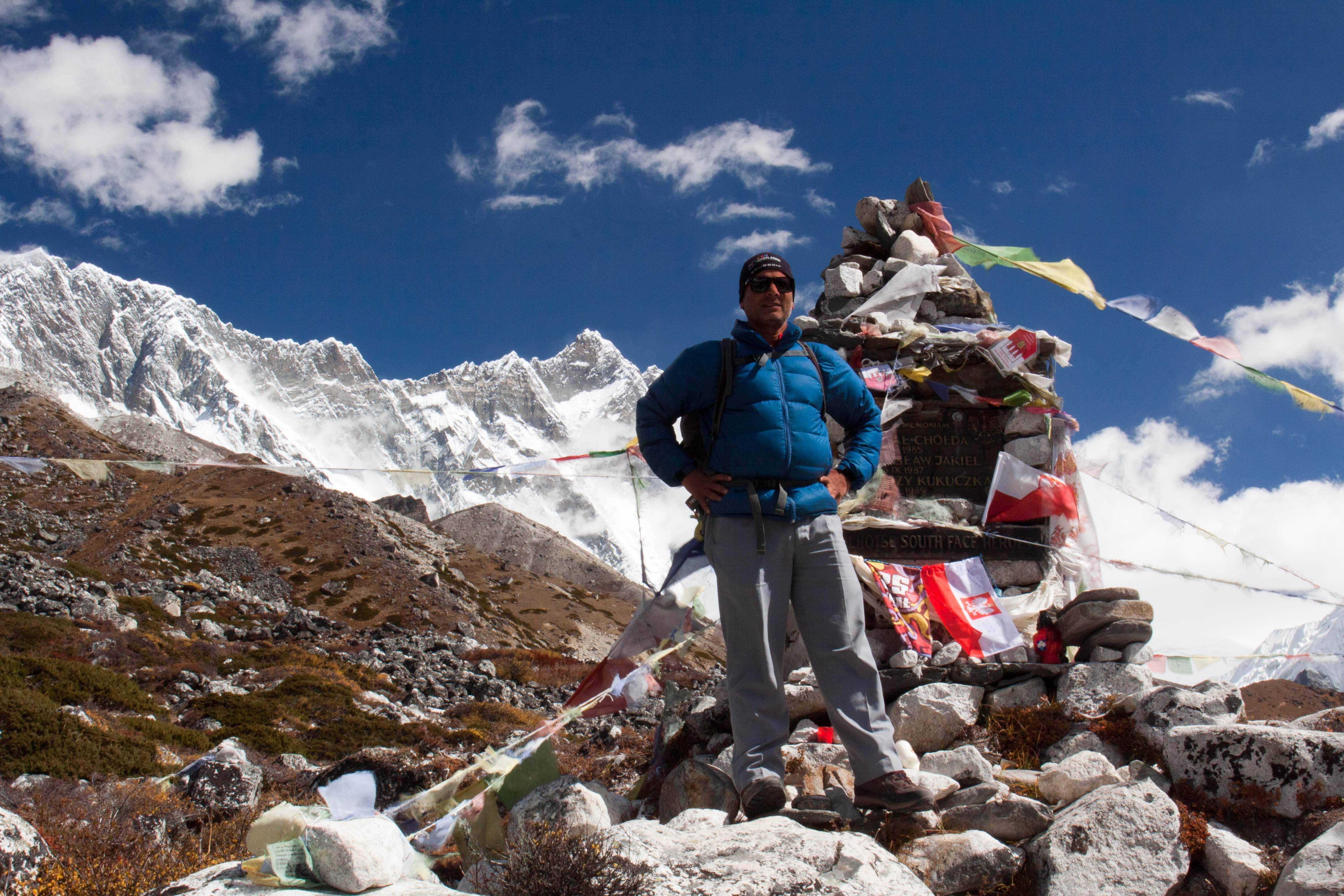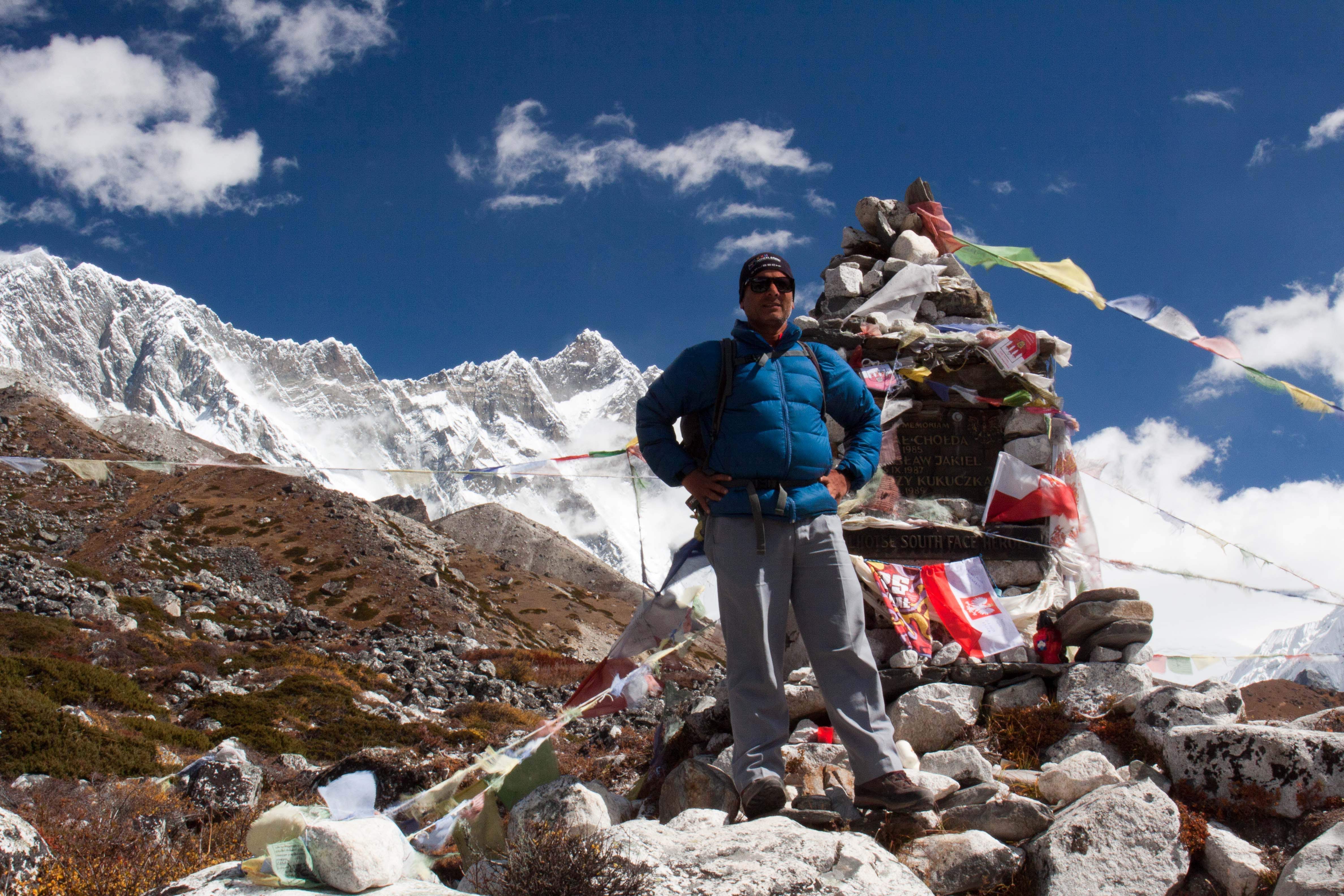
Govinda Prasad Sapkota – Founder of Mountain King Treks
Meet Govinda Prasad Sapkota, founder of Mountain King Treks, with more than 35 years of experience guiding travelers through Nepal and the wider Himalayas.
A Lifetime Dedicated to the Himalayas
Govinda Prasad Sapkota is the founder of Mountain King Treks & Expedition and a veteran Himalayan trekking professional with more than 35 years of experience in Nepal's adventure tourism industry.
His journey began long before modern tea houses, internet communication, GPS devices, and today's trekking infrastructure transformed the Himalayan trails. Starting as a porter, he gradually progressed through different roles in the trekking profession, gaining firsthand experience in expedition logistics, camping operations, guest care, mountain safety, and guiding.
Today, after decades of guiding travelers across Nepal and the wider Himalayas, Govinda continues to share his knowledge, experience, and passion for mountain travel with guests from around the world.
From Porter to Professional Guide
Like many Himalayan mountain professionals of his generation, Govinda began his career as a porter on the Everest Base Camp Trek. Trekking in Nepal was very different at that time. Most journeys were organized as fully supported camping expeditions, requiring large teams, extensive supplies, and careful logistical planning.
Even a small group could travel with guides, Sherpas, cooks, kitchen staff, and porters carrying food, tents, cooking equipment, fuel, and other essential supplies. Every day depended on teamwork, discipline, and careful preparation.
Through years of hard work and field experience, Govinda progressed from porter to assistant guide and later to professional trekking guide and expedition leader. He also worked closely with camping and kitchen teams, gaining practical knowledge of campsite management, logistics, porter coordination, guest care, and mountain safety.
This experience gave him a thorough understanding of what it takes to organize and lead Himalayan journeys from the ground up.
The Golden Age of Camping Treks
During the early years of Nepal's trekking industry, most journeys were organized as camping expeditions. Support teams would move ahead of the guests to establish camps and prepare everything needed for the next stage of the journey.
Porters carried tents and supplies, while kitchen teams prepared meals and hot drinks. At lunch stops and campsites, guests were welcomed with tea, coffee, fruit drinks, and freshly prepared meals. Evenings often brought hot soup, snacks, multi-course dinners, desserts, and opportunities to enjoy local culture around the camp.
Mornings began with bed tea delivered to the tents, followed by warm washing water, breakfast, and preparations for another day on the trail.
Working in these demanding environments taught Govinda lessons that have remained central to his professional life: hospitality, organization, teamwork, responsibility, and attention to detail.
Professional Guide Training and Certification
After several years of practical experience in the mountains, Govinda received recommendations from trekking companies to apply for professional guide training through the Hotel Management and Tourism Training Centre (HMTC).
At the time, professional guide training was highly competitive, with only a limited number of candidates selected each season. Applicants faced interviews, examinations, and selection based on their experience and suitability for the profession.
Successfully completing the training became an important milestone in Govinda's career and provided a professional foundation for his continuing work throughout Nepal's trekking industry.
Exploring Every Corner of Nepal
Over the decades, Govinda has guided travelers through many of Nepal's major trekking regions, including Everest, Annapurna, Langtang, Manaslu, Mustang, Dolpo, Kanchenjunga, Makalu, Dhaulagiri, Rolwaling, the Far West, and numerous remote mountain areas connected with the Great Himalayan Trail.
From established trekking routes to remote valleys and less-traveled mountain landscapes, his years in the field have brought him close to diverse communities, cultures, and environments across Nepal.
This broad experience helps him understand the practical realities of Himalayan travel and design journeys that combine careful planning, local knowledge, cultural understanding, and adventure.
Beyond Nepal: Tibet, Bhutan, India, and Sikkim
Govinda's mountain experience extends beyond Nepal's borders. He has led journeys in Tibet, including more than forty pilgrimages and trekking journeys around Mount Kailash and Lake Manasarovar.
His experience also includes Bhutan, Sikkim, Darjeeling, Ladakh, Uttarakhand, and other Himalayan destinations.
Traveling across these regions has deepened his understanding of the Himalayan cultural landscape and strengthened his ability to organize journeys that cross different environments, communities, and travel systems.
Founding Mountain King Treks & Expedition
After decades of working throughout the Himalayas, Govinda founded Mountain King Treks & Expedition in 2017 with a clear purpose: to create professionally organized journeys rooted in local knowledge, personal service, responsible tourism, and respect for the mountains and their communities.
The company grew from the values he developed throughout his career — honesty, responsibility, personal service, local knowledge, and respect for guests and mountain communities.
Today, Mountain King Treks & Expedition continues to follow these principles through carefully designed trekking, tours, climbing, cultural, wildlife, pilgrimage, and expedition journeys in Nepal and the wider Himalayas.
A Legendary Dolpo Expedition — The Spirit of the Himalayas
One of the most memorable and demanding journeys of Govinda Prasad Sapkota's career was a 45-day expedition through the remote Dolpo region in 1995, when he served as the lead guide, or Sardar, for a Swiss trekking group.
The expedition consisted of two Swiss couples, one cook, Govinda as Sardar and lead guide, one kitchen boy, one Sherpa, one additional support staff member, and nine porters. In those days, such a journey required a large, self-sufficient team because there were no mobile phones, internet connections, modern communication systems, or reliable rescue services in the remote mountains.
The expedition began in Pokhara and followed a long and challenging route through Babiyachaur, Dharapani, Lumsang, Jaljala, Gurjaghat, and Dhorpatan, gradually entering the remote wilderness of western Nepal.
The Great Snowstorm
After continuing toward Jangla Base Camp, the weather began to change dramatically. Heavy snowfall started, and the team decided to remain at the camp for a day, waiting for conditions to improve.
But the snowfall continued.
At that time, there were already reports of severe winter conditions in different parts of Nepal. The country was experiencing an exceptional period of heavy snowfall and disruption. Around the same period, a Japanese trekking group on the Annapurna Circuit was caught in an avalanche, while Bagarchhap village suffered devastating destruction as heavy snow and an avalanche affected lodges and teahouses. The severe weather affected mountain areas across Nepal.
At Jangla Base Camp, however, Govinda and his team faced a difficult decision. They could not remain there indefinitely. The journey had to continue.
When other groups stopped their progress, Govinda decided that his team would continue toward the pass when conditions allowed. He took the lead and began breaking the trail through the deep snow.
The snow was extremely deep in places — more than three feet — and every step became exhausting. Govinda had to repeatedly push through the snow and open a path for the team behind him.
It was physically exhausting, but the team continued.
Eventually, they reached and crossed the pass.
A Night Without Shelter
The real danger came after the pass.
As they descended, the team searched for a suitable place to establish camp, but the entire landscape was covered in snow. There was nowhere suitable to pitch their tents.
It was getting dark.
The team could not safely continue in the worsening conditions. They needed shelter immediately.
Finally, they discovered a small yak herder's hut.
The hut was almost buried in snow. Its roof was made from tree branches, but the leaves had fallen away, leaving gaps through which snow was already coming inside. It was far from a comfortable shelter, but in the darkness and worsening weather, they had no other choice.
The team quickly began turning the little hut into a place where everyone could survive the night.
They spread a tarpaulin beneath the roof to protect the group from falling snow. Another large tarpaulin was secured higher up inside the hut, using the surrounding snow and structure to create additional protection from the storm.
The cook immediately began preparing hot soup and drinks.
There was no proper campsite, no comfortable sleeping arrangement, and no way to call for help. But the team worked together.
They spent the night inside the small yak hut, surrounded by snow.
Coffee was prepared and shared through the night to keep everyone warm and alert. The team remained together, protecting the shelter and watching the conditions outside.
It was a long and difficult night, but everyone survived safely.
No Telephone, No News, No Rescue Call
The following day, the snowfall finally stopped enough for the team to continue.
They descended toward Dunai, where they were able to find rooms and a kitchen. After the long ordeal, they rested for a day, dried their clothes and equipment, and recovered their strength.
But there was something the team did not know.
Back in Kathmandu, their families and colleagues had no idea whether they were alive.
There were no mobile phones. There was no internet. There was no satellite communication available to trekking teams in the way it is today.
Only a few government offices and Nepal Army facilities had access to satellite communication.
The team itself did not know how severely other parts of Nepal had been affected by the storm. They knew they were safe and had no immediate need to contact Kathmandu, so they continued their journey.
Meanwhile, their families and colleagues were waiting for news that never came.
As the days passed, their silence became increasingly frightening. The expedition had disappeared into one of the most remote parts of Nepal during an exceptional period of snowfall, with no means of communication.
Unknown to Govinda and the team, there had even been concern that they might have been lost or killed in the mountains. There were discussions about the possibility of a helicopter rescue, but at that time helicopters were already heavily occupied with rescue operations elsewhere.
The team, however, knew only one thing:
They were together, they were alive, and they had to keep moving.
Frozen Water and the Long Journey Through Dolpo
After leaving Dunai, the expedition continued deeper into the remote Himalayan landscape.
They travelled toward Dho Tarap, then onward through the high mountain country toward Luma La and Baga La.
At the high camps, the cold was severe. Water sources were completely frozen. The team had to melt ice and snow to obtain water for cooking and drinking.
The expedition continued through difficult terrain and high passes, with the team relying on its own supplies, experience, and cooperation.
They rested for a day at Dho Tarap, allowing everyone to recover before continuing.
The journey then reached Ringmo and Shey Phoksundo Lake, one of the great natural landmarks of Dolpo. After another rest day, the team continued onward through the remote mountain landscape.
From there, the expedition crossed another major high pass, Kagmara La, before eventually making its way toward Jumla.
Forty-Five Days Without Contact
For approximately 45 days, the expedition remained largely cut off from the outside world.
Govinda did not contact his family from the mountains.
The team did not contact the office.
Even after reaching Jumla, they did not immediately make a call because they were all safe and did not realize how much anxiety their disappearance had caused back home.
The team then flew from Jumla to Surkhet and continued the journey by road toward Kathmandu.
They travelled through the night by bus and finally reached Kathmandu the following morning.
The Return No One Expected
When Govinda finally arrived home, the reaction was unforgettable.
His family, relatives, friends, and colleagues had been living with uncertainty for weeks. They had received no reliable news from the expedition and had feared the worst.
Then, suddenly, Govinda walked through the door alive and well.
The people who had been expecting tragic news could hardly believe what they were seeing.
After weeks of silence, the expedition team had simply returned.
For Govinda, this was more than the successful completion of a trekking expedition. It became one of the defining experiences of his life in the Himalayas — a journey that tested leadership, endurance, judgment, teamwork, and the ability to remain calm when conditions became dangerous.
The mountains had provided no easy answers. There was no telephone to call for help, no internet to check the weather, and no helicopter waiting nearby.
There was only the team, their experience, their equipment, their determination, and the shelter they could create with their own hands.
They entered the storm together, survived it together, and eventually walked out of the Himalayas together.
For Govinda, the 1995 Dolpo expedition remains a powerful reminder that Himalayan travel is not only about reaching a destination. It is about leadership when conditions are uncertain, responsibility for the people travelling with you, courage in difficult moments, and the strength of a team working together when there is nowhere else to turn.
Philosophy of Guiding
For Govinda, trekking in Nepal is not simply about reaching a destination. It is about human connection, cultural understanding, safety, and respect for nature.
His guiding philosophy is built around four principles:
- Safety first in every journey and condition
- Respect for local communities, cultures, and traditions
- Honest and responsible leadership
- Meaningful travel experiences, rather than simply organized tours
He believes that travelers should experience the Himalayas in a way that is safe, respectful, authentic, and memorable.
Vision for Nepal Adventure Tourism
As the founder of Mountain King Treks & Expedition and a lifelong mountain guide, Govinda Prasad Sapkota believes Nepal's greatest strengths lie in its mountains, diverse cultures, and welcoming communities.
His vision is to promote responsible adventure tourism while helping preserve Nepal's cultural heritage and natural environment.
He believes tourism should benefit local communities, respect fragile mountain ecosystems, and create sustainable opportunities for future generations.
Mountain King Treks & Expedition continues to carry this vision through carefully designed trekking, climbing, cultural, pilgrimage, and expedition journeys across Nepal and the greater Himalayas.
Personal Message from Govinda Prasad Sapkota
“I have spent more than 35 years in the Himalayas, beginning my journey as a porter and later working as an assistant guide, cook, trekking guide, and expedition leader. The mountains have taught me patience, discipline, humility, and respect for nature.
Today, through Mountain King Treks & Expedition, I am proud to share these experiences with travelers from around the world. I believe a journey should be more than reaching a destination. It should be an opportunity to experience the mountains, understand local cultures, meet the people who call these places home, and create memories that stay with you for a lifetime.
I warmly welcome you to Nepal and invite you to travel with us on a journey that goes beyond trekking — a journey that becomes part of your story.”
Travel with Mountain King Treks & Expedition
Whether you are trekking to Everest Base Camp, exploring the hidden valleys of Dolpo, experiencing the culture of Bhutan, or discovering the remote landscapes of Tibet, Mountain King Treks & Expedition is committed to providing safe, authentic, and thoughtfully organized Himalayan journeys.
We value professionalism, respect, local knowledge, and responsible tourism in every journey we operate, creating meaningful experiences for our guests while respecting the communities and environments that make these destinations special.
Plan Your Himalayan Adventure in Nepal & Beyond
A Himalayan journey can be arranged around your travel dates, available time, preferred destinations, interests, and travel style. Our Nepal Travel Planning Guide offers broader guidance for organizing your journey, while the Nepal Travel Information Guide provides practical information about traveling in Nepal. The Nepal Trip Preparation Guide covers important preparations such as packing, clothing, travel documents, fitness, and other essentials.
Contact Us
Mountain King Treks & Expedition Pvt. Ltd.
WhatsApp / Call: +977-9841566449
Email: info@mountainkingtrek.com
Contact us to discuss your preferred destination, travel dates, interests, and the type of Himalayan journey you have in mind.
Plan a Trip
Share your travel dates, available time, preferred destinations, and interests, and we will help you plan a Himalayan journey suited to your travel style and experience.
Through the lens.