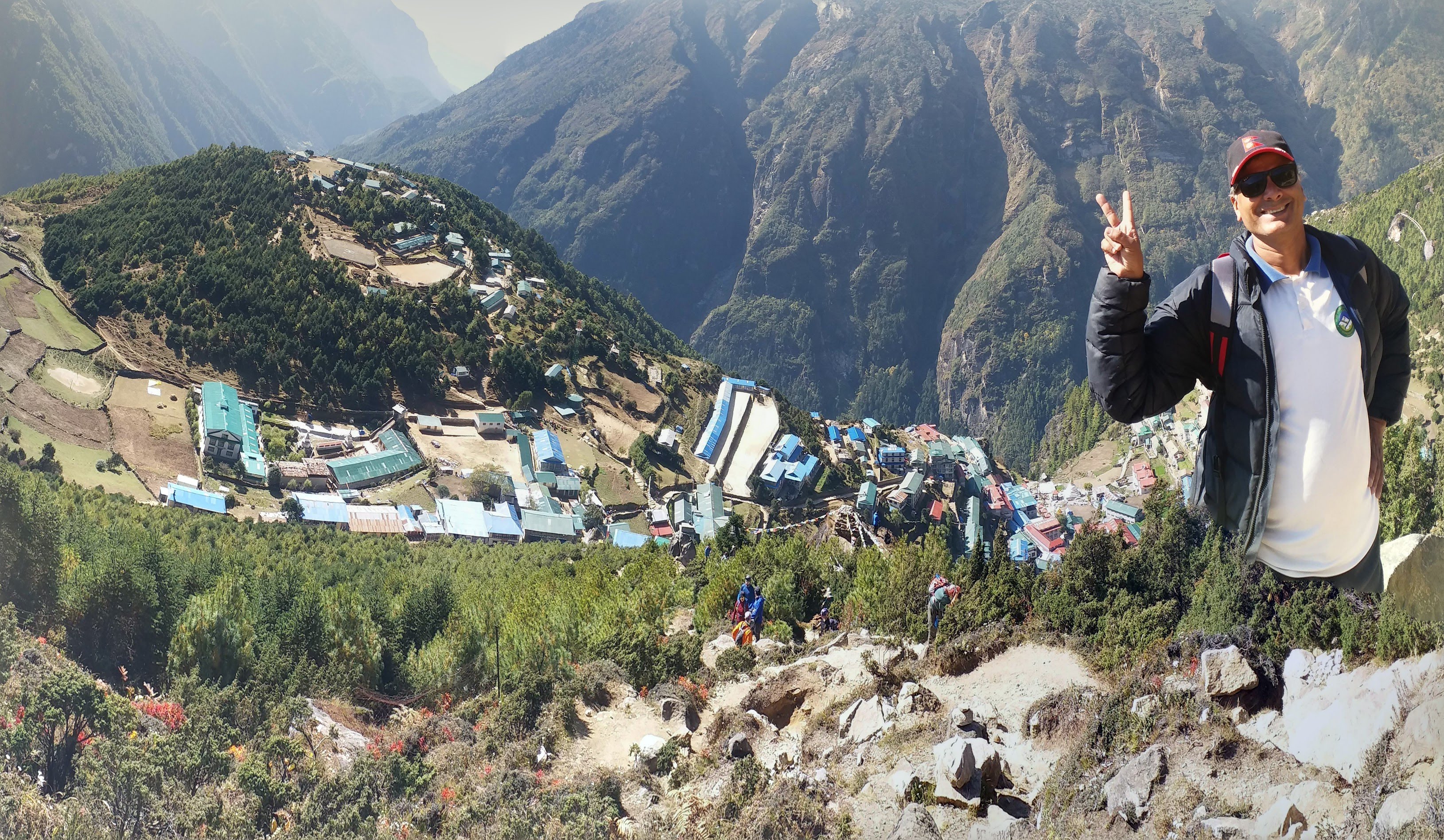
About The World 14 Highest Mountains
The 14 highest mountains in the world are the classic eight-thousanders, the legendary peaks that rise above 8,000 meters across the Himalaya and Karakoram. These mountains are among the world's most remarkable natural landmarks, known for their extraordinary elevations, dramatic landscapes and long history of exploration and mountaineering. The UIAA recognizes these 14 peaks as the classic group of eight-thousanders.
Nepal is home to eight of these 14 highest mountains, giving the country a special place in Himalayan trekking and mountaineering. They include Mount Everest, Kangchenjunga, Lhotse, Makalu, Cho Oyu, Dhaulagiri, Manaslu and Annapurna I. These mountains are located within Nepal or along its northern border with China.
The remaining six eight-thousanders are located in the Karakoram and western Himalaya of Pakistan, along the Pakistan–China border, and in Tibet, China. Together, these 14 peaks form the world's classic collection of mountains rising above 8,000 meters.
For trekkers and travelers, Nepal's eight-thousanders are more than magnificent peaks to admire from a distance. Their surrounding regions offer some of the world's most memorable trekking experiences, including Everest Base Camp, Annapurna, Manaslu, Kanchenjunga, Makalu and Dhaulagiri. Along these routes, travelers can experience high Himalayan landscapes, traditional mountain communities, monasteries, valleys and diverse natural environments.
For mountaineers, the eight-thousanders represent major high-altitude climbing objectives. Nepal also offers numerous other Himalayan peaks for climbing and expeditions, making the country an important destination for both trekking and mountaineering.
In this guide, Mountain King Treks introduces the 14 highest mountains in the world, including their elevations, locations, mountain ranges and climbing history, while giving special attention to Nepal's remarkable share of the world's highest peaks. To discover more about Nepal's mountain regions, trekking routes and climbing opportunities, explore our Himalayan Destinations, Trekking in Nepal and Climbing in Nepal.
List of the 14 Highest Mountains in the World
The 14 classic eight-thousanders are located across Nepal, Tibet/China, Pakistan and the Pakistan–China border region. Eight of these mountains are in Nepal or along Nepal's northern border, making Nepal one of the world's most important destinations for Himalayan trekking and mountaineering.
1. Mount Everest – 8,848.86 m
Mount Everest, known as Sagarmatha in Nepal and Chomolungma in Tibet, is the highest mountain in the world at 8,848.86 meters (29,031.7 feet). It stands in the Mahalangur Himal on the Nepal–China border.
Everest has become an enduring symbol of Himalayan exploration and mountaineering. The first confirmed successful ascent was made in 1953 by Edmund Hillary and Tenzing Norgay.
For trekkers, reaching Everest Base Camp provides an opportunity to experience the mountain and the surrounding Khumbu landscape without attempting to climb the summit. The journey passes through famous Sherpa settlements, Buddhist monasteries, high valleys and spectacular mountain scenery. Nepal Tourism Board also highlights Everest Base Camp trekking as one of the region's major experiences.
Elevation: 8,848.86 m / 29,031.7 ft
Location: Nepal–China border
Mountain range: Himalaya
First ascent: 1953
2. K2 – 8,611 m
K2 is the second-highest mountain in the world, rising to 8,611 meters (28,251 feet). It is located in the Karakoram range on the Pakistan–China border.
Known for its steep terrain, complex climbing routes and severe high-altitude environment, K2 has a distinguished place in the history of Himalayan and Karakoram mountaineering.
Unlike Everest, K2 is not a major trekking destination for general travelers. Its remote location and demanding climbing environment make it primarily a destination for experienced mountaineers and expedition teams.
Elevation: 8,611 m / 28,251 ft
Location: Pakistan–China border
Mountain range: Karakoram
First ascent: 1954
3. Kangchenjunga – 8,586 m
Kangchenjunga is the third-highest mountain in the world at 8,586 meters (28,169 feet). It lies along the Nepal–India border and is one of the most significant mountains in the eastern Himalaya.
The name Kangchenjunga is traditionally associated with the meaning “Five Treasures of the Great Snow,” reflecting its five prominent summits. The mountain has deep cultural and spiritual significance for communities in the surrounding region.
The Nepal side of Kangchenjunga is particularly well known for remote trekking routes, dramatic mountain landscapes and diverse Himalayan cultures. The Kangchenjunga Circuit Trek provides an opportunity to explore this less-developed and spectacular part of eastern Nepal.
Elevation: 8,586 m / 28,169 ft
Location: Nepal–India border
Mountain range: Himalaya
First ascent: 1955
4. Lhotse – 8,516 m
Lhotse is the fourth-highest mountain in the world, rising to 8,516 meters (27,940 feet). It is directly connected to Mount Everest through the South Col and forms an important part of the Everest mountain landscape.
Lhotse's main summit is accompanied by Lhotse Middle and Lhotse Shar. Its position beside Everest makes the mountain particularly significant in Himalayan mountaineering.
Trekkers approaching Everest Base Camp can enjoy impressive views of Lhotse throughout the Khumbu journey, particularly around the upper valleys and viewpoints near Everest Base Camp.
Elevation: 8,516 m / 27,940 ft
Location: Nepal–China border
Mountain range: Himalaya
First ascent: 1956
5. Makalu – 8,485 m
Makalu is the fifth-highest mountain in the world, rising to 8,485 meters (27,838 feet). It lies southeast of Everest in the Makalu region of eastern Nepal, close to the Nepal–China border.
The mountain is famous for its distinctive pyramid shape and steep ridges. Makalu is part of the Makalu-Barun National Park and Conservation Area, an exceptionally diverse region extending from lower Himalayan forests to high alpine landscapes.
The Makalu Base Camp Trek provides an opportunity to explore one of Nepal's more remote mountain regions, with dramatic views of Makalu and surrounding Himalayan peaks.
Elevation: 8,485 m / 27,838 ft
Location: Nepal–China border
Mountain range: Himalaya
First ascent: 1955
6. Cho Oyu – 8,188 m
Cho Oyu is the sixth-highest mountain in the world at 8,188 meters (26,864 feet). It lies on the Nepal–China border west of Everest.
The mountain forms part of the Mahalangur Himal and is closely associated with the Everest region. Its enormous northwestern Himalayan landscape extends toward the Tibetan Plateau.
Cho Oyu can be viewed from trekking areas in the Everest and Gokyo regions, making it an important part of the broader Himalayan experience even for travelers who are not attempting an expedition.
Elevation: 8,188 m / 26,864 ft
Location: Nepal–China border
Mountain range: Himalaya
First ascent: 1954
7. Dhaulagiri I – 8,167 m
Dhaulagiri I rises to 8,167 meters (26,795 feet), making it the seventh-highest mountain in the world.
The mountain lies in north-central Nepal and forms the centerpiece of the spectacular Dhaulagiri massif. Its name comes from Sanskrit, generally understood as “White Mountain.”
The surrounding Dhaulagiri region offers demanding trekking routes through remote valleys, high mountain passes and traditional Himalayan settlements. The Dhaulagiri Circuit Trek is particularly suited to experienced trekkers seeking a more remote Himalayan journey.
Elevation: 8,167 m / 26,795 ft
Location: Nepal
Mountain range: Himalaya
First ascent: 1960
8. Manaslu – 8,163 m
Manaslu is the eighth-highest mountain in the world at 8,163 meters (26,781 feet). Located in northern Nepal, the mountain rises dramatically above the Budhi Gandaki valley.
The name Manaslu is associated with the Sanskrit word Manasa, commonly interpreted as “Mountain of the Spirit.” The region is known for its spectacular mountain scenery, diverse landscapes and rich cultural heritage. Nepal Tourism Board identifies Manaslu as the eighth-highest mountain in the world and highlights the famous trekking route around the Manaslu massif.
The Manaslu Circuit Trek follows the historic Budhi Gandaki valley, crossing the Larkya La and connecting subtropical foothills with high alpine landscapes.
Elevation: 8,163 m / 26,781 ft
Location: Nepal
Mountain range: Himalaya
First ascent: 1956
9. Nanga Parbat – 8,126 m
Nanga Parbat is the ninth-highest mountain in the world at 8,126 meters (26,660 feet). It stands in the western Himalaya of Pakistan.
Its enormous mountain walls and dramatic relief have made Nanga Parbat an important chapter in the history of Himalayan mountaineering. The mountain rises prominently above the surrounding valleys and is sometimes associated with the name “Killer Mountain” in mountaineering literature.
Today, Nanga Parbat remains an important climbing destination in Pakistan's northern mountain region.
Elevation: 8,126 m / 26,660 ft
Location: Pakistan
Mountain range: Himalaya
First ascent: 1953
10. Annapurna I – 8,091 m
Annapurna I rises to 8,091 meters (26,545 feet), making it the tenth-highest mountain in the world.
Located in north-central Nepal, Annapurna is one of the country's most famous mountain massifs. The surrounding region is also home to some of Nepal's most popular trekking routes.
The Annapurna Circuit Trek and Annapurna Base Camp Trek offer different ways to experience the landscapes surrounding the massif, from subtropical valleys and terraced hillsides to high mountain passes and alpine terrain.
Annapurna I also holds an important place in climbing history as the first of the 14 classic eight-thousanders to be successfully climbed, in 1950.
Elevation: 8,091 m / 26,545 ft
Location: Nepal
Mountain range: Himalaya
First ascent: 1950
11. Gasherbrum I – 8,080 m
Gasherbrum I, also known as Hidden Peak, rises to 8,080 meters (26,509 feet) in the Karakoram.
The mountain forms part of the Gasherbrum massif in the remote northern areas of Pakistan. Its isolated location, glaciers and challenging climbing terrain make it a significant expedition peak.
Gasherbrum I is one of the five classic eight-thousanders located in Pakistan or along Pakistan's borders with China.
Elevation: 8,080 m / 26,509 ft
Location: Pakistan–China border region
Mountain range: Karakoram
First ascent: 1958
12. Broad Peak – 8,051 m
Broad Peak is the twelfth-highest mountain in the world at 8,051 meters (26,414 feet).
It is located in the Karakoram near K2 and forms part of one of the most spectacular high-altitude mountain landscapes in Pakistan.
The mountain takes its name from its broad summit ridge. Its location within the remote Baltoro region places it among some of the world's most impressive concentrations of high peaks and glaciers.
Elevation: 8,051 m / 26,414 ft
Location: Pakistan–China border region
Mountain range: Karakoram
First ascent: 1957
13. Gasherbrum II – 8,035 m
Gasherbrum II rises to 8,035 meters (26,362 feet), making it the thirteenth-highest mountain in the world.
Located in the Karakoram, Gasherbrum II is part of the same great mountain massif as Gasherbrum I. Its high glaciers, remote location and surrounding peaks create an extraordinary environment for high-altitude mountaineering.
The Gasherbrum peaks are among the great expedition mountains of the Karakoram.
Elevation: 8,035 m / 26,362 ft
Location: Pakistan–China border region
Mountain range: Karakoram
First ascent: 1956
14. Shishapangma – 8,027 m
Shishapangma is the fourteenth and lowest of the classic eight-thousanders, rising to 8,027 meters (26,335 feet).
Located entirely within Tibet, China, Shishapangma is the only one of the classic 14 eight-thousanders located entirely within China.
The mountain's remote Tibetan setting and extensive high-altitude landscapes make it an important destination in the history of Himalayan mountaineering.
Elevation: 8,027 m / 26,335 ft
Location: Tibet, China
Mountain range: Himalaya
First ascent: 1964
Why Are the 14 Eight-Thousanders So Important?
The 14 eight-thousanders represent a unique group in the history of modern mountaineering. Each mountain rises above 8,000 meters, where altitude, weather, cold, terrain and limited oxygen create demanding conditions for climbers.
The UIAA recognizes these 14 principal summits as the classic eight-thousanders. At the same time, the organization notes that mountaineering communities continue to discuss how separate mountains and subsidiary summits should be defined, including several points above 8,000 meters that are traditionally considered part of larger mountain masses.
Their importance, therefore, is not only about height. These mountains are also connected with exploration, local cultures, Himalayan geography, mountaineering history and the communities that have lived around them for generations.
The 14 Eight-Thousanders: Himalaya and Karakoram
The 14 classic eight-thousanders are distributed across two great mountain systems: the Himalaya and Karakoram.
The Himalaya includes Everest, Kangchenjunga, Lhotse, Makalu, Cho Oyu, Dhaulagiri, Manaslu, Annapurna I and other major peaks. The Karakoram contains K2, Gasherbrum I, Broad Peak and Gasherbrum II, while Nanga Parbat stands in the western Himalaya and Shishapangma is located in Tibet.
Nepal is especially significant because eight of the world's 14 classic eight-thousanders are in Nepal or on its northern border: Everest, Kangchenjunga, Lhotse, Makalu, Cho Oyu, Dhaulagiri, Manaslu and Annapurna I. Nepal Tourism Board identifies these eight mountains as the country's eight-thousanders.
Mountains Above 8,000 Meters and Mountaineering
Climbing an eight-thousand-meter mountain is a major mountaineering undertaking requiring appropriate experience, physical preparation, acclimatization, technical skills, equipment, logistics and careful attention to mountain conditions.
Nepal has long been an important center for Himalayan mountaineering. In addition to its eight eight-thousanders, the country offers numerous other climbing peaks and mountain routes. Nepal Tourism Board describes mountaineering as one of the country's major adventure activities and highlights the wide range of mountain regions available to climbers.
For those who do not intend to climb an 8,000-meter summit, trekking offers another way to experience the Himalaya. Base-camp treks, high mountain passes, viewpoint hikes and cultural journeys bring travelers close to some of the world's most famous peaks.
Nepal and the World's Highest Mountains
Nepal occupies a special place in the world of Himalayan travel. Eight of the classic 14 eight-thousanders are located in Nepal or along its northern border, from Everest in the east-central Himalaya to Kangchenjunga in the far east and Annapurna and Dhaulagiri in the west.
These mountains are surrounded by remarkable cultural landscapes. Sherpa communities in the Everest region, Gurung and other Himalayan communities around Annapurna and Manaslu, and diverse communities in the Kanchenjunga and Makalu regions all contribute to the rich cultural character of Nepal's mountain destinations.
For travelers, the experience goes beyond simply seeing a high mountain. Trekking through Nepal can combine dramatic Himalayan scenery with local villages, monasteries, traditional lifestyles, forests, rivers, alpine landscapes and meaningful cultural encounters.
Explore Nepal's Highest Mountains with Mountain King Treks
Nepal is home to some of the world's most remarkable high mountains, including Mount Everest, Kangchenjunga, Lhotse, Makalu, Cho Oyu, Dhaulagiri, Manaslu, and Annapurna I. Exploring these mountain regions offers much more than spectacular views, with opportunities to experience Himalayan cultures, traditional communities, monasteries, diverse landscapes, and the remarkable natural environment of Nepal.
Mountain King Treks can arrange private and customized trekking, peak climbing, and expedition programs according to your available time, interests, experience, and travel style. From classic trekking routes and mountain base camps to challenging peak climbing and Himalayan expeditions, we can help you choose a journey that suits your plans.
Explore some of our Himalayan adventures, including the Everest Base Camp Trek, Manaslu Circuit Trek, Annapurna Base Camp Trek, Kangchenjunga Circuit Trek, Island Peak Climbing, and Baruntse Expedition.
Planning & Preparation
A Himalayan journey requires thoughtful planning and preparation. Our three master guides provide practical information to help you understand Nepal, organize your journey, and prepare for your adventure.
Nepal Travel Information Guide provides practical information about Nepal, including destinations, culture, climate, transportation, and other useful travel information.
Nepal Travel Planning Guide helps you choose destinations, routes, seasons, itineraries, and travel arrangements according to your interests and available time.
Nepal Trip Preparation Guide covers practical preparation, including equipment, travel documents, insurance, fitness, altitude, and other important considerations.
Contact Us
Mountain King Treks & Expedition Pvt. Ltd.
WhatsApp / Call: +977-9841566449
Email: info@mountainkingtrek.com
If you would like to explore Nepal's highest mountains, trekking regions, or Himalayan climbing destinations, contact Mountain King Treks to discuss your preferred itinerary, travel dates, interests, and travel style.
Plan a Trip
Share your preferred dates, interests, and travel style with us, and we can help create a private and customized Himalayan journey that fits your plans and gives you the opportunity to experience Nepal's mountains, landscapes, communities, and cultural heritage.