From Kanchenjunga to Hilsa: Nepal's Great Himalayan Journey
The Great Himalayan Trail Nepal is one of the most ambitious long-distance Trekking in Nepal journeys in the Himalayas, connecting the eastern and western mountain regions through a network of established trekking trails, traditional mountain paths, remote valleys, high passes, and Himalayan settlements. It is not a single constructed trail or one fixed itinerary. Instead, the High Route brings together many existing routes that can be combined into a long-distance journey according to the season, route conditions, available time, and the trekker's experience.
The Nepal High Route is generally described as extending from the Kanchenjunga region in the east toward Humla and Hilsa in the west, covering approximately 1,700 kilometres. Along the way, different route options can connect major Himalayan regions including Kanchenjunga, Makalu, Everest, Rolwaling, Langtang, Ganesh Himal, Manaslu, Annapurna, Upper Mustang, Dolpo, Api Himal, and Humla. Each region offers a different combination of mountain scenery, culture, climate, terrain, and trekking experience.
The scale of the journey makes the High Route very different from an ordinary trek. Some sections are relatively established, while others involve remote terrain, high mountain passes, limited infrastructure, camping, special permits, domestic flights, road transportation, and local logistical support. The route must therefore be planned around altitude, weather, seasonal conditions, acclimatization, physical preparation, and the practical requirements of each section.
For broader information about destinations, culture, transportation, seasons, and practical travel planning in Nepal, see our Nepal Travel Information Guide.
History of the Great Himalayan Trail
The idea of the Great Himalaya Trail grew from the long history of travel, exploration, mountaineering, and traditional movement through the Himalayan mountains. The GHT is not a single footpath built across the entire mountain range. Rather, it is a concept based on connecting existing trails, traditional routes, local paths, mountain crossings, and high-altitude trekking routes into longer Himalayan journeys.
The modern GHT concept began to develop more clearly during the 1990s and early 2000s, as explorers and trekkers considered how established and remote routes across the Himalayas could be connected into long-distance journeys. One of the most important figures in the development of the modern concept was Robin Boustead, whose research and exploration helped document high routes through Nepal and contributed to the development of the wider GHT vision.
The broader Great Himalaya Trail concept extends beyond a single country. The Himalayan mountain system stretches across Bhutan, India, Nepal, Pakistan, and China (Tibet), with different countries and regions containing their own established trails, mountain routes, cultural landscapes, and trekking possibilities. The wider GHT vision connects these diverse Himalayan environments through the idea of long-distance mountain journeys.
It is therefore important to distinguish between the broader Great Himalaya Trail concept and the Great Himalayan Trail Nepal High Route. The former represents a wider Himalayan vision, while the latter is the extensive east-to-west route network developed specifically across Nepal.
The Development of Nepal's High Route
Nepal became a particularly important part of the GHT because of its exceptional east-to-west Himalayan geography and the remarkable variety of trekking routes found across the country. The gradual opening of previously restricted mountain areas to permit-based trekking after 2002 made it increasingly possible to explore and connect remote Himalayan regions.
The Nepal route was subsequently developed and promoted as a major long-distance trekking and tourism product. Around 2010–2011, the route was being widely described as approximately 1,700 kilometres, extending from the Kanchenjunga region in the east toward the western Himalayas. This helped establish Nepal as one of the most significant destinations within the wider GHT concept.
Early expeditions and traverses demonstrated the enormous scale of the journey. A notable 157-day traverse in 2011 attracted international attention, while Apa Sherpa and his team undertook a major 1,700-kilometre traverse in 2012. These journeys helped demonstrate the feasibility of crossing Nepal through a combination of established trekking routes, remote trails, and demanding high-altitude sections.
The route has continued to develop through further expeditions, route research, mapping, and different approaches to linking its many sections. Because the High Route is a network rather than one fixed trail, itineraries can differ according to route selection, seasonal conditions, high-pass accessibility, transportation, and expedition logistics.
A 1,700-Kilometre Network Across Nepal
The Nepal High Route covers approximately 1,700 kilometres across the country's Himalayan belt, creating an extraordinary east-to-west journey between the Kanchenjunga region and Hilsa in Humla near the Nepal–Tibet border. The distance is approximate because the High Route offers alternative trails and regional connections rather than following one permanently fixed alignment.
Across this vast network, trekkers can encounter some of Nepal's most famous and remote mountain environments, from the eastern Himalayas of Kanchenjunga and Makalu through the Everest, Rolwaling, Langtang, Ganesh Himal, Manaslu, and Annapurna regions, and onward to the drier landscapes of Mustang and Dolpo and the remote western mountains of Api Himal and Humla.
The significance of the 1,700-kilometre journey is not simply its length. It represents an exceptional combination of different elevations, climates, ecosystems, cultures, mountain communities, trekking environments, and logistical conditions. Some sections can be undertaken using established teahouse networks, while others require camping, local support, special permits, or additional transportation.
The route can therefore be experienced in different ways. Some trekkers may aim for the complete High Route, while others may choose selected sections according to their time, experience, fitness, interests, and preferred trekking season.
The Great Himalayan Trail Beyond Nepal
The Great Himalaya Trail also represents a much broader Himalayan idea beyond Nepal. The Nepal Tourism Board describes the wider trail concept as extending from Bhutan in the east toward Pakistan in the west, connecting a vast succession of Himalayan landscapes and existing mountain routes.
Beyond Nepal, the Himalayan mountain system extends across Bhutan, India, Pakistan, and China, including the Tibetan Plateau, with each region offering its own mountain landscapes, cultures, trekking traditions, regulations, and levels of accessibility. The Himalayan regions of India include Sikkim, Uttarakhand, Himachal Pradesh, Ladakh, and Arunachal Pradesh, while Bhutan is known for its high mountain valleys and distinctive Buddhist culture. Pakistan contains spectacular western Himalayan and adjoining high-mountain landscapes, while Tibet forms the vast northern high plateau of the Himalayas, with remarkable high-altitude landscapes and sacred mountain regions.
These countries should not, however, be presented as though there is one officially measured GHT trekking route running continuously through all of them. The broader GHT is better understood as a network and vision of long-distance Himalayan routes, while individual countries and regions have their own trekking systems, permits, border requirements, regulations, and access conditions.
This wider Himalayan perspective gives the Great Himalaya Trail its international significance, while the Great Himalayan Trail Nepal remains a distinct and exceptionally extensive east-to-west trekking journey within Nepal.
From Lush Eastern Valleys to the Dry Western Himalayas
One of the most remarkable features of the Great Himalayan Trail Nepal is the dramatic transformation of the landscape as the journey moves from east to west. Rather than passing through one consistent type of mountain environment, the High Route crosses a succession of ecosystems, elevations, climates, and cultural landscapes.
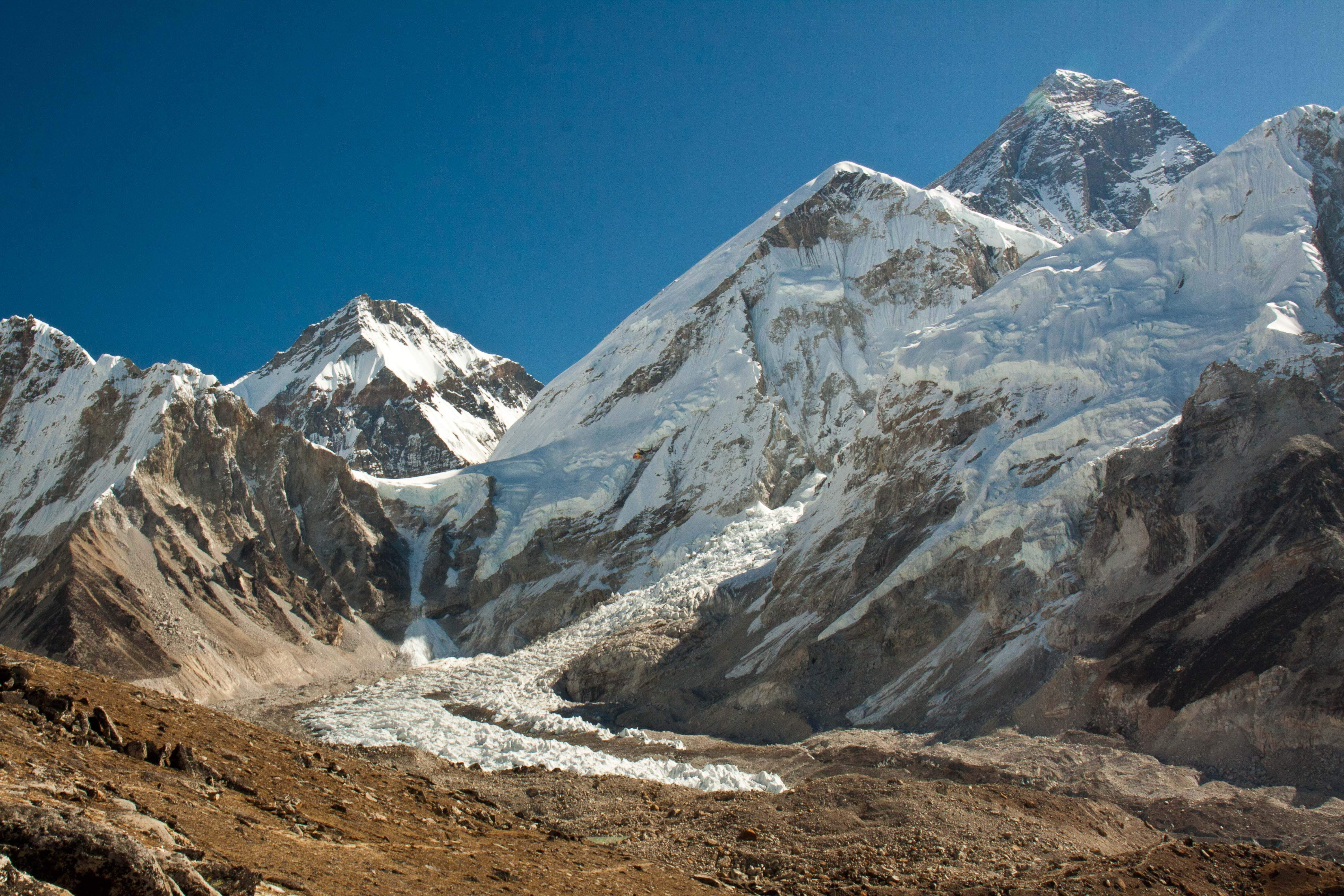
Around Kanchenjunga and Makalu, the eastern Himalayas are characterized by lush valleys, dense forests, terraced hillsides, remote settlements, and spectacular high peaks. Moving west through the Everest, Rolwaling, Langtang, Ganesh Himal, Manaslu, and Annapurna regions, the landscape becomes increasingly alpine, with glaciers, high passes, deep valleys, rugged mountain faces, and extensive high-altitude terrain.
Farther west, the landscape changes again. Upper Mustang and Dolpo lie partly within the Himalayan rain shadow and feature dry valleys, rocky cliffs, high plateaus, ancient settlements, and strong Tibetan cultural influences. Beyond these regions, Api Himal and Humla offer remote mountain terrain, isolated communities, and vast landscapes extending toward the Nepal–Tibet border.
This progression from lush eastern valleys to high alpine terrain and dry western landscapes is one of the defining characteristics of the Great Himalayan Trail. It allows trekkers to experience the extraordinary geographical, ecological, and cultural diversity of the Nepal Himalayas through one long-distance journey.
Why the Great Himalayan Trail Is Different
Most trekking itineraries in Nepal are designed around a particular region and can usually be completed within a few weeks. The Great Himalayan Trail is fundamentally different because it brings together many separate Himalayan regions into one extraordinary long-distance journey.
The challenge is not only the distance. A complete or extended High Route requires trekkers to adapt to changing altitudes, terrain, climates, accommodation conditions, and logistical environments. Some sections are supported by established teahouses and local infrastructure, while more remote areas may require camping, local staff, domestic flights, road transportation, and additional permits.
For this reason, the Great Himalayan Trail is best approached as a major Himalayan expedition-style journey, where realistic route planning, preparation, and flexibility are as important as physical endurance.
A Journey of High Passes and Extreme Himalayan Terrain
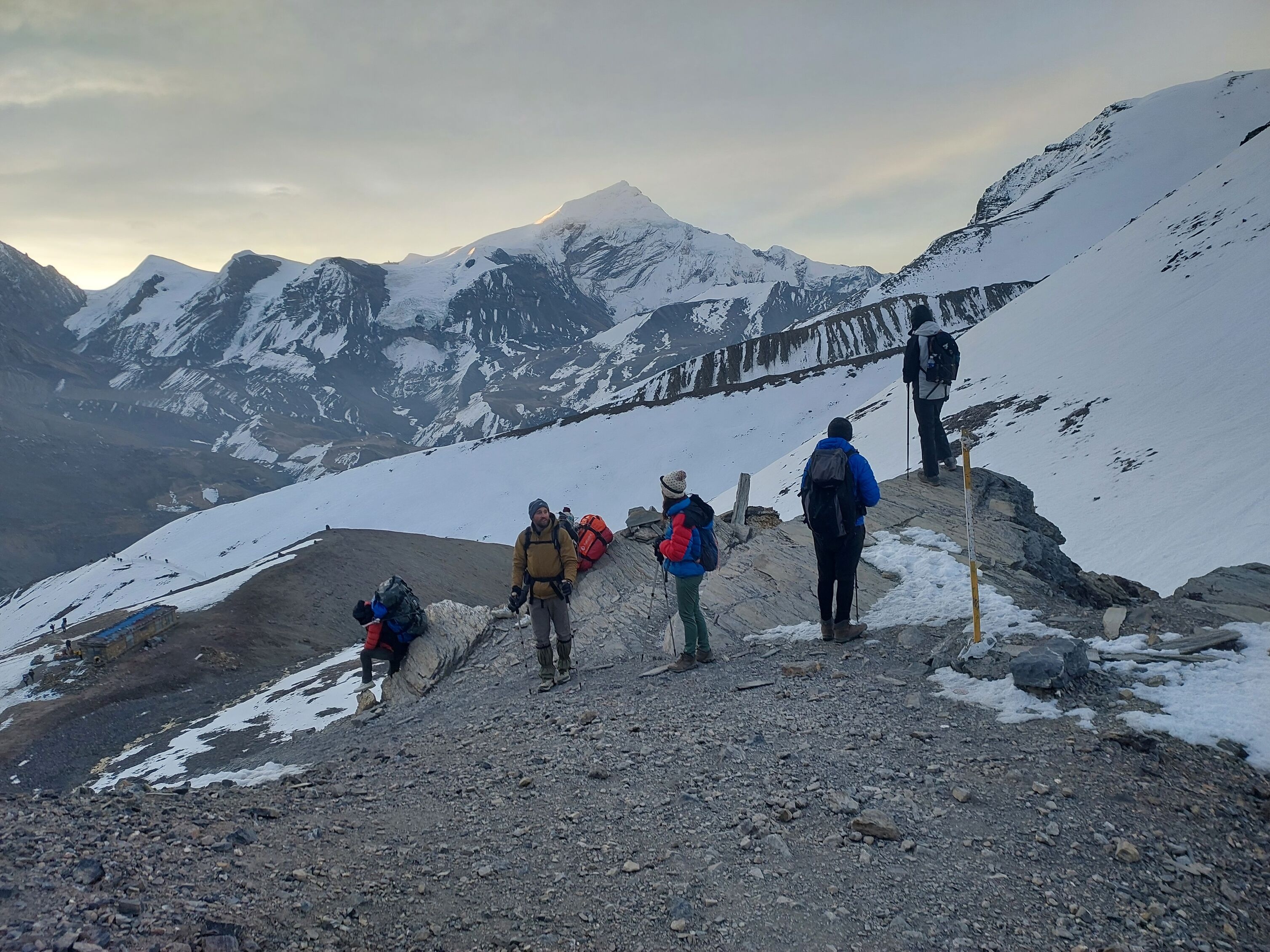
The High Route includes some of the most demanding mountain terrain found in Nepal. Depending on the selected section, trekkers may encounter high mountain passes, snow-covered crossings, glaciers, steep trails, exposed terrain, and remote alpine valleys.
Some sections reach around or above 6,000 metres, making them considerably more demanding than many of Nepal's popular trekking routes. Depending on the exact itinerary, challenging crossings can include Sherpani Col and Amphu Lapcha, while routes incorporating the Everest climbing environment may encounter the South Col. These are not features of every GHT itinerary, so the difficulty depends greatly on the route selected.
High-altitude crossings require strong physical preparation, previous experience where appropriate, careful acclimatization, suitable equipment, and favorable mountain conditions. Not every section of the Great Himalayan Trail has the same level of difficulty, allowing itineraries to be selected according to experience, fitness, interests, available time, and season.
How Long Does the Great Himalayan Trail Nepal Take?
The Complete Great Himalayan Trail Nepal High Route can be planned as an approximately 154-day expedition in our complete High Route itinerary. This is considerably longer than a standard two- or three-week trek and reflects the enormous geographical scale of the journey, including high-altitude sections, acclimatization, rest, and logistical requirements.
However, 154 days does not mean that every trekker must complete the route continuously in one expedition. Because the High Route crosses regions with very different seasonal conditions, it can be divided into several sections and undertaken over multiple trekking seasons.
The actual duration varies according to the route selected, number of sections, acclimatization requirements, weather, route conditions, transportation, and individual trekking plans. The GHT can therefore be approached either as a major long-term expedition or as a series of carefully planned Himalayan journeys completed over time.
Why the Great Himalayan Trail Cannot Simply Be Completed in One Season
The Great Himalayan Trail crosses Nepal from east to west through mountain regions with very different weather patterns, altitudes, and seasonal conditions. Although a very long expedition can be planned, completing the entire High Route continuously within one trekking season is generally difficult and, on some itineraries, impractical.
A journey beginning in spring can take advantage of favorable conditions in many eastern and central Himalayan areas. However, the trekking window changes as the summer monsoon approaches. From around June, monsoon rainfall increasingly affects much of Nepal, particularly the eastern and central mountain regions. Rain, cloud, landslides, wet trails, and reduced visibility can make some high-altitude and remote sections unsuitable.
After the monsoon, autumn provides another major trekking window, with generally clearer weather across many Himalayan regions. However, winter gradually becomes a limiting factor at higher elevations. By late autumn and winter, increasing snowfall, freezing temperatures, shorter daylight hours, and difficult high-pass conditions can make some demanding sections unsuitable.
This is why the Great Himalayan Trail is often better understood as a multi-season Himalayan journey. Sections can be selected according to their most suitable trekking windows, allowing trekkers to pause between stages, recover physically, arrange permits and logistics, and return for the next part of the journey when mountain conditions are more favorable.
Spring to Monsoon: Where the Journey May Need to Pause
Spring is an important trekking season for many eastern and central sections of the Great Himalayan Trail. As the season progresses toward June, however, the approaching monsoon begins to change conditions across much of Nepal.
Heavy rainfall can affect trails, mountain visibility, river crossings, roads, and landslide-prone areas, while cloud and precipitation can make high mountain crossings more difficult. For this reason, a long-distance journey that begins in spring may need to pause before the monsoon becomes fully established.
The exact timing depends on the route and elevation. Some high-altitude sections may have different weather patterns, while remote rain-shadow areas can remain more suitable during the summer months.
Autumn to Winter: Another Seasonal Limit
Autumn provides some of the most favorable conditions for long-distance trekking in Nepal. Following the monsoon, skies are generally clearer, mountain visibility improves, and many high-altitude routes become more accessible.
However, an autumn start does not provide an unlimited trekking window. As the season progresses toward winter, temperatures fall, snowfall increases at higher elevations, and some high passes can become difficult or unsafe. Shorter daylight hours also become an important consideration on remote and high-altitude sections.
For a long GHT journey beginning around September, these seasonal changes can create a natural stopping point toward the end of the year. The next stage can then be planned for the following suitable season rather than forcing the entire route into increasingly difficult winter conditions.
Rain-Shadow Regions and Seasonal Exceptions
Not every part of the Great Himalayan Trail follows the same monsoon pattern. Some northern Himalayan regions lie within the rain shadow, where the mountains block much of the moisture coming from the south.
Upper Mustang and Dolpo, together with some areas farther west, can therefore offer different trekking possibilities during the summer monsoon. The Nepal Tourism Board specifically identifies Mustang, Dolpo, and parts of far-western Nepal as rain-shadow areas where trekking can be considered during wetter periods elsewhere in the country.
This does not mean that every rain-shadow route is automatically suitable during the monsoon. Trail conditions, snowfall, river crossings, local weather, road access, and high-pass conditions still need to be assessed before departure.
The existence of these seasonal differences is another reason the Great Himalayan Trail is best planned section by section, rather than treated as one uniform route with one trekking season.
Two Seasons, Multiple Sections: A Practical Way to Complete the Trail
For trekkers who want to experience a substantial portion of the Great Himalayan Trail, dividing the journey between different seasons can be a practical approach. Instead of trying to remain in the mountains continuously for many months, the journey can be organized into carefully selected stages based on weather, route conditions, personal preparation, and available time.
A spring journey may focus on suitable eastern or central sections before the monsoon, while an autumn journey can continue through other regions when post-monsoon conditions are more favorable. Rain-shadow areas can sometimes provide additional summer possibilities, depending on current conditions and the selected route.
This approach makes the GHT more manageable while still preserving its character as a long-distance Himalayan adventure. Each completed section becomes part of a larger journey, with time between expeditions to recover, prepare, arrange logistics, and return for the next stage.
Spring to Monsoon: Where the Journey May Need to Pause
A trekker starting in spring cannot simply assume that the entire route can be completed before the monsoon. The eastern and central high mountains contain some of the most demanding sections, and the available trekking window depends on snow conditions, pass openings, weather, and acclimatization.
As the monsoon approaches, it may be necessary to finish one section at a suitable point, return to lower elevations or Kathmandu, and resume another section after the monsoon.
This is not a failure to complete the trail. It is a normal and sensible way of planning a journey through such a large and climatically diverse mountain environment.
Autumn to Winter: Another Seasonal Limit
The post-monsoon season provides excellent opportunities across many parts of Nepal, but autumn does not continue indefinitely. As winter approaches, temperatures drop significantly at high elevations and snow conditions can make some mountain passes difficult or impossible to cross safely.
A trek beginning in mid-September therefore needs to be planned carefully. Depending on the route and altitude, the journey may need to stop before winter becomes established and continue during another suitable season.
This seasonal approach allows trekkers to experience each section under more appropriate conditions rather than forcing a continuous itinerary through unfavorable weather.
Rain-Shadow Regions and Seasonal Exceptions
Not every part of Nepal experiences the monsoon in the same way. Areas such as Upper Mustang and Dolpo lie partly within the Himalayan rain shadow and can have very different trekking conditions from the wetter eastern and central mountains.
This creates additional possibilities when planning a multi-section Great Himalayan Trail journey. Certain western and rain-shadow sections may be suitable during periods when other parts of Nepal are affected by monsoon conditions.
However, seasonal suitability still depends on the exact route, altitude, snow, local weather, road or flight access, and current trail conditions. A section should always be planned according to its own geographical and seasonal characteristics.
Two Seasons, Multiple Sections: A Practical Way to Complete the Trail
For many trekkers, the most realistic way to experience the Great Himalayan Trail is to divide it into several major sections and return to Nepal for different stages of the journey.
A traveler might complete an eastern section during spring, pause for the monsoon, and continue with another suitable section during autumn. Further western sections can then be completed in later seasons.
The trail can therefore become a multi-season Himalayan journey, rather than a single expedition with one fixed start and finish date.
How to Divide the Great Himalayan Trail Into Sections
There is no single division that is right for every trekker. The route can be divided according to geography, seasonal conditions, difficulty, available time, and personal interests.
Some travelers may prefer an eastern and western division, while others may choose several smaller sections connecting particular mountain regions. Another option is to focus on one major Himalayan region at a time and gradually build a complete east-to-west journey over several visits.
The right division depends on where the trekker wants to travel, how much time is available, the level of high-altitude experience, and which passes and landscapes are most important to them.
Choosing Your Sections According to Time, Experience and Fitness
The Great Himalayan Trail should never be planned only by counting days on a calendar. Physical preparation and mountain experience are equally important.
A trekker with limited time may choose one challenging section rather than attempting too much in a single trip. An experienced high-altitude trekker may be able to undertake longer and more demanding sections. Others may prefer to combine culturally rich valleys, remote villages, and high mountain landscapes without taking on the most technical crossings.
At Mountain King Treks, we can help travelers select and connect sections according to their available time, interests, physical preparation, trekking experience, preferred landscapes, seasonal conditions, and logistical requirements.
East to Far West: How the Himalayan Landscape Changes
One of the greatest attractions of the Great Himalayan Trail Nepal is the extraordinary transformation of the Himalayan landscape as the journey moves from east to far west. The route does not remain within one type of mountain environment. Instead, it gradually passes through lush forests and green valleys, high alpine terrain, glacial landscapes, deep mountain valleys, dry trans-Himalayan plateaus, and some of the most remote landscapes in Nepal.
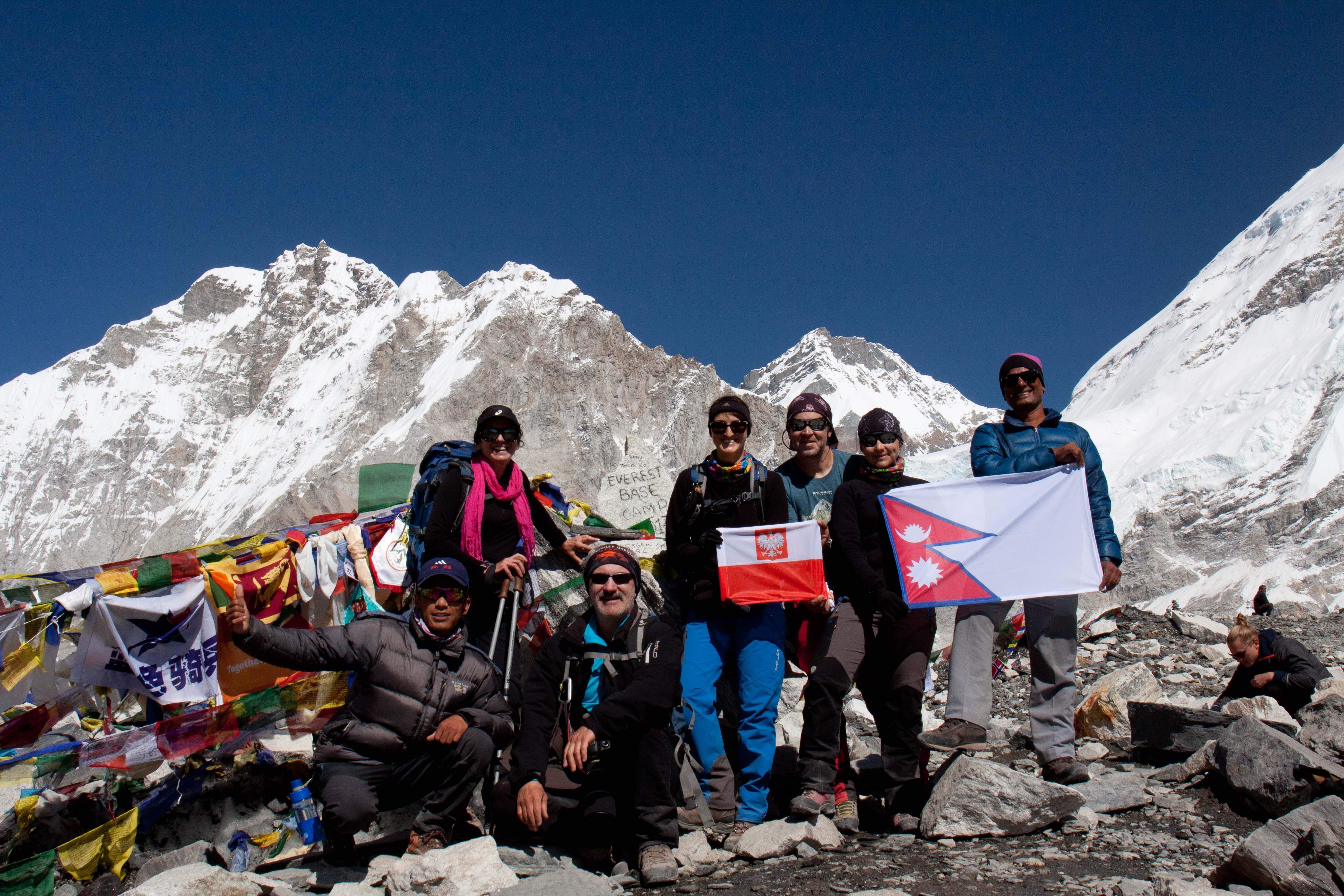
Beginning around Kanchenjunga in the east, trekkers encounter densely forested valleys, traditional mountain settlements, and spectacular high peaks before moving toward the rugged alpine environments of Makalu and Everest. Further west, the landscape continues through the dramatic valleys and high mountains of Rolwaling, Langtang, Ganesh Himal, Manaslu, and Annapurna, where glaciers, high passes, deep valleys, and changing mountain cultures create a remarkable variety of trekking experiences.
Beyond the central Himalayas, the environment begins to change significantly. Upper Mustang and Dolpo offer drier, more barren landscapes shaped by the Himalayan rain shadow, with rocky cliffs, high plateaus, ancient villages, and distinctive Tibetan-influenced cultures. Farther west, the route reaches the remote mountain landscapes of Api Himal and Humla, before continuing toward Hilsa near the Nepal–Tibet border.
This gradual transition from the lush eastern Himalayas to the dry and rugged far-western mountains is what makes the Great Himalayan Trail so remarkable. Rather than experiencing one Himalayan landscape repeatedly, trekkers encounter an extraordinary succession of environments, cultures, and mountain regions connected by one long-distance journey across Nepal.
Himalayan Regions Connected by the High Route
The Great Himalayan Trail connects an extraordinary range of Himalayan landscapes across Nepal. Depending on the selected itinerary, the journey can pass through the spectacular mountain environments of Kanchenjunga and Makalu, the high valleys and dramatic terrain of the Everest and Rolwaling regions, and the culturally rich landscapes of Langtang, Ganesh Himal, Manaslu, and Annapurna. Farther west, the High Route continues into the dry trans-Himalayan landscapes of Upper Mustang and Dolpo, before reaching the remote mountain regions of Api Himal and Humla toward the Nepal–Tibet border.
Each region brings a different character to the journey, with its own geography, mountain scenery, local communities, traditions, climate, trekking conditions, and logistical challenges. This remarkable diversity is one of the defining features of the Great Himalayan Trail, allowing trekkers to experience Nepal's Himalayas not as a single landscape, but as a succession of distinct mountain environments connected by one extraordinary long-distance route.
Mountain Communities, Culture and Ancient Trails
The Great Himalayan Trail is also a journey through the cultural diversity of the Nepal Himalayas. Along different sections, trekkers can encounter communities including Sherpa, Rai, Limbu, Tamang, Gurung, Tibetan, Thakuri, Dolpo-pa and Loba people.
Traditional villages, Buddhist monasteries, sacred places, ancient trails, local agriculture, architecture, food, and mountain lifestyles add another dimension to the journey.
The experience is therefore not only about crossing mountains. It is also about traveling through communities that have adapted to some of the most challenging environments in the Himalayas.
Accommodation, Camping and Remote-Trail Logistics
Accommodation varies considerably along the Great Himalayan Trail. Some established trekking corridors have locally operated teahouses and lodges, while remote High Route sections may have very limited accommodation and require camping and organized expedition support.
Transportation also differs between regions. Depending on the section, travelers may use local roads, domestic flights, or connecting transport to reach and leave remote trailheads.
These logistical differences are another reason why the complete route must be planned section by section rather than treated as one simple itinerary.
Permits, Guides and Expedition Planning
Permit requirements vary according to the regions included in the itinerary. Trekkers may require conservation-area or national-park entry permits, TIMS, and additional permits for restricted areas.
Some remote and restricted regions require specific arrangements through authorized trekking agencies and licensed guides. The exact requirements depend on the route selected.
Because the Great Himalayan Trail crosses many different administrative and protected areas, permit arrangements and logistics should be confirmed before each section of the journey.
Three Ways to Experience the Great Himalayan Trail Nepal High Route
For travelers who want to undertake major sections of the High Route, Mountain King Treks offers several expedition approaches.
Complete Great Himalayan Trail Nepal High Route Expedition
The Complete Great Himalayan Trail Nepal High Route Expedition is designed for experienced trekkers seeking the most extensive possible east-to-west Himalayan journey, from the Kanchenjunga region toward Hilsa in the far west. Because of the scale, altitude, seasonal limitations, and logistical requirements, the journey requires detailed preparation and may be organized across suitable seasons and sections.
Eastern Great Himalayan Trail High Route Expedition
The Eastern Great Himalayan Trail High Route Expedition focuses on the challenging eastern Himalayan section, where trekkers can experience some of Nepal's most spectacular high-altitude landscapes and demanding mountain terrain. This option is ideal for travelers who want to explore the eastern part of the High Route without committing to the entire Nepal journey at once.
Western Great Himalayan Trail High Route Expedition
The Western Great Himalayan Trail High Route Expedition explores the remote western Himalayas and can include extraordinary landscapes around Dolpo, Api Himal, Humla and the route toward Hilsa, depending on the selected itinerary. It offers an opportunity to experience some of Nepal's least-visited mountain regions and can also be planned as one stage of a longer east-to-west journey.
Can the Great Himalayan Trail Be Completed in Separate Sections?
Yes. For many travelers, completing the Great Himalayan Trail in separate sections is the most practical approach.
Instead of trying to walk from Kanchenjunga to Hilsa continuously, trekkers can complete one major section, return home, and continue another section during the next suitable trekking season.
This approach provides greater flexibility and allows each section to be selected according to weather, high-pass conditions, available time, physical preparation, personal interests, and logistical possibilities.
Planning Your Next Section After Completing One
A Great Himalayan Trail journey does not have to end when one section is complete. Many trekkers can return to Nepal for another season and continue from a different point.
This creates the opportunity to experience the Himalayas gradually, with enough time to prepare physically and mentally for each new section. It also allows travelers to choose the most appropriate season for difficult high-altitude crossings and different geographical regions.
Over time, several individual adventures can become one remarkable east-to-far-west Himalayan journey across Nepal.
Who Is the Great Himalayan Trail Suitable For?
The complete High Route is best suited to experienced trekkers who are physically prepared for long-distance walking, high altitude, remote conditions, and demanding mountain terrain.
However, the Great Himalayan Trail is not one uniform difficulty level. Individual sections can be selected according to experience and ability. Some sections are substantially more demanding than others, particularly those involving very high passes or technical terrain.
First-time trekkers should generally begin with an appropriate trekking route and build experience before attempting the most demanding High Route sections.
The Great Himalayan Trail as a Long-Term Himalayan Journey
The Great Himalayan Trail can become much more than one trekking holiday. For many experienced mountain travelers, it can be a long-term project: one section in spring, another after the monsoon, and further sections during future visits to Nepal.
This approach makes the journey more realistic while also giving trekkers the opportunity to experience each region at the right time of year.
From Kanchenjunga to Hilsa, from the eastern Himalayas through the central mountain ranges to Dolpo, Api Himal and Humla, the Great Himalayan Trail offers an extraordinary way to discover the geographical and cultural diversity of Nepal.
Great Himalayan Trail Nepal FAQs
Are there restricted areas along the Great Himalayan Trail Nepal?
Yes. The High Route passes through several restricted and specially regulated mountain areas where additional permits and specific trekking arrangements may be required. Access conditions vary by region, so the complete route must be planned carefully before departure.
Can I obtain the required permits independently?
For many restricted areas, permits and trekking arrangements must be handled through an authorized trekking agency and according to the regulations of the relevant authorities. Travelers should not attempt to enter restricted areas without the required permits and approved arrangements.
Do I need a professional trekking company for the Great Himalayan Trail?
Yes. For a complete High Route expedition, working with an experienced trekking company and professional support team is essential. The route includes restricted areas, remote terrain, very high passes, difficult crossings, and sections where normal trekking facilities are unavailable. Proper planning, permits, logistics, safety arrangements, and local support are extremely difficult to manage independently.
Is a technical Sherpa or high-altitude support team required?
For the most demanding sections, experienced high-altitude Sherpa guides and technical mountain support may be essential. Some crossings involve difficult snow and ice conditions, glaciers, exposed terrain, or technically demanding high passes. The required level of support depends on the selected route and current mountain conditions.
Can I trek the entire High Route without a guide or support team?
Attempting the complete High Route independently is not considered a practical or responsible approach. Remote sections, restricted areas, high-altitude crossings, navigation, changing weather, emergency situations, permits, food and accommodation logistics, and technical terrain require professional preparation and support. A properly organized expedition provides the guides, Sherpa support, porters, camping staff, logistics, and permits needed for the journey.
What kind of support team is used on a High Route expedition?
Depending on the section, a support team may include experienced trekking guides, high-altitude Sherpa guides, porters, cooks, camping staff, and logistics personnel. More technical or remote sections may require additional specialized mountain support and equipment.
Is accommodation available throughout the Great Himalayan Trail?
Accommodation varies significantly between sections. Established trekking areas may have teahouses and lodges, while remote and high-altitude sections may require organized camping and expedition support. The accommodation arrangement therefore depends on the exact route.
What transportation is used between different sections?
Although the Great Himalayan Trail is primarily a trekking journey, transportation may be required to connect different sections. Depending on the itinerary, travelers may use road transportation or domestic flights, particularly when seasonal conditions make a direct continuation impractical.
Can the Great Himalayan Trail itinerary be customized?
Yes. The High Route can be customized according to your available time, trekking experience, physical preparation, interests, preferred regions, and suitable seasons. Individual sections can also be planned as separate expeditions over multiple years.
What should I expect from a Great Himalayan Trail expedition?
The High Route is an expedition-style Himalayan journey, not simply a long-distance walking holiday. Depending on the selected sections, travelers may encounter restricted areas, remote settlements, very high passes, glaciers, snow, difficult terrain, basic facilities, long trekking days, and rapidly changing mountain conditions. Strong preparation and professional support are therefore essential.
Plan Your Great Himalayan Trail Journey
The Great Himalayan Trail Nepal is not simply a route to be completed as quickly as possible. It is a long-distance Himalayan journey that should be planned around the mountains themselves—their seasons, high passes, landscapes, communities, weather, and changing trail conditions.
Whether you want to undertake the complete High Route or gradually explore Nepal through several sections, Mountain King Treks can help design a realistic itinerary around your available time, interests, trekking experience, physical preparation, and seasonal possibilities.
For detailed information about route planning, major high passes, regional sections, seasons, logistics, and preparation, see our Great Himalayan Trail Nepal High Route Expedition Guide.
Contact Us
For a customized Great Himalayan Trail Nepal High Route itinerary, please contact Mountain King Treks & Expedition Pvt. Ltd. We can help you plan the appropriate sections, permits, guides, accommodation, camping, transportation, and expedition logistics.
Plan Your Trip
Before beginning your journey, explore our Nepal Travel Information Guide and Nepal Trip Preparation Guide to understand the practical requirements of traveling and trekking in Nepal.