The Story of Birendra Lake
High above Samagaun in Nepal's Manaslu region lies Birendra Lake, also known as Birendra Tal, a beautiful glacial lake surrounded by some of the most dramatic mountain scenery in the Himalayas. Located below the Manaslu Glacier, the lake is one of the most memorable places to visit during a Manaslu trekking journey.
For trekkers, Birendra Lake is particularly important because it can be visited during the acclimatization stay in Samagaun. The short walk from the village provides an opportunity to gain some elevation, experience the glacial landscape and enjoy views of the surrounding mountains without committing to the much longer hike toward Manaslu Base Camp.
But the lake has a story that goes beyond trekking. Before it became known as Birendra Lake, local people knew it as Yamcho. Local accounts describe Yamcho as an older Tibetan name associated with the lake, with the meaning reported as "upper lake." The lake later became known as Birendra Lake following the visit of Nepal's late King Birendra Bir Bikram Shah Dev to the Manaslu region in 1977. Local people renamed it in his honour, and the name has remained in use ever since.
More than four decades later, another royal story became connected with the same Manaslu landscape. In 2020, during the difficult period of the COVID-19 pandemic, a Bahrain royal expedition came to Nepal and successfully climbed Mount Manaslu. Following the expedition, a nearby mountain was given the name Royal Bahrain Peak in honour of Bahrain's royal family.
The stories of Yamcho, King Birendra and the Bahrain expedition add a fascinating human dimension to a landscape already shaped by glaciers, mountains and centuries of Himalayan culture.
The lake is therefore not simply a beautiful place to visit. It is part of the wider story of Trekking in Nepal and the distinctive natural and cultural heritage of Manaslu Region Trekking.
Where Is Birendra Lake?
Birendra Lake is located near Samagaun in the Manaslu region of northern Gorkha District, within the Manaslu Conservation Area. The lake lies at roughly 3,600–3,700 metres above sea level in a high Himalayan landscape dominated by the Manaslu massif and its surrounding glaciers.
Samagaun is one of the most important villages on the Manaslu Circuit Trek. It is normally used as an acclimatization stop before trekkers continue toward Samdo, Dharamsala and the Larkya La Pass.
The lake is close enough to Samagaun to be visited as a short excursion. From the village, the walk to Birendra Lake takes about 45 minutes for many trekkers, making the lake an accessible destination during an acclimatization day.
Its location also makes it an excellent introduction to the higher glacial environment. As the trail leaves Samagaun, the landscape gradually changes from the cultivated and settled valley around the village to rocky terrain, moraine and the mountains surrounding the Manaslu Glacier.
What Was Birendra Lake Called Before It Was Named Birendra?
Before it became known as Birendra Lake or Birendra Tal, local people of Samagaun knew the lake as Yamcho.
Local reporting and accounts from the Manaslu region describe Yamcho as an older Tibetan name for the lake, with the meaning reported as "upper lake." The name reflects the cultural and linguistic character of the Nubri Valley, where Tibetan Buddhist traditions have shaped the communities, monasteries, architecture and place names of the upper Manaslu region.
For generations, Yamcho was simply part of the landscape known by the people of the valley. The lake did not need to be a major tourist destination to have meaning. It was part of the natural environment surrounding Samagaun and the traditional life of the local community.
Today, visitors are much more familiar with the name Birendra Lake. The older name Yamcho, however, remains an important part of the lake's history and helps explain that its story began long before modern trekking brought international visitors to the region.
How Did Yamcho Become Birendra Lake?
The change from Yamcho to Birendra Lake is connected with the visit of King Birendra Bir Bikram Shah Dev to the Manaslu region in 1977.
According to local accounts, the lake was still known as Yamcho before the King's visit. After he visited the area, local people renamed the lake Birendra Lake in his honour. The new name gradually became established and eventually became the name most commonly used by trekkers, guides and visitors.
The lake itself was, of course, much older than the new name. Its glacial origin and place within the landscape were unchanged. What changed was the name attached to it and the historical memory associated with that name.
This makes Birendra Lake an interesting example of how Himalayan places can carry several layers of history. The older name Yamcho reflects the traditional identity of the Nubri Valley, while the name Birendra Lake preserves a memory of Nepal's modern royal history and the connection between King Birendra and the people of this remote mountain region.
King Birendra's Visit to Samagaun
King Birendra's visit to Samagaun is an important part of the local story surrounding Birendra Lake.
In 1977, travelling to the upper Manaslu region was very different from travelling there today. There were no modern roads reaching Samagaun, tourism facilities were limited, and journeys into the high Himalaya required considerable time and effort. The King's visit therefore became part of local memory and was remembered with respect by the people of the village.
According to local accounts, the lake was later named Birendra Lake in honour of the King. The name has endured, connecting an existing glacial landscape with a memorable chapter of Nepal's modern history.
Today, every trekker walking from Samagaun toward Birendra Lake passes through a landscape that carries this connection. The lake is not simply a beautiful mountain destination; its name also reflects the people, traditions and memories of the Nubri Valley.
Mountain destinations are shaped by more than scenery. Villages, monasteries, traditional names and local stories all add meaning to the Himalayan landscape. The Manaslu Region Culture & Heritage Guide provides further insight into the cultural heritage and traditions of the region.
A visit to Birendra Lake can therefore be appreciated on two levels: as a walk into the glacial landscape below Manaslu and as a visit to a place whose name preserves a chapter of Nepal's history.
Birendra Lake on the Manaslu Trek Acclimatization Day
Samagaun is an important acclimatization point on the Manaslu Trek. By the time trekkers reach the village, they have already gained significant elevation, and spending an additional night allows the body more time to adjust before moving higher.
An acclimatization day does not necessarily mean staying in the lodge all day. A short walk to a higher elevation can be a useful way to spend the day, provided it is done at a comfortable pace.
Birendra Lake is one of the easiest and most popular excursions from Samagaun. The lake is only about 45 minutes away on foot, so the round trip can take around one and a half hours for many trekkers.
The excursion gives trekkers a chance to walk higher, experience the glacial surroundings and enjoy the mountain scenery before returning to Samagaun for the night.
For those who are feeling strong and want a longer acclimatization walk, the trail toward Manaslu Base Camp provides another option. The important point is that reaching the Base Camp is not essential for acclimatization. Walking higher along the trail as far as conditions and individual fitness allow can already provide a valuable experience.
Birendra Lake or Manaslu Base Camp: Which Hike Is Longer?
From Samagaun, trekkers have more than one option for their acclimatization day. Birendra Lake is a short excursion, while the trail toward Manaslu Base Camp provides a much longer and more demanding day in the high mountain landscape.
Birendra Lake: A Short and Scenic Excursion
Birendra Lake is about 45 minutes' walk from Samagaun, making it an accessible excursion for an acclimatization day. The round trip normally takes around one and a half hours, although walking time can vary according to the trail and individual pace.
The short walk takes you away from the village toward the glacial landscape below Manaslu. The lake, surrounding mountains and views toward the Manaslu Glacier make the excursion worthwhile even for trekkers who do not want to undertake a full-day hike.
Walking Higher Toward Manaslu Base Camp
The walk toward Manaslu Base Camp is considerably longer. A return journey from Samagaun can take around 8 to 9 hours, depending on the season, weather, snow and trail conditions.
During periods of heavy snow, the route can become difficult and progress can be much slower. For this reason, reaching Manaslu Base Camp is not necessary for every trekker during the acclimatization day.
Instead, trekkers can walk higher along the trail according to their fitness, available time and the conditions that day. Even without reaching Base Camp, gaining additional elevation and then returning to Samagaun can make the excursion useful for acclimatization.
Beautiful Views from Higher on the Trail
One of the rewards of continuing higher toward Manaslu Base Camp is the changing view of the landscape. As you gain elevation, Samagaun Valley spreads out below, and the village, surrounding mountains and glacial landscape can be seen from a different perspective.
Birendra Lake also becomes part of the wider landscape below. Seeing the lake from higher along the trail gives trekkers a different perspective from simply walking to the lakeshore.
For this reason, the goal of the acclimatization hike does not have to be reaching a particular destination. A comfortable walk to a higher elevation, followed by a return to Samagaun, can provide both a valuable acclimatization experience and some of the finest views around the village.
The best distance to walk should be decided according to the season, snow conditions, weather, trail conditions and the trekker's physical condition, with guidance from the trekking guide.
The Bahrain Prince and Royal Bahrain Peak
Another remarkable chapter in the history of the Manaslu region came during the COVID-19 pandemic in 2020.
At a time when international travel and mountaineering were severely restricted, a Bahrain Royal Guard expedition travelled to Nepal for a mountain expedition. The Nepal Tourism Board reported that an 18-member expedition team, including a member of Bahrain's royal family, arrived in September 2020 to climb Lobuche and Manaslu.
The expedition became particularly significant when the Bahrain team successfully reached the summit of Mount Manaslu in October 2020. Contemporary reports identified Prince Mohamed Hamad Mohamed Al Khalifa as the leader of the royal mountaineering team, while Nepal Tourism Board reporting identified Shaikh Nasser bin Hamad Al Khalifa as the leader of the wider expedition team.
The achievement was notable not only because of the difficult circumstances created by the pandemic, but also because it represented an important milestone for Bahrain in Himalayan mountaineering. Prince Mohamed Hamad Mohamed Al Khalifa became the first Bahraini national to summit an 8,000-metre mountain.
The story continued after the expedition.
A nearby mountain in the Samagaun area was subsequently given the name Royal Bahrain Peak, honouring Bahrain's royal family. Reports place the peak at approximately 5,200 metres. The naming added another royal connection to a landscape that already contained Birendra Lake, named in memory of Nepal's late King Birendra.
The Royal Bahrain Peak story is therefore a relatively recent addition to the history of the Manaslu region. It shows how the mountains continue to create connections between Nepal and people from different parts of the world through exploration and mountaineering.
For visitors walking around Samagaun, these names tell two different royal stories from different periods: Birendra Lake reflects Nepal's own royal history, while Royal Bahrain Peak reflects a modern international mountaineering connection.
What Can You See Around Birendra Lake?
The walk to Birendra Lake provides much more than a view of the water.
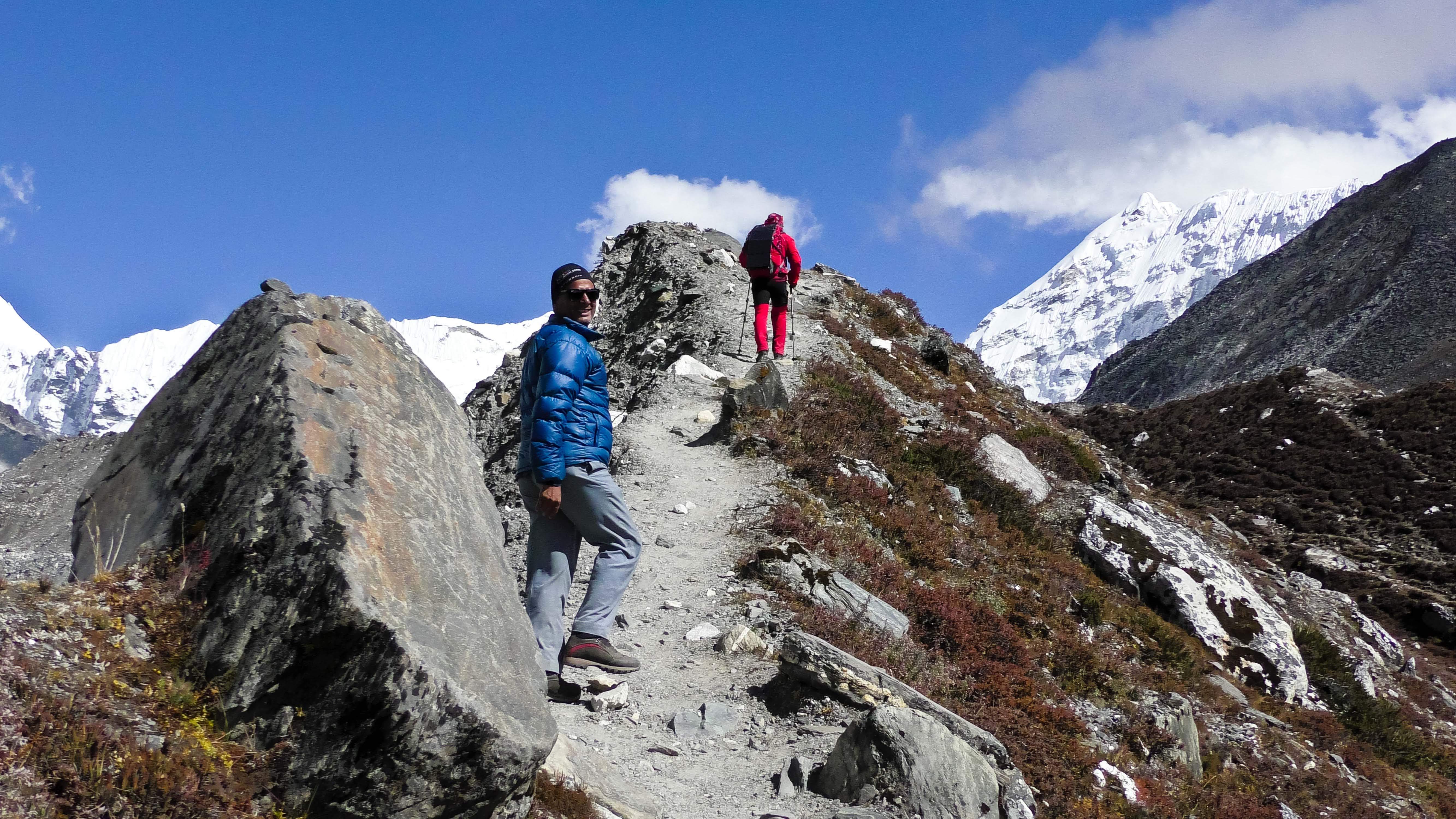
As you leave Samagaun, the landscape gradually becomes more open and rugged. The trail leads toward the glacial environment below Manaslu, with rocky terrain, moraine and high mountain scenery surrounding the route.
The Manaslu Glacier and the peaks of the Manaslu massif dominate the wider landscape. Depending on the season and weather, the lake can appear in different shades of blue and turquoise, contrasting with the surrounding rock and snow-covered mountains.
The walk also provides a different perspective of Samagaun and the Nubri Valley. From higher ground, the traditional village and surrounding valley can be viewed against the enormous Himalayan landscape.
Prayer flags, monasteries, traditional houses and grazing areas around Samagaun further remind visitors that the landscape is both a natural and cultural environment.
Best Time to Visit Birendra Lake
The best times to visit Birendra Lake generally follow the main trekking seasons in the Manaslu region.
Spring, from March to May, brings warmer conditions, increasingly stable weather and good opportunities for mountain views. Snow may still remain on the higher peaks and surrounding areas, adding to the scenery.
Autumn, from September to November, is another excellent period for the Manaslu region. After the monsoon, the air is often clearer and the mountain views can be particularly impressive.
Winter brings colder conditions and possible snow and ice around the lake and higher trails. Access can depend heavily on current weather and trail conditions.
During the monsoon, rain, cloud and poor visibility can make the experience less predictable.
Regardless of the season, conditions in the mountains can change quickly. The decision to walk toward the lake or continue higher should always take account of the actual weather, trail and snow conditions on the day.
Birendra Lake and the Manaslu Glacier Landscape
Birendra Lake is closely connected with the glacial environment of Mount Manaslu.
The lake lies within a landscape shaped by glaciers, rock and meltwater. Water from the surrounding glacial environment contributes to the lake, creating the distinctive high-altitude setting that trekkers encounter when walking beyond Samagaun.
The relationship between glacier, lake and mountain is one of the most impressive features of the area. From the trail, trekkers can see how the landscape changes as it approaches the higher mountain environment.
This is also why Birendra Lake provides such a good introduction to the upper Manaslu region. It allows trekkers to experience a genuine glacial landscape without undertaking the much longer journey toward the higher mountain camps.
Protecting Birendra Lake and the Himalayan Environment
The changing Himalayan climate reminds us that places such as Birendra Lake and the Manaslu Glacier are part of a much larger environmental system. Glacier ice is being lost rapidly across the Hindu Kush Himalaya, while changing glaciers and expanding glacial lakes can increase the risk of floods, landslides and other hazards downstream.
Climate change is a global challenge, and no single country or community can solve it alone. At the same time, there is much we can do locally. Protecting forests, rivers, trekking trails and natural corridors, reducing waste and pollution, using resources responsibly, and keeping mountain villages and waterways clean all contribute to a healthier Himalayan environment.
For trekkers, responsible travel means leaving Birendra Lake and the surrounding landscape as naturally as possible. Avoiding single-use plastics, carrying waste back, respecting local communities and wildlife, staying on established trails and supporting responsible local tourism are simple actions that can make a difference.
Protecting the Himalayas is not only about preserving beautiful places for visitors. It is also about protecting the rivers, communities, agriculture, wildlife and livelihoods that depend on these mountains. Monitoring glaciers and glacial lakes, improving early-warning systems and strengthening local preparedness are also important parts of reducing future risks.
Birendra Lake therefore offers more than a beautiful mountain view. It is also a reminder that the Himalayas are changing, and that protecting these landscapes is a shared responsibility.
Why Birendra Lake Is Special on the Manaslu Trek
Birendra Lake brings together the natural beauty, culture, history and trekking experience of the Manaslu region in one remarkable place.
The glacial lake lies below the Manaslu Glacier and is easily reached from Samagaun during an acclimatization stay. Its older name, Yamcho, reflects the traditional cultural identity of the Nubri Valley, while the name Birendra Lake preserves the memory of King Birendra's connection with the region.
The lake is also part of the high-altitude acclimatization experience before trekkers continue toward the higher sections of the Manaslu route. A short walk to the lake provides an opportunity to gain some elevation, enjoy the mountain surroundings and return to Samagaun without requiring a full-day excursion.
The wider landscape also carries stories from modern mountaineering. The Bahrain Royal Guard expedition of 2020 brought another chapter to the region's mountaineering history, followed by the local naming of a nearby peak as Royal Bahrain Peak.
For trekkers, however, the attraction remains beautifully simple: walking through the high Himalayan landscape, reaching a glacial lake surrounded by mountains, looking back toward Samagaun and experiencing a place whose story extends well beyond its scenery.
How to Visit Birendra Lake
Birendra Lake is visited as part of a Manaslu trekking journey, usually during an acclimatization stay in Samagaun. The lake is about a 45-minute walk from the village, making it a convenient excursion while exploring the mountain and glacial landscape. The Manaslu Circuit Trek Guide provides broader information about the route, while the following itineraries offer different ways to include Birendra Lake in your journey.
Manaslu Circuit Trek – 14 Days
The Manaslu Circuit Trek – 14 Days provides a well-paced journey around Mount Manaslu, with time to explore mountain villages, Buddhist culture and the dramatic landscapes of the region. Its acclimatization stay in Samagaun allows you to walk to Birendra Lake and explore the surrounding glacial landscape before continuing toward the higher sections of the route and Larkya La Pass.
Manaslu Circuit Trek 11 Days
The Manaslu Circuit Trek 11 Days is a shorter option for trekkers with limited time who still want to experience the major highlights of the region. During the stay in Samagaun, you can make the short excursion to Birendra Lake, enjoy views of the surrounding mountains and glacier, and return to the village before continuing toward the higher sections and Larkya La Pass.
Tsum Valley to Manaslu Circuit Trek
The Tsum Valley to Manaslu Circuit Trek combines the peaceful cultural landscape of Tsum Valley with the wider Manaslu journey. Its longer itinerary provides more time to explore villages, monasteries and mountain landscapes before reaching Samagaun, where Birendra Lake offers a memorable excursion before the route continues toward Larkya La Pass.
Planning Your Manaslu Trek
A visit to Birendra Lake is part of a larger journey through the Manaslu region, and good planning helps you make the most of the experience. The Nepal Travel Planning Guide provides broader advice for organizing your journey, while the Nepal Travel Information Guide covers practical details about travelling in Nepal, including transportation, accommodation and permits. Before departure, the Nepal Trip Preparation Guide is useful for checking your equipment, documents, travel insurance and physical preparation.
With the right preparation and enough time for acclimatization, you can enjoy Samagaun, Birendra Lake and the surrounding Himalayan landscape at a comfortable pace.
Frequently Asked Questions About Birendra Lake
Where is Birendra Lake located?
Birendra Lake is located near Samagaun in the Manaslu region of northern Gorkha District, Nepal. It lies within the Manaslu Conservation Area below the Manaslu Glacier.
How long does it take to walk from Samagaun to Birendra Lake?
The walk from Samagaun to Birendra Lake takes approximately 45 minutes for many trekkers. The round trip is generally around one and a half hours, depending on individual walking pace and trail conditions.
Do I need to reach Manaslu Base Camp for acclimatization?
No. Reaching Manaslu Base Camp is not necessary for an effective acclimatization walk. Trekkers can walk higher along the trail according to their fitness, the weather, snow and trail conditions, then return to Samagaun.
What was Birendra Lake called before?
The lake was traditionally known locally as Yamcho. Local accounts describe it as an older Tibetan name associated with the lake before it became known as Birendra Lake.
Why is Birendra Lake important on the Manaslu Trek?
Birendra Lake is important because it combines a short acclimatization excursion with a beautiful glacial landscape and an interesting history connected with King Birendra. It also provides trekkers with views of the Manaslu Glacier and surrounding Himalayan mountains.
Contact Us
If you would like to experience Birendra Lake as part of a Manaslu trekking journey, contact Mountain King Treks & Expedition for information about the itinerary, acclimatization, trekking conditions and arrangements for your journey.
Plan a Trip
Plan your Manaslu journey with enough time to experience Samagaun, Birendra Lake, the surrounding Himalayan landscape and the cultural heritage of the region. A well-planned itinerary allows you to enjoy the mountains at a comfortable pace while making the most of this remarkable part of Nepal.