Planning an Upper Mustang Trek
Upper Mustang Trek Planning begins with choosing an itinerary that matches your available time, trekking experience, interests, budget, and preferred travel style. As one of Nepal’s most distinctive Himalayan destinations, Upper Mustang offers dramatic dry landscapes, ancient villages, Buddhist monasteries, fascinating cave settlements, and a strong Tibetan-influenced cultural heritage. The historic walled city of Lo Manthang is one of the region’s most remarkable highlights.
For travelers planning Trekking in Nepal, Upper Mustang provides a very different experience from the country’s greener mountain regions. A well-planned journey requires more than choosing a trekking route. You should consider the trekking duration, transportation, restricted-area permits, accommodation, meals, weather, altitude, physical preparation, and overall budget before deciding on your itinerary.
Upper Mustang is also different from many other trekking destinations because it is a restricted area. Foreign trekkers must obtain the applicable special trekking permit through a registered trekking agency. This makes advance planning particularly important, especially when arranging transportation, accommodation, and the required permits.
The classic Upper Mustang Trek takes travelers through spectacular landscapes and traditional settlements toward Lo Manthang. Depending on your time and interests, you can also choose alternative itineraries, cultural experiences, high-route adventures, or special journeys within the region. Understanding these options in advance will help you choose an Upper Mustang experience that best matches your time, budget, fitness, and interests.
Choosing the Right Upper Mustang Trek
Upper Mustang offers several distinct trekking experiences, from the classic journey to Lo Manthang to challenging high-route adventures and culturally focused festival trips. The right choice depends on your available time, trekking experience, fitness, budget, interests, and preferred level of adventure.
Classic Upper Mustang Trek
The Upper Mustang Trek is the classic choice for travelers who want to discover the region's dramatic landscapes, traditional villages, ancient monasteries, cave settlements, and historic heritage. The journey toward Lo Manthang combines spectacular high-altitude scenery with a distinctive Tibetan-influenced culture that makes Upper Mustang very different from Nepal's greener trekking regions.
This is a good option for travelers who want a comprehensive introduction to Upper Mustang without choosing one of the region's more demanding high-route itineraries. Adequate time for acclimatization and cultural exploration is an important part of the experience.
Upper Mustang High Route Trek
Trekkers looking for a more challenging and less-traveled adventure can choose the Upper Mustang High Route Trek. This itinerary explores higher and more remote sections of Mustang, with dramatic mountain landscapes, high passes, remote valleys, and traditional settlements beyond the main trekking route.
Because of the higher elevations, longer walking days, and more demanding terrain, this trek requires stronger physical preparation and careful itinerary planning. It is particularly suitable for experienced trekkers seeking a more adventurous way to explore the region.
Upper Mustang Tiji Festival Trek
For travelers whose main interest is Mustang's living culture and Buddhist traditions, the Upper Mustang Tiji Festival Trek offers a special opportunity to combine the classic Upper Mustang journey with the annual Tiji Festival in Lo Manthang. The festival features traditional Buddhist ceremonies and is one of the region's most important cultural events.
Because Tiji Festival dates follow the Tibetan lunar calendar and change each year, travelers should plan well in advance. Our Upper Mustang Tiji Festival Guide provides additional information about the festival, timing, and planning considerations.
Ultimately, the best Upper Mustang trek is not necessarily the longest or most challenging. The right itinerary is the one that fits your time, fitness, budget, interests, and travel goals, allowing you to enjoy the region at a comfortable and meaningful pace.
How to Reach Upper Mustang
Most journeys to Upper Mustang begin by traveling from Kathmandu toward Pokhara and then continuing toward the Mustang region. Depending on the itinerary and current road and flight conditions, transportation may include tourist bus, private vehicle, local road transport, or domestic flight.
Pokhara is an important gateway to Mustang, while Jomsom provides access to the upper Mustang area by both air and land. From Jomsom, the journey continues north through the Kali Gandaki valley toward Kagbeni and the restricted Upper Mustang area. Nepal Tourism Board also identifies Jomsom as an air and land access point for Mustang.
Road conditions and seasonal transportation can influence the journey, so it is important to check the current arrangements before departure. Private transportation can provide greater flexibility, while shared or local transportation may be more economical.
When to Go to Upper Mustang
One of the major advantages of Upper Mustang is its rain-shadow climate. Unlike much of Nepal, the region receives relatively little monsoon rainfall, and Nepal Tourism Board notes that Upper Mustang can be visited even during the rainy season.
Spring
March to May is an excellent period for Upper Mustang trekking. Temperatures become more comfortable, mountain landscapes are generally clear, and the region begins to become more active after winter.
May is also particularly interesting for travelers who want to experience the Tiji Festival in Lo Manthang, although festival dates follow the Tibetan lunar calendar and change from year to year.
Summer and Monsoon
June to August can be a good alternative for Upper Mustang because the region lies in the rain shadow of the Himalayas. While other parts of Nepal can experience heavy monsoon rainfall, Mustang remains comparatively dry.
However, road and flight conditions elsewhere on the journey, particularly around Pokhara and Jomsom, can still be affected by monsoon weather. Allowing some flexibility in your transportation schedule is therefore sensible.
Autumn
September to November is another excellent season. The post-monsoon period generally brings clearer skies and comfortable trekking conditions, making autumn one of the most popular times to explore the region.
Winter
December to February can be very cold, particularly at higher elevations. Snow and freezing temperatures can affect some routes and accommodation availability. Winter trekking is possible for well-prepared travelers, but itineraries should be planned carefully according to current conditions.
Accommodation and Food on the Upper Mustang Trek
Accommodation along the established Upper Mustang routes is generally provided by local tea houses, lodges, guest houses, and mountain accommodations. Facilities become simpler as you travel farther into remote areas.
Meals are normally available at the lodges and guest houses, with Nepali, Tibetan-influenced, and common trekking dishes available depending on the location. Because supplies must be transported into the higher and more remote parts of Mustang, food and drinks can become more expensive than in Kathmandu or Pokhara.
Travelers should also budget for personal expenses such as hot drinks, snacks, charging, internet access, showers where available, and other services.
Permits and Restricted Area Requirements
Upper Mustang is a restricted trekking area, so foreign visitors need a special restricted-area trekking permit. The permit is charged at USD 50 per person per day, and the duration can now be arranged according to the actual itinerary rather than requiring the previous minimum of 10 days. Shorter permits can therefore be arranged for journeys of only a few days, with additional days charged at the applicable daily rate.
The current rules also allow a single traveler to obtain a permit, so the previous requirement for a minimum of two trekkers no longer applies. However, Upper Mustang restricted-area permits cannot be obtained independently by individual travelers. The permit and required trekking arrangements must be handled through a government-authorized trekking agency, such as Mountain King Treks, with the appropriate guide and permit service arranged for the journey.
Travelers who choose a trekking package with accommodation and meals can have the necessary arrangements organized as part of their package. Those who prefer a more independent style and do not want a full-board trekking package still need to arrange the required permit, guide, and applicable conservation-area entry requirements through their trekking agency.
Upper Mustang also lies within the Annapurna Conservation Area, so the applicable ACAP entry fee is required in addition to the restricted-area permit. Your trekking agency can arrange the necessary permits, guide services, transportation, and other required logistics according to your chosen itinerary.
Because restricted-area regulations, permit fees, and procedures can change, travelers should always confirm the latest requirements and applicable fees with their authorized trekking agency before departure.
Culture and Heritage of Upper Mustang
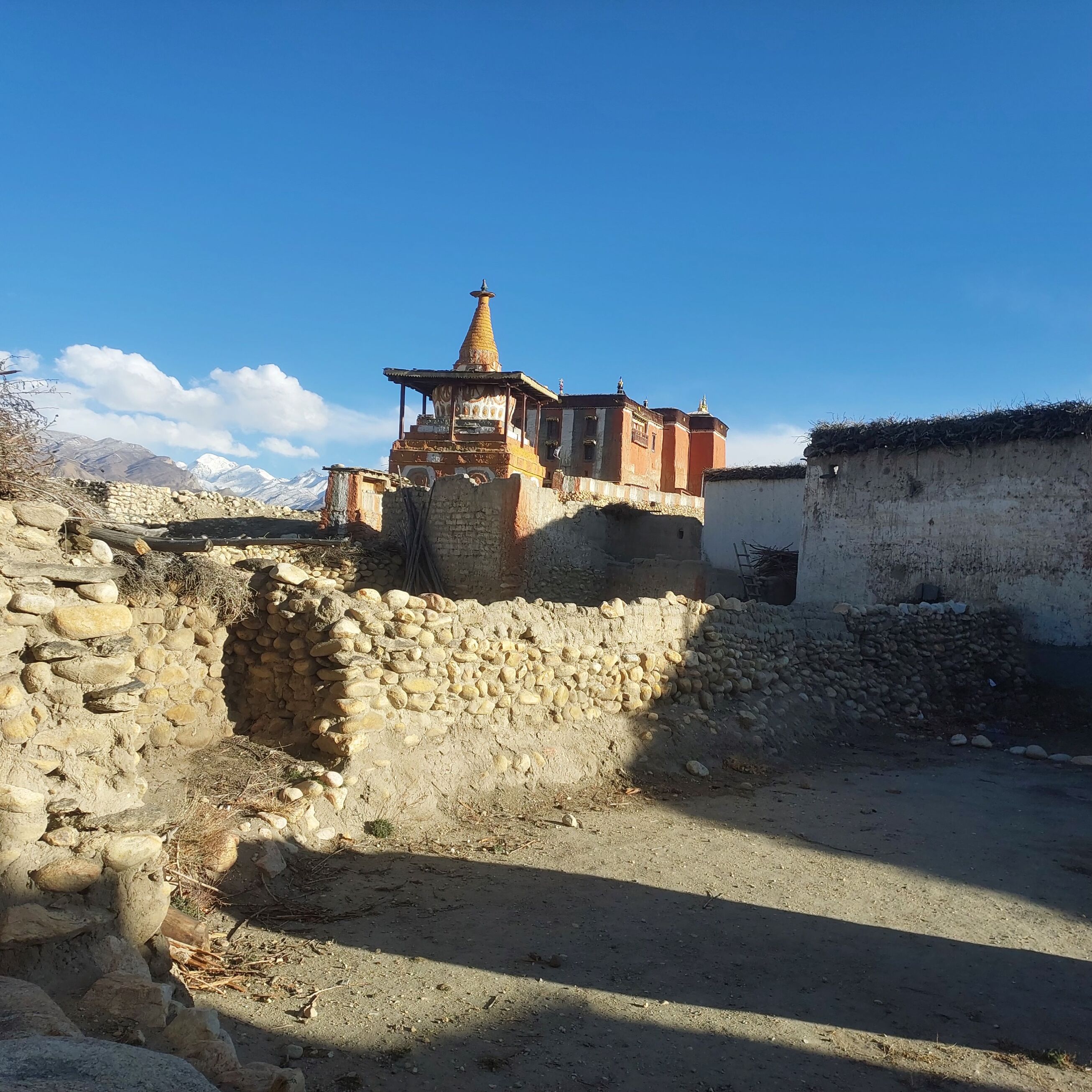
Culture and heritage are among the main reasons travelers choose Upper Mustang. The region is known for its traditional villages, ancient monasteries, prayer walls, distinctive mud-brick architecture, cave settlements, and Tibetan-influenced Buddhist traditions. Exploring these places adds a deeper cultural dimension to the trekking experience.
Lo Manthang and Traditional Himalayan Heritage
Lo Manthang, the historic walled settlement and former capital of the Kingdom of Lo, is one of Upper Mustang's most important cultural destinations. Its ancient monasteries, narrow streets, traditional houses, and surrounding landscapes provide a fascinating insight into the region's long-standing Himalayan heritage.
Beyond Lo Manthang, many smaller villages and religious sites along the trekking routes offer equally valuable cultural experiences. Travelers interested in the region's traditions, architecture, and way of life can explore our Upper Mustang Culture & Heritage Guide.
Hidden Places and Ancient Monasteries
Upper Mustang also contains lesser-known valleys, caves, monasteries, and historic sites that are not always included in standard trekking itineraries. Taking additional time to explore these places can make the journey more rewarding, particularly for travelers interested in history, Buddhism, archaeology, and local traditions.
Our Upper Mustang Hidden Places & Monasteries Guide provides more information about these fascinating places and helps travelers understand what they may discover beyond the main trekking route.
When visiting monasteries, religious sites, and traditional communities, travelers should respect local customs, dress appropriately, and follow guidance from their guide and local residents.
Altitude, Fitness and Trekking Preparation
Upper Mustang is a high-altitude trekking destination, so proper preparation is important even though the terrain may not always appear as steep or difficult as other Himalayan routes.
A sensible itinerary should allow time for acclimatization and avoid unnecessarily long walking days. Travelers should prepare through regular walking, hiking, or cardiovascular exercise before departure and carry suitable clothing and equipment for rapidly changing mountain conditions.
Travel insurance that covers trekking at the relevant altitude is also strongly recommended. For more demanding routes, experienced guide and support services become particularly important.
Frequently Asked Questions
What is the best time to trek in Upper Mustang?
Spring and autumn are generally excellent seasons for trekking in Upper Mustang. Because the region lies in the rain shadow of the Himalayas, it can also be a good option during the monsoon months. Winter trekking is possible but requires careful preparation for colder conditions.
Is a special permit required for Upper Mustang?
Yes. Upper Mustang is a restricted area, and foreign trekkers require the applicable special trekking permit. Permit requirements and fees can change, so travellers should confirm the latest regulations before departure.
How do I reach Upper Mustang?
Most travellers travel through Pokhara and continue toward Jomsom by air or road before heading north through Kagbeni into Upper Mustang. The exact transportation arrangement depends on the itinerary, season, and current road or flight conditions.
Is Upper Mustang suitable for first-time trekkers?
The classic Upper Mustang route can be suitable for reasonably fit trekkers with proper preparation. However, the high altitude and remote environment require careful planning. More demanding routes are better suited to travellers with appropriate trekking experience.
Why is Upper Mustang different from other trekking regions in Nepal?
Upper Mustang combines dramatic high-altitude landscapes with distinctive Tibetan-influenced culture, ancient settlements, monasteries, caves, and the historic walled city of Lo Manthang. Its dry rain-shadow environment also makes it possible to trek during the monsoon when many other parts of Nepal receive heavier rainfall.
Planning and Preparing for Your Upper Mustang Trek
Good preparation helps make your Upper Mustang journey comfortable and enjoyable. Before departure, consider your route, trekking duration, transportation, permits, accommodation, fitness, equipment, insurance, weather, and budget. As Upper Mustang is a restricted and remote trekking area, arranging the important details in advance is especially helpful.
For broader travel advice, explore our Nepal Travel Planning Guide and Nepal Travel Information Guide. Our Nepal Trip Preparation Guide also provides useful guidance on documents, clothing, equipment, insurance, and other essentials.
Contact Us
If you need help with your Upper Mustang route, itinerary, permits, transportation, or other arrangements, Mountain King Treks & Expedition Pvt. Ltd. can help organise your trek according to your time, interests, and experience.
WhatsApp: +977-9841566449
Email: info@mountainkingtrek.com
Plan Your Trip
Ready to explore the landscapes, culture, and ancient heritage of Upper Mustang? Plan your Upper Mustang Trek and begin your journey into one of Nepal’s most distinctive Himalayan regions.