What Is Indra Jatra?
Indra Jatra Festival is one of the most important traditional celebrations of the Newar community in the Kathmandu Valley and one of Kathmandu's most spectacular annual cultural events. The festival brings together ancient religious traditions, sacred deities, chariot processions, masked dances, traditional Newar music, community gatherings, and elaborate rituals in the historic heart of Kathmandu. Travelers exploring Tours in Nepal during the festival have a special opportunity to experience the valley's living culture, particularly around Kathmandu Durbar Square, Hanuman Dhoka, Indra Chowk, Asan, and the surrounding old neighborhoods. For a broader introduction to the valley's history, heritage, architecture, and traditional communities, see our Kathmandu Valley Culture & Heritage Guide.
Known locally as Yenya, Indra Jatra is traditionally an eight-day festival that follows the lunar calendar. The main celebration begins with the ceremonial erection of the Yosin or lingo, a tall wooden pole carrying Indra's flag at Hanuman Dhoka. Its raising marks the beginning of the principal festival, while its ceremonial lowering at the end completes the eight-day cycle.
Throughout the festival, Kathmandu's historic streets become centers of religious and cultural activity. The Living Goddess Kumari, together with the chariots of Ganesh and Bhairav, is taken through different parts of the old city. Devotees gather along the procession routes to receive blessings, while traditional musicians, masked dancers, and community groups bring the streets to life.
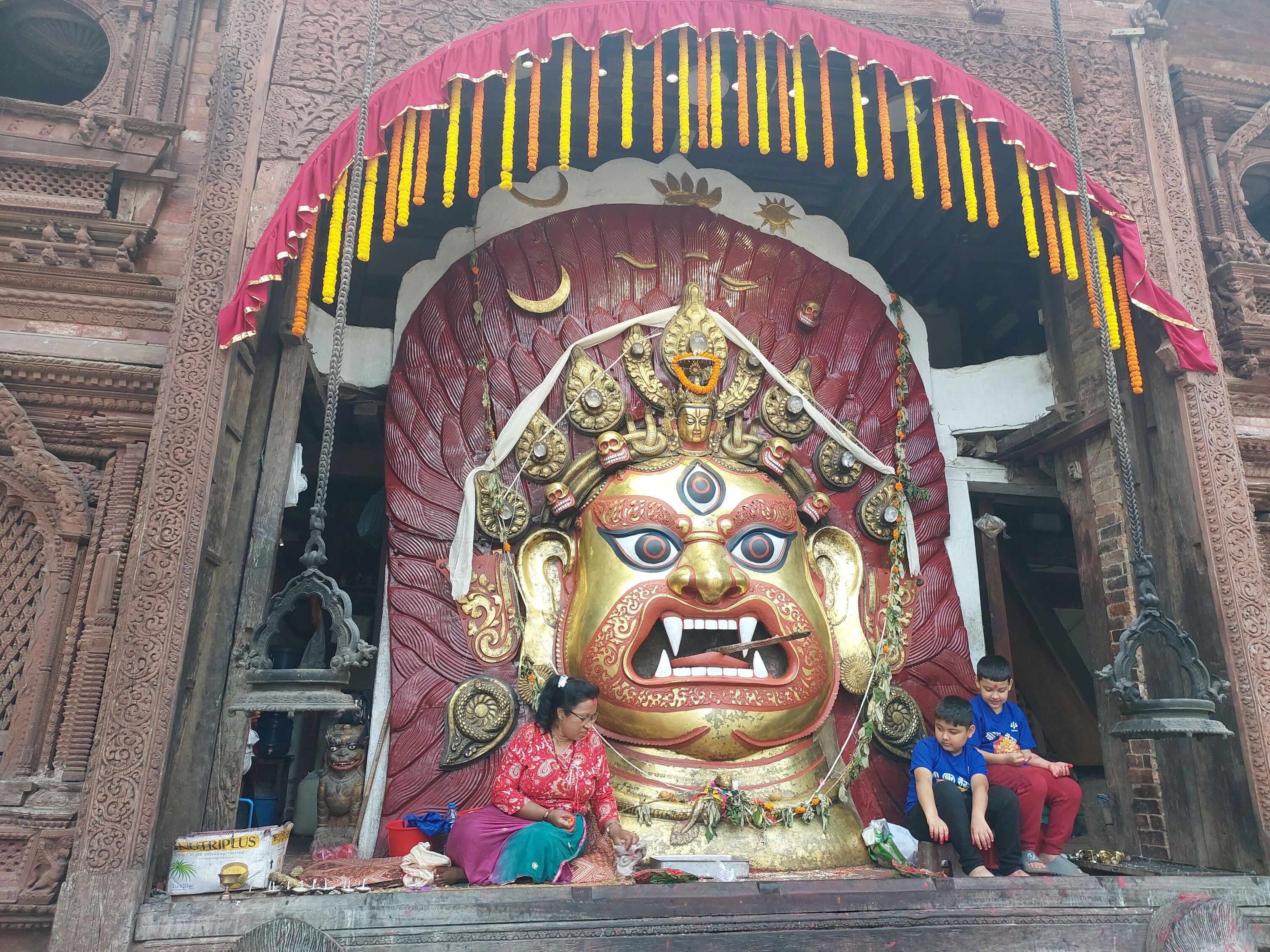
The festival also features some of Kathmandu's most recognizable sacred traditions, including the public display of Akash Bhairav, the imposing Kala Bhairav at Hanuman Dhoka, and Swet Bhairav, whose traditional festival offering attracts large crowds. Lakhey and other masked dances are performed with powerful traditional music, while families and communities prepare and share Samay Baji and other Newari foods.
Indra Jatra has both Hindu and Buddhist dimensions and has developed over centuries as a major Newar community festival. It is associated with Lord Indra, the god of rain, and with traditions concerning rainfall, harvest, ancestors, and the protection and prosperity of the community. The festival has also evolved historically, with the Kumari chariot procession becoming an important part of the celebration during the Malla period.
For visitors, Indra Jatra offers much more than watching a single procession. It is an opportunity to walk through the historic streets of Kathmandu, hear traditional music, witness ancient dances and rituals, see the elaborate chariots, observe religious ceremonies, and experience Newari culture as a living tradition rather than simply as a museum heritage.
This makes Indra Jatra particularly valuable for travelers who want to understand the cultural character of Kathmandu and the wider Kathmandu Valley.
History and Religious Significance of Indra Jatra
Indra Jatra is closely associated with Lord Indra, the Hindu god of rain and the king of heaven. According to one traditional legend, Indra came to the Kathmandu Valley in human form in search of flowers for his mother. Local people captured him without realizing his divine identity, and the story became connected with the rituals and traditions of the festival.
The festival also reflects the importance of rain, agriculture, harvest, prosperity, and community well-being in the traditional life of the Kathmandu Valley. Over the centuries, Indra Jatra developed within the religious and cultural traditions of the former Kathmandu Kingdom, incorporating both Hindu and Buddhist practices.
The Kumari Jatra, featuring the chariot procession of the Living Goddess Kumari together with Ganesh and Bhairav, became an important part of the festival during the Malla period. Today, these traditions continue to bring together Kathmandu's communities and remain an important expression of the valley's living religious and cultural heritage.
When and Where Is Indra Jatra Celebrated?
Indra Jatra follows the lunar calendar, so the festival dates change each year. The main celebrations take place in the historic center of Kathmandu, particularly around Kathmandu Durbar Square and the traditional neighborhoods of the old city.
Important places associated with the festival include:
- Basantapur Durbar Square and Hanuman Dhoka
- Indra Chowk
- Maru
- Asan
- Kilagal
- Other traditional neighborhoods along the chariot and cultural procession routes
The festival begins with the ceremonial erection of the lingo at Hanuman Dhoka and continues with religious ceremonies, chariot processions, traditional music, masked dances, and community celebrations. After eight days of festivities, the lingo is ceremonially lowered, marking the conclusion of the main Indra Jatra celebrations.
The Beginning of Indra Jatra: Bringing the Lingo
One of the most important preparations for Indra Jatra is bringing the large ceremonial wooden pole, known as Yosin or Ya Sin, into Kathmandu.
The pole is traditionally made from a pine tree selected according to established customs. In recent festival preparations, the tree has been brought from the Nala or Bhaktapur area and transported toward Kathmandu using traditional methods involving ropes and community participation.
The arrival of the lingo is itself an important cultural event. It reminds visitors that Indra Jatra is not simply a festival that begins when the chariots appear; the preparation and community rituals begin beforehand.
Erecting the Lingo at Basantapur
The official beginning of the main festival is marked by the erection of the lingo, also known as the Indradhwaj ceremony.
The tall wooden pole is raised at Basantapur Durbar Square in front of the historic Hanuman Dhoka Palace and near the image of Kala Bhairav. The ceremony takes place at an auspicious time determined according to the traditional calendar and religious practice.
During the ceremony, traditional musicians and other performers contribute to the atmosphere. The idol or representation of Indra is associated with the base of the pole, while the Indra flag is displayed above it.
Once the lingo is standing, the main eight-day celebration begins.
Traditional Music of Indra Jatra
Music is an essential part of Indra Jatra. Traditional Newar musical groups accompany religious ceremonies, chariot processions, masked dances, and other public performances.
Visitors may hear dhime, traditional drums, cymbals, trumpets, and other instruments used by different musical groups. During the lingo-raising ceremony, traditional and ceremonial music accompanies the ritual, adding a powerful communal atmosphere to Basantapur.
The music is not simply entertainment. It forms part of the ritual environment and helps bring together performers, devotees, dancers, chariot pullers, and spectators.
Masked Dances and Traditional Performances
One of the most visually impressive aspects of Indra Jatra is its traditional masked dancing.
Lakhey Dance
The Lakhey is one of the best-known masked figures associated with the festival. Masked Lakhey dancers move through the streets accompanied by powerful traditional drums and music.
Lakhey performances can be seen on several evenings during the festival and are among the most exciting cultural experiences for visitors.
Other Traditional Dances
Indra Jatra also features other traditional masked and cultural performances, including Pulukisi, Devi dances, Mahakali Pyakhan, and other Lakhe traditions. Different communities maintain their own performance traditions, costumes, masks, music, and ritual responsibilities.
These performances help preserve stories and religious traditions that have been passed from one generation to another.
Akash Bhairav and Bhairav Traditions
Bhairav is another major presence during Indra Jatra. Different representations of Bhairav appear at important locations in the old city.
One of the most famous is Akash Bhairav at Indra Chowk, where a large representation of the deity is displayed publicly during the festival.
Kala Bhairav is prominently displayed at Hanuman Dhoka, close to the location where the lingo is erected. The large image is one of the most recognizable religious landmarks in Kathmandu Durbar Square.
These Bhairav traditions give the festival a powerful religious and visual character.
Swet Bhairav and the Traditional Festival Drink
Another famous Indra Jatra tradition takes place at Swet Bhairav in the Hanuman Dhoka area.
During Indra Jatra, the large face of Swet Bhairav is opened to the public. A traditional arrangement allows rice-based alcoholic drink to flow from the mouth of the Bhairav image through a pipe or tube, and devotees gather to receive it as a form of prasad or sacred offering.
This is one of the festival traditions that attracts both local devotees and visitors. It is important, however, to understand the practice in its religious and cultural context rather than viewing it simply as a drinking attraction.
The Living Goddess Kumari
The Living Goddess Kumari is one of the central figures of the Indra Jatra celebrations.
The Kumari represents Goddess Taleju in the Newar tradition. During the festival, she appears in her magnificent chariot and is taken through the historic streets of Kathmandu so that devotees can receive her darshan and blessings.
The Kumari chariot is accompanied by the smaller chariots of Ganesh and Bhairav, creating the famous three-chariot procession of Indra Jatra.
For many devotees, seeing the Kumari during the procession is one of the most spiritually significant moments of the festival.
The Three Chariots: Kumari, Ganesh and Bhairav
The famous Kumari Jatra is one of the central highlights of Indra Jatra, featuring three beautifully decorated chariots carrying the principal deities through the historic streets of Kathmandu. The three chariots represent:
- Kumari — the Living Goddess
- Ganesh — the second chariot
- Bhairav — the third chariot
Over several days, the chariots travel through different parts of the old city, allowing devotees and local communities to receive blessings and participate in the celebrations. The processions are accompanied by traditional Newar music, masked dancers, community groups, and large crowds of devotees, creating one of the most vibrant and culturally significant experiences of Indra Jatra.
The First Chariot Procession
The first major chariot procession traditionally travels through the southern part of the old city.
This is one of the busiest and most exciting periods of the festival. Large crowds gather along the narrow streets to see the Kumari, Ganesh, and Bhairav chariots pass through the historic neighborhoods.
The procession is not only a public spectacle. It is a religious journey in which the deities are brought into direct contact with the wider community.
The Second Procession and Full Moon Day
The second major procession takes place around the full moon, known as Yenya Punhi.
The chariots travel toward the northern part of the old city, including the Asan area. Traditional streets become filled with devotees, music, lamps, cultural performances, and visitors waiting for the chariots.
This is often one of the busiest times to experience Indra Jatra.
The Third Procession: Nanichaya
The third procession is known as Nanichaya and passes through the central part of the old city.
An important modern development is that the Kumari chariot has, since 2012, been pulled by an all-women team on the third day of the chariot festival.
This demonstrates how a historic festival can retain its traditional religious identity while also reflecting changes in contemporary Kathmandu society.
Remembering Departed Family Members
Indra Jatra is also a time when families remember relatives who have died.
During the festival period, people participate in traditional routes and rituals associated with remembering the deceased. Lamps, incense, and other offerings are used as part of these observances.
This quieter side of Indra Jatra is important because the festival is not only about music, dancing, crowds, and chariots. It also provides a time for remembrance, family devotion, and respect for ancestors.
Samay Baji and Newari Festival Food
Food is another important part of Newari cultural celebrations.
During Indra Jatra, families and communities prepare traditional Newari foods and share Samay Baji, a popular ceremonial food arrangement that may include beaten rice, black soybeans, potatoes, pickles, eggs, meat, and other traditional dishes.
For visitors, experiencing the festival through its food provides another way to understand the community traditions surrounding Indra Jatra.
Lights, Oil Lamps and Kathmandu's Old City
As evening arrives, the atmosphere of the old city changes dramatically.
Traditional shrines, courtyards, temples, and historic buildings around Kathmandu Durbar Square are illuminated with oil lamps and traditional lighting. The combination of religious images, music, masked dancers, chariots, and illuminated heritage buildings creates one of the most memorable cultural scenes in Kathmandu.
Experiencing Indra Jatra as a Visitor
Visitors can experience Indra Jatra most strongly around Kathmandu Durbar Square, Hanuman Dhoka, Indra Chowk, Maru, Asan, and the traditional streets used by the chariot processions.
If you want to see the Kumari chariot, arrive early because the streets become extremely crowded. For masked dances and evening performances, staying in the old city allows you to experience the atmosphere beyond the main procession.
Visitors should remember that Indra Jatra is a religious festival first and a tourist attraction second. Dress respectfully, follow local instructions, avoid obstructing processions, and ask before photographing people or religious ceremonies at close range.
When Is the Best Time to Experience Indra Jatra?
The best time is naturally during the eight-day festival itself, but different days provide different experiences.
Those most interested in the opening ceremony should plan around the lingo erection. Visitors interested in the Living Goddess should focus on the three major chariot-procession days. Those interested in music, masked dances, and the evening atmosphere can spend several nights exploring the old city.
Because the festival follows the lunar calendar, the dates change every year. It is therefore important to check the official festival calendar for the year you plan to visit.
Indra Jatra and Newari Culture
Indra Jatra is one of the clearest examples of living Newari culture in Kathmandu.
The festival brings together religious beliefs, traditional music, masked dances, ancient architecture, community organizations, chariot building, craftsmanship, food, family traditions, and neighborhood participation.
The lingo, Kumari, Ganesh, Bhairav, Lakhey dances, traditional instruments, Samay Baji, oil lamps, and historic courtyards are not separate attractions. Together, they form a cultural system that has been maintained by generations of Kathmandu's communities.
The Final Ceremony: Lowering the Lingo
After eight days of ceremonies and celebrations, Indra Jatra reaches its conclusion with the lowering of the lingo, known as the Indradhwaja lowering ceremony.
The ceremonial pole that marked the beginning of the festival is carefully brought down through traditional religious procedures. This closing ritual marks the end of the main Indra Jatra celebrations.
The lowering of the lingo is therefore more than simply removing a wooden pole. It completes the cycle that began with its ceremonial erection and brings the eight-day festival to a close.
Planning Your Visit to Kathmandu and Nepal
Experiencing Indra Jatra can be combined with a wider journey through Kathmandu and other parts of Nepal. Because the festival follows the lunar calendar and its dates change each year, travelers should check the festival dates and plan transportation, accommodation, and sightseeing in advance, particularly if they want to experience the main chariot processions.
For broader trip planning, our Nepal Travel Planning Guide provides useful information for choosing destinations, arranging itineraries, and deciding when and how to travel. Our Nepal Travel Information Guide covers practical information about transportation, accommodation, culture, seasons, visas, and other essential aspects of traveling in Nepal. Before departure, the Nepal Trip Preparation Guide can help you prepare for your journey, including practical considerations, packing, documents, and other travel preparations.
If you are planning to explore Kathmandu beyond Indra Jatra, our Kathmandu Valley Sightseeing Guide can also help you discover the valley's major cultural, historical, and UNESCO World Heritage attractions.
Frequently Asked Questions
1. How long does Indra Jatra last?
Indra Jatra traditionally lasts eight days, beginning with the erection of the ceremonial lingo and concluding with its lowering.
2. Where is Indra Jatra celebrated?
The main celebrations take place in Kathmandu's historic old city, especially around Basantapur, Hanuman Dhoka, Kathmandu Durbar Square, Indra Chowk, Maru, Asan, and other traditional neighborhoods.
3. What are the three main chariots of Indra Jatra?
The three principal chariots carry representations of Kumari, Ganesh, and Bhairav. They travel through different parts of the old city during the festival.
4. What is the lingo in Indra Jatra?
The lingo, also called Yosin or Ya Sin, is a large ceremonial wooden pole erected at Basantapur to mark the beginning of the festival. It remains standing during the festival and is lowered at the conclusion.
5. Can visitors see the Living Goddess Kumari?
Yes. During the main chariot processions, the Living Goddess Kumari appears in her ceremonial chariot and travels through the old city. Visitors can watch the procession respectfully from the designated streets and public areas.
6. Why does rice liquor flow from Swet Bhairav?
During Indra Jatra, a traditional arrangement allows rice-based liquor to flow from the mouth of Swet Bhairav as a sacred offering. Devotees receive it as prasad, reflecting the religious and cultural traditions associated with the festival.
Absolutely. I would make these three sections especially polished, because they connect the article's cultural information with your Nepal travel content without making the internal links feel forced.
Experiencing the Spirit of Indra Jatra
Indra Jatra is much more than an annual festival in Kathmandu. It is a living expression of Newari culture, religion, music, dance, craftsmanship, community life, and centuries-old traditions.
From the ceremonial erection of the lingo to the chariot processions of Kumari, Ganesh, and Bhairav, and from the powerful sounds of traditional music and masked dances to the sacred traditions surrounding Bhairav, each part of the festival reflects the rich cultural heritage of the Kathmandu Valley.
For travelers, experiencing Indra Jatra offers an opportunity to see Kathmandu beyond its monuments and sightseeing attractions. Walking through the historic streets, witnessing the processions, listening to traditional music, observing the dances, and respectfully experiencing local traditions can provide a deeper connection with the living culture of Nepal.
Indra Jatra is not simply a festival to watch—it is a tradition to experience.