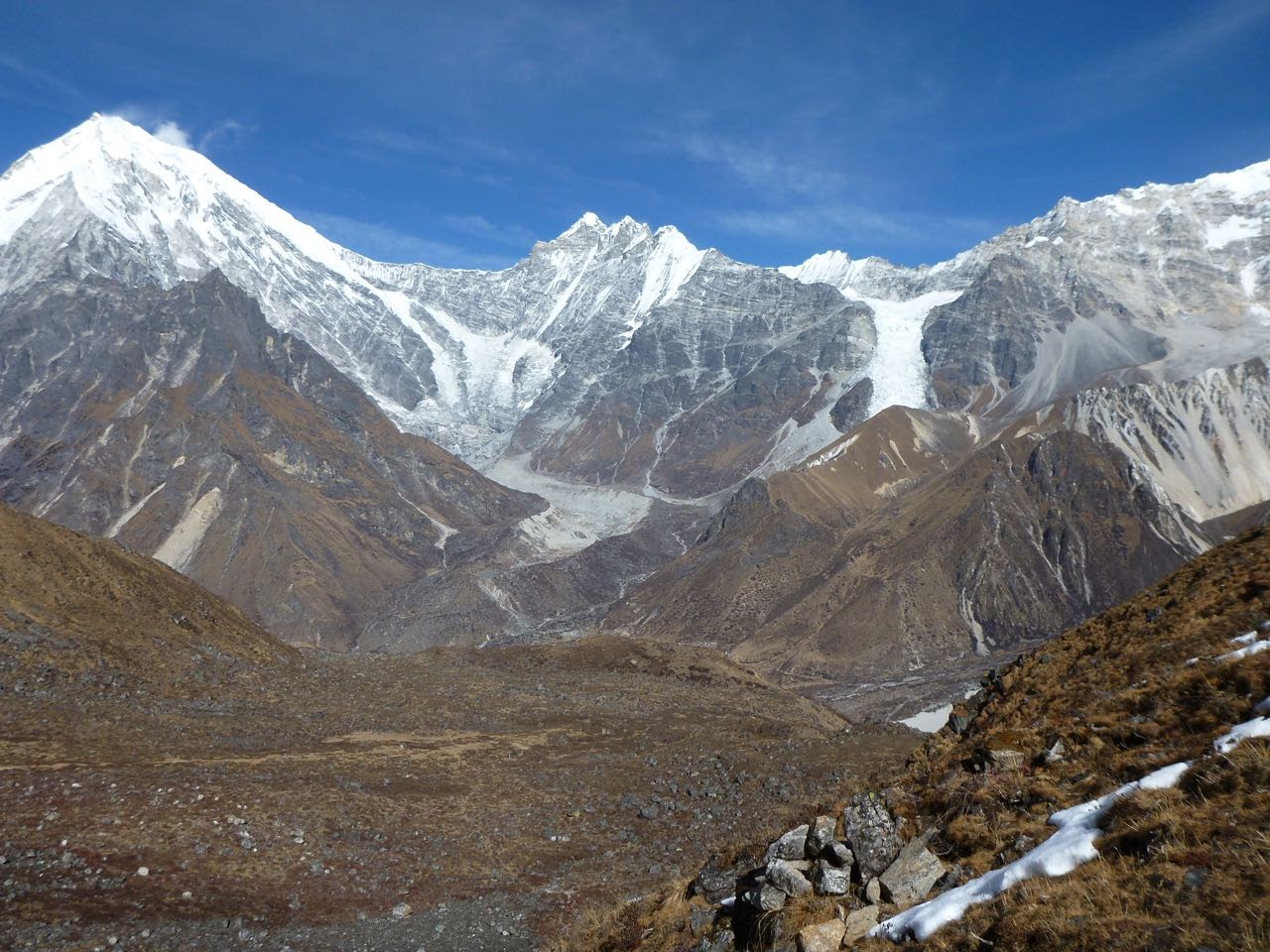
A bespoke trekking in nepal adventure.
The Tilman Pass Trek is a challenging high-altitude adventure in Langtang Region Trekking, combining spectacular Himalayan landscapes, remote mountain terrain, high-altitude camping, and traditional Himalayan communities. As an adventurous route for Trekking in Nepal, the journey follows the beautiful Langtang Valley from Syabrubesi to Kyanjin Gompa before heading into a remote wilderness area toward the Tilman Pass at 5,320 m.
The trek offers a diverse experience, beginning with scenic mountain roads and forest trails before reaching the alpine landscapes around Kyanjin Gompa. After the acclimatization and exploration day, the trail continues through Langshisha Kharka and Moraine Base Camp to Tilman Pass Base Camp. The challenging crossing of Tilman Pass leads into a remote high-mountain landscape, followed by the beautiful Dudh Pokhari, Tin Pokhari, and Panch Pokhari before descending toward Chautara.
The Tilman Pass Trek begins and ends in Kathmandu, with an arrival day and final departure day included in the itinerary. The trekking route combines lodge accommodation with remote camping arrangements, while full-board meals, an experienced trekking guide, porter support, necessary permits, and transportation are arranged according to the package. For practical information about traveling in Nepal, planning your journey, permits, transportation, accommodation, and trekking preparation, see our Nepal Travel Information Guide.
Short Itinerary
Day 01: Arrival in Kathmandu, 1,400 m.
Day 02: Drive from Kathmandu to Syabrubesi, 1,672 m, 8–10 h.
Day 03: Trek to Lama Hotel, 2,670 m, 5–6 h.
Day 04: Trek to Langtang Village, 3,430 m, 5–6 h.
Day 05: Trek to Kyanjin Gompa, 3,700 m, 4–5 h.
Day 06: Acclimatization and exploration day at Kyanjin Gompa.
Day 07: Trek to Langshisha Kharka, 4,160 m, 5–6 h.
Day 08: Trek to Moraine Base Camp, 4,580 m, 4–5 h.
Day 09: Trek to Tilman Pass Base Camp, 4,850 m, 5–6 h.
Day 10: Cross Tilman Pass, 5,320 m, and trek to Dudh Pokhari, 7–8 h.
Day 11: Trek to Tin Pokhari, 3,840 m, 5–6 h.
Day 12: Trek to Panch Pokhari, 4,060 m, 5–6 h.
Day 13: Trek to Nasimpati, 3,810 m, 4 h.
Day 14: Trek to Chyo Kharka, 5–6 h.
Day 15: Trek to Chautara, 1,235 m, 5–6 h.
Day 16: Drive from Chautara to Kathmandu, 1,400 m, 6–7 h.
Day 17: Final departure from Kathmandu.
Trip Facts
- Trip Name: Tilman Pass Trek
- Duration: 17 Days / 16 Nights
- Destination: Nepal
- Region: Langtang Region
- Trip Type: High-Altitude Trekking and Camping
- Trek Grade: Challenging
- Highest Point: Tilman Pass, 5,320 m
- Starting Point: Syabrubesi
- Ending Point: Chautara
- Accommodation: Hotels, mountain lodges, and camping
- Meals: Breakfast, lunch, and dinner during the trek
- Transportation: Bus to Syabrubesi and private vehicle from Chautara to Kathmandu
- Best Seasons: Spring and autumn
- Guide: Experienced, licensed, English-speaking trekking guide
- Porter: One porter for every two trekkers
- Group Type: Private or customized trek
Himalayan Cultural Experience
The Tilman Pass Trek combines a challenging high-altitude adventure with opportunities to experience the rich culture and traditional mountain lifestyle of communities in the Langtang region. The early part of the journey passes through villages inhabited mainly by Tamang communities, where traditional houses, Buddhist prayer flags, chortens, monasteries, and local customs reflect the region's deep Himalayan heritage.
As the trail continues through the Langtang Valley toward Kyanjin Gompa, trekkers encounter the distinctive Buddhist traditions and way of life of the local mountain communities. Staying in village lodges provides opportunities to meet local people, experience their warm hospitality, and observe daily life in the high Himalayan environment.
Beyond Kyanjin Gompa, the route becomes increasingly remote as it enters a spectacular wilderness of alpine landscapes and high mountain terrain. The combination of Tamang culture, Buddhist heritage, traditional villages, mountain hospitality, and remote Himalayan wilderness adds a meaningful cultural dimension to the demanding adventure. For a deeper understanding of the region's cultural traditions and heritage, see our Langtang & Helambu Culture and Heritage Guide.
Nature & Wildlife of the Langtang Himalaya
The Tilman Pass Trek passes through the diverse landscapes of Langtang National Park, ranging from subtropical forests and river valleys to alpine meadows and high Himalayan terrain. The changing environment supports a variety of plant and animal species, while the forests and mountain landscapes add to the natural beauty of the journey.
Trekkers may encounter Himalayan wildlife such as Himalayan tahr, musk deer, langur monkeys, and a variety of mountain birds, although wildlife sightings are naturally unpredictable. The route also offers opportunities to observe rhododendron forests, alpine vegetation, waterfalls, rivers, and dramatic mountain landscapes. For more information about the park's nature, wildlife, ecosystems, and conservation, see our Langtang National Park Guide.
GHT High Route & Himalayan Wilderness Experience
The Tilman Pass Trek follows a demanding section of the Great Himalaya Trail (GHT) High Route, taking trekkers beyond the established trails of the Langtang Valley and into remote, rugged mountain terrain. After Kyanjin Gompa, the route continues through Langshisha Kharka and Moraine Base Camp toward Tilman Pass, where the landscape becomes increasingly alpine, wild, and isolated.
The crossing of Tilman Pass at 5,320 m is the most demanding section of the journey. From the pass, the trail descends through a remote high-mountain landscape toward Dudh Pokhari, Tin Pokhari, and Panch Pokhari, with spectacular Himalayan scenery and a strong sense of wilderness throughout the route. This section requires good physical fitness, proper acclimatization, suitable trekking equipment, and the support of an experienced trekking team.
The combination of high-altitude trekking, remote camping, rugged mountain terrain, and spectacular Himalayan scenery makes the Tilman Pass Trek a rewarding GHT High Route adventure for trekkers seeking a less-traveled journey through the mountains of central Nepal. For another challenging journey along Nepal's GHT High Route, see our Eastern Great Himalayan Trail High Route Expedition.
Best Time to Trek
The best seasons for the Tilman Pass Trek are spring (March to May) and autumn (September to November). During these periods, the weather is generally more stable, visibility is better, and the mountain landscapes are particularly impressive.
Spring brings warmer conditions, blooming rhododendrons, and clear Himalayan views, while autumn generally offers dry trails, stable weather, and excellent mountain visibility after the monsoon. These conditions are especially important for the high-altitude section and the crossing of Tilman Pass.
The trek can be affected by snow, strong winds, poor visibility, and rapidly changing weather at higher elevations. For this reason, the timing of the pass crossing should always be considered carefully, and the itinerary may need to be adjusted according to actual trail and weather conditions.
Permits and Entrance Fees
The Tilman Pass Trek requires the necessary permits and entrance fees for the areas covered by the trekking route, including the Langtang National Park entry permit and any applicable local or trekking permits required under current regulations.
Mountain King Treks arranges the necessary permits and official fees as part of the trekking service. For the permit arrangements, trekkers need to provide a scanned copy of their passport and a recent passport-size photograph in advance.
Once the permits have been arranged, trekkers may keep their original passport safely stored at their hotel or another secure place in Kathmandu if they prefer, rather than carrying it throughout the trek. The original passport should remain accessible whenever it is required for travel or official purposes.
Accommodation & Meals Throughout the Trip
Accommodation and meals are arranged throughout the Tilman Pass Trek according to the nature of the route. The package includes two nights in Kathmandu at a tourist-standard hotel on a twin-sharing basis with breakfast included.
During the trekking section from Syabrubesi through Langtang Valley to Kyanjin Gompa, accommodation is provided in locally operated mountain lodges and village guesthouses. Although trekkers stay in these lodges, all meals are prepared by our own trekking kitchen and professional trekking cook. This allows our team to maintain consistent meal arrangements throughout the journey rather than relying on the individual lodge kitchens.
Beyond Kyanjin Gompa, the route enters remote high-altitude areas where permanent accommodation facilities are limited or unavailable. This section is operated as a fully supported camping trek, with tents, group camping equipment, kitchen equipment, and other necessary camping gear provided by our trekking team. Our professional trekking cook prepares all meals at the campsites using food supplies carried by the support team.
Breakfast, lunch, and dinner are provided throughout the trekking and camping sections. Our kitchen team prepares a variety of fresh and hygienically prepared meals, with menus adapted to the trekking environment and the nutritional needs of trekkers. The combination of village lodge accommodation, remote wilderness camping, and meals prepared by our own trekking kitchen provides a reliable and fully supported arrangement for this challenging high-altitude adventure.
Transportation Throughout the Trip
The journey begins with a private airport transfer on arrival in Kathmandu and ends with a private transfer to the airport for departure. Transportation from Kathmandu to Syabrubesi is provided by private vehicle, following the scenic road through the Trishuli corridor and surrounding mountain landscapes.
After completing the trek at Chautara, transportation back to Kathmandu is arranged by private vehicle. Travel times may vary depending on road conditions, traffic, weather, and other circumstances along the route.
All transportation arrangements are organized according to the itinerary so that trekkers can travel between the trailhead, trekking route, and Kathmandu with the necessary support from our team.
Responsible Trekking and Himalayan Environmental Care
Responsible trekking is an important part of the Tilman Pass Trek, particularly because the route passes through environmentally sensitive forests, alpine landscapes, high-altitude areas, and remote wilderness where natural resources and waste-management facilities are limited.
Trekkers are encouraged to stay on established trails, minimize plastic and other waste, avoid unnecessary damage to vegetation, and respect local customs, Buddhist religious sites, wildlife, and traditional communities. All waste should be managed responsibly, particularly during the remote camping section where there are no regular waste-disposal facilities.
Our trekking and camping team takes responsibility for managing the kitchen, camping equipment, food supplies, and waste as carefully as possible. By traveling responsibly and respecting both the natural environment and local communities, trekkers can help protect the unique Himalayan landscape and cultural heritage of the Tilman Pass route for future generations.
Frequently Asked Questions
How difficult is the Tilman Pass Trek?
The Tilman Pass Trek is a challenging high-altitude trek that requires good physical fitness, proper preparation, and experience with demanding mountain terrain. The crossing of Tilman Pass at 5,320 m, combined with remote camping and changing high-altitude conditions, makes this trek considerably more demanding than standard lodge-based routes.
What is the highest point of the Tilman Pass Trek?
The highest point is Tilman Pass at 5,320 m. The pass crossing is one of the most demanding sections of the trek and requires appropriate acclimatization, suitable equipment, and careful guidance.
Is the Tilman Pass Trek a camping trek?
The trek combines village lodge accommodation and camping. The initial section through Syabrubesi, Langtang Valley, and Kyanjin Gompa uses mountain lodges and guesthouses, while the remote section beyond Kyanjin Gompa is operated as a fully supported camping trek.
Are meals prepared by the trekking team?
Yes. Although accommodation is provided in local lodges and village guesthouses during the lodge section, meals are prepared by our own trekking kitchen and professional trekking cook. During the camping section, the same kitchen team prepares breakfast, lunch, and dinner at the campsites.
Do I need previous high-altitude trekking experience?
Previous high-altitude trekking experience is strongly recommended because the route includes remote terrain, high-altitude camping, and the crossing of Tilman Pass. Trekkers should have good physical fitness and be comfortable walking for several hours each day in demanding mountain conditions.
What is the best season for the Tilman Pass Trek?
The best seasons are generally spring (March to May) and autumn (September to November), when weather and visibility are usually more favorable. Conditions at Tilman Pass can change quickly, so the final decision to cross the pass depends on actual weather and trail conditions.
Can the Tilman Pass Trek be customized?
Yes. Mountain King Treks can arrange the Tilman Pass Trek as a private or customized journey according to your schedule, group size, experience, and trekking requirements. The itinerary can be discussed in advance based on current trail conditions and the needs of the group.
Plan Your Tilman Pass Trek
Planning the Tilman Pass Trek requires careful preparation because the journey combines high-altitude trekking, remote camping, challenging terrain, and the crossing of a 5,320 m mountain pass. Choosing the right season, preparing suitable trekking equipment, arranging the necessary permits, and allowing sufficient time for acclimatization are all important for a safe and enjoyable journey.
Mountain King Treks can arrange the trek as a private or customized adventure with experienced guides, porters, camping support, transportation, accommodation, meals, permits, and the necessary trekking logistics.
For broader travel arrangements and practical information, see our Nepal Travel Planning Guide. For equipment, insurance, health, altitude, and other practical preparation information, visit our Nepal Trip Preparation Guide.
Contact Us
WhatsApp / Call: +977-9841566449
Email: info@mountainkingtrek.com
Plan Your Trip
Share your plans with us, and we will help you arrange your Tilman Pass Trek.
What makes this special.
- Challenging crossing of Tilman Pass at 5,320 m
- Scenic Langtang Valley and Himalayan mountain landscapes
- Acclimatization and exploration at Kyanjin Gompa
- Remote alpine terrain around Langshisha Kharka and Moraine Base Camp
- High-altitude camping and wilderness experience
- Beautiful Dudh Pokhari, Tin Pokhari, and Panch Pokhari
- Traditional Himalayan villages and local mountain communities
- Forests, rivers, valleys, and spectacular Himalayan scenery
- A combination of lodge trekking and remote camping
- An adventurous route connecting the Langtang and Panch Pokhari areas
Your itinerary.
Upon your arrival at Tribhuvan International Airport in Kathmandu, a representative from Mountain King Treks will meet you and provide a private transfer to your hotel. After check-in, you can rest and relax at the hotel or explore the nearby area if time permits. Our team will also provide a brief introduction to the trek and help you make any final preparations for the journey.
Accommodation: Hotel in Kathmandu (BB)
After breakfast, we drive from Kathmandu to Syabrubesi, the starting point of the trek. The journey follows the scenic road through the Trishuli corridor, passing along rivers, green hills, terraced farmland, and traditional mountain settlements. As we travel north toward the Langtang region, the landscape gradually becomes more mountainous.
After reaching Syabrubesi, we settle into our accommodation and prepare for the trekking days ahead. The trekking guide and support team will check the equipment and make sure everything is ready for the journey into the Langtang Valley.
Meals: Breakfast, Lunch & Dinner
Accommodation: Lodge in Syabrubesi
After breakfast, we begin our trek from Syabrubesi toward Lama Hotel. The trail follows the Langtang Khola through beautiful forests of rhododendron, oak, pine, and other Himalayan vegetation. We cross small streams and walk through peaceful forest surroundings as the valley gradually becomes narrower and more remote.
The trail includes several ascents and descents before reaching Lama Hotel, where we spend the night. The peaceful forest setting and sounds of the river make this a pleasant introduction to the Langtang trekking route.
Meals: Breakfast, Lunch & Dinner
Accommodation: Lodge at Lama Hotel
After breakfast, we continue along the Langtang Khola through dense forest and gradually gain elevation. The trail opens into wider mountain landscapes as we approach the traditional settlements of the Langtang Valley. Along the way, we enjoy views of surrounding mountains and experience the changing vegetation with increasing altitude.
We continue toward Langtang Village, an important settlement in the valley surrounded by spectacular Himalayan scenery. After reaching the village, we settle into our lodge and have time to rest and enjoy the mountain surroundings.
Meals: Breakfast, Lunch & Dinner
Accommodation: Lodge in Langtang Village
Today, the trail continues deeper into the Langtang Valley toward Kyanjin Gompa. After breakfast, we walk through alpine landscapes and traditional mountain settlements, with increasingly impressive views of the surrounding peaks and high Himalayan terrain. The trail gradually climbs toward the upper valley.
We arrive at Kyanjin Gompa, one of the most scenic locations on the trek, surrounded by spectacular mountain peaks and alpine landscapes. After checking into the lodge, we can relax and enjoy the impressive Himalayan environment.
Meals: Breakfast, Lunch & Dinner
Accommodation: Lodge at Kyanjin Gompa
Today is an important acclimatization and exploration day at Kyanjin Gompa. We take a break from the main trekking route and allow our bodies to adjust to the increasing altitude. Depending on conditions and the group's fitness, we can enjoy a short exploration hike around the surrounding alpine landscape and viewpoints.
The day also provides an opportunity to enjoy the spectacular Langtang Himalayan scenery and prepare for the more remote and challenging section ahead. Our guide will check the team's health and trekking equipment and make final preparations for the camping section toward Tilman Pass.
Meals: Breakfast, Lunch & Dinner
Accommodation: Lodge at Kyanjin Gompa
After breakfast, we leave Kyanjin Gompa and enter a more remote section of the Langtang Valley. The trail heads toward Langshisha Kharka, gradually moving through rugged alpine terrain with increasingly sparse vegetation. The surrounding mountains and high Himalayan landscape create a dramatic setting as we gain elevation.
After reaching Langshisha Kharka, the camping team sets up our camp and prepares the evening meal. This marks the beginning of the fully supported camping section of the Tilman Pass Trek, with our guide, cook, porters, and support team managing the necessary camping arrangements.
Meals: Breakfast, Lunch & Dinner
Accommodation: Camping at Langshisha Kharka
We begin the day with breakfast prepared by our camping cook before continuing toward Moraine Base Camp. The trail becomes increasingly rugged as we move higher into the remote mountain environment, with rocky terrain, glacial landscapes, and limited vegetation along the route.
After several hours of challenging walking, we reach Moraine Base Camp at approximately 4,580 m. The support team establishes camp while trekkers rest and enjoy the dramatic surroundings. As we are now at high altitude, the evening is kept relaxed to conserve energy for the demanding days ahead.
Meals: Breakfast, Lunch & Dinner
Accommodation: Camping at Moraine Base Camp
After an early breakfast, we continue toward Tilman Pass Base Camp, following a challenging high-altitude trail through increasingly rugged and remote terrain. The landscape becomes more barren as we gain elevation, with rocky slopes and spectacular views of the surrounding Himalayan mountains.
We reach Tilman Pass Base Camp at approximately 4,850 m, where the camping team prepares our camp and meals. This is an important preparation day for the following day's crossing of Tilman Pass at 5,320 m. Our guide will assess weather, trail conditions, and the group's overall condition before the pass crossing.
Meals: Breakfast, Lunch & Dinner
Accommodation: Camping at Tilman Pass Base Camp
Today is the most challenging and rewarding day of the trek as we cross Tilman Pass at 5,320 m. We start early after breakfast and follow the demanding trail toward the pass. The ascent requires careful and steady walking over rugged high-altitude terrain, and our experienced guide will lead the group according to weather, trail conditions, and individual fitness.
After reaching the top of Tilman Pass, we take time to appreciate the spectacular Himalayan panorama before beginning the descent toward Dudh Pokhari. The trail remains remote and rugged as we continue to our campsite, where our support team prepares the camp and evening meal.
Meals: Breakfast, Lunch & Dinner
Accommodation: Camping at Dudh Pokhari
After breakfast, we continue through the remote mountain landscape toward Tin Pokhari. The trail gradually descends from the higher pass area, passing through rugged terrain with changing views of the surrounding mountains and valleys.
We reach Tin Pokhari and settle into camp for the night. The peaceful surroundings provide an opportunity to rest and recover after the demanding Tilman Pass crossing.
Meals: Breakfast, Lunch & Dinner
Accommodation: Camping at Tin Pokhari
Today, we continue our journey toward Panch Pokhari, a beautiful high-altitude lake area and one of the highlights of this remote section. The trail passes through rugged Himalayan landscapes and gradually leads us toward the sacred lakes.
After reaching Panch Pokhari, we set up camp and have time to enjoy the peaceful mountain surroundings. The area is culturally and spiritually significant, adding another dimension to the trekking experience.
Meals: Breakfast, Lunch & Dinner
Accommodation: Camping at Panch Pokhari
After breakfast, we leave Panch Pokhari and begin descending toward Nasimpati. The trail gradually moves through changing landscapes as the altitude decreases, with more vegetation appearing along the route.
After approximately four hours of trekking, we reach Nasimpati and settle into camp. The shorter walking day provides valuable time to rest and enjoy the surrounding mountain environment.
Meals: Breakfast, Lunch & Dinner
Accommodation: Camping at Nasimpati
We continue our descent from Nasimpati toward Chyo Kharka. The trail passes through mountain terrain and gradually becomes greener as we lose elevation. The landscape provides a noticeable contrast to the rugged high-altitude environment experienced earlier in the trek.
After reaching Chyo Kharka, our support team prepares the campsite and evening meal. We spend the night surrounded by the peaceful mountain landscape.
Meals: Breakfast, Lunch & Dinner
Accommodation: Camping at Chyo Kharka
After breakfast, we begin the final trekking day toward Chautara. The trail continues descending through greener hills, forests, traditional settlements, and cultivated landscapes as we return to lower elevations.
After approximately five to six hours of walking, we reach Chautara and complete our trekking journey. We settle into our accommodation and have time to relax after completing this challenging high-altitude adventure.
Meals: Breakfast, Lunch & Dinner
Accommodation: Lodge in Chautara
After breakfast, we drive from Chautara to Kathmandu by private vehicle. The journey follows scenic hill roads through valleys, villages, rivers, and terraced farmland before gradually reaching the Kathmandu Valley.
After arriving in Kathmandu, we check into our hotel and have time to rest or explore the surrounding area. In the evening, we enjoy a farewell dinner with typical Nepali meals, traditional music, and cultural dance, celebrating the successful completion of the Tilman Pass Trek with our trekking team.
Meals: Breakfast, Lunch & Farewell Dinner
Accommodation: Hotel in Kathmandu
After breakfast, our representative will provide a private transfer to Tribhuvan International Airport for your final departure. Our team will assist you with your airport transfer and bid you farewell as you continue your journey home or onward to your next destination.
Meals: Breakfast
Trip includes
- Airport arrival and departure transfers in Kathmandu by private vehicle.
- Two nights' accommodation in Kathmandu at a tourist-standard hotel on a twin-sharing basis with breakfast included.
- Kathmandu to Syabrubesi and from Chautara to Kathmandu by bus
- Fully supported camping trek with tents, group camping equipment, kitchen equipment, and other necessary camping gear.
- Full-board meals throughout the trekking and camping sections, including breakfast, lunch, and dinner, with a variety of fresh and hygienically prepared meals from our own trekking kitchen.
- Experienced, licensed, and professional English-speaking trekking guide.
- Professional trekking cook responsible for preparing meals throughout the camping section.
- Necessary porter and support team members for carrying equipment, food, and trekking supplies.
- All guide, cook, porter, and support staff expenses, including their meals, accommodation, salary, insurance, and necessary equipment.
- All necessary trekking permits, national park entry fees, and applicable local government permits and fees.
- First-aid medical kit carried by the trekking guide.
- Government taxes and official service charges.
Not included
- International airfare and Nepal entry visa fees.
- Travel insurance, including emergency medical treatment and helicopter evacuation.
- Personal trekking clothing and equipment, including sleeping bag and other personal gear.
- Hotel accommodation in Kathmandu beyond the two nights included in the package.
- Personal expenses such as drinks, snacks, laundry, telephone, internet, and battery charging.
- Meals and accommodation not specifically mentioned under Includes.
- Personal expenses or additional services caused by delays, itinerary changes, or requirements for additional accommodation and transportation.
- Tips for the guide, cook, porters, drivers, and other support staff.
- Expenses caused by bad weather, natural disasters, road conditions, or other circumstances beyond our control.
- Any services or expenses not specifically mentioned under Includes.